

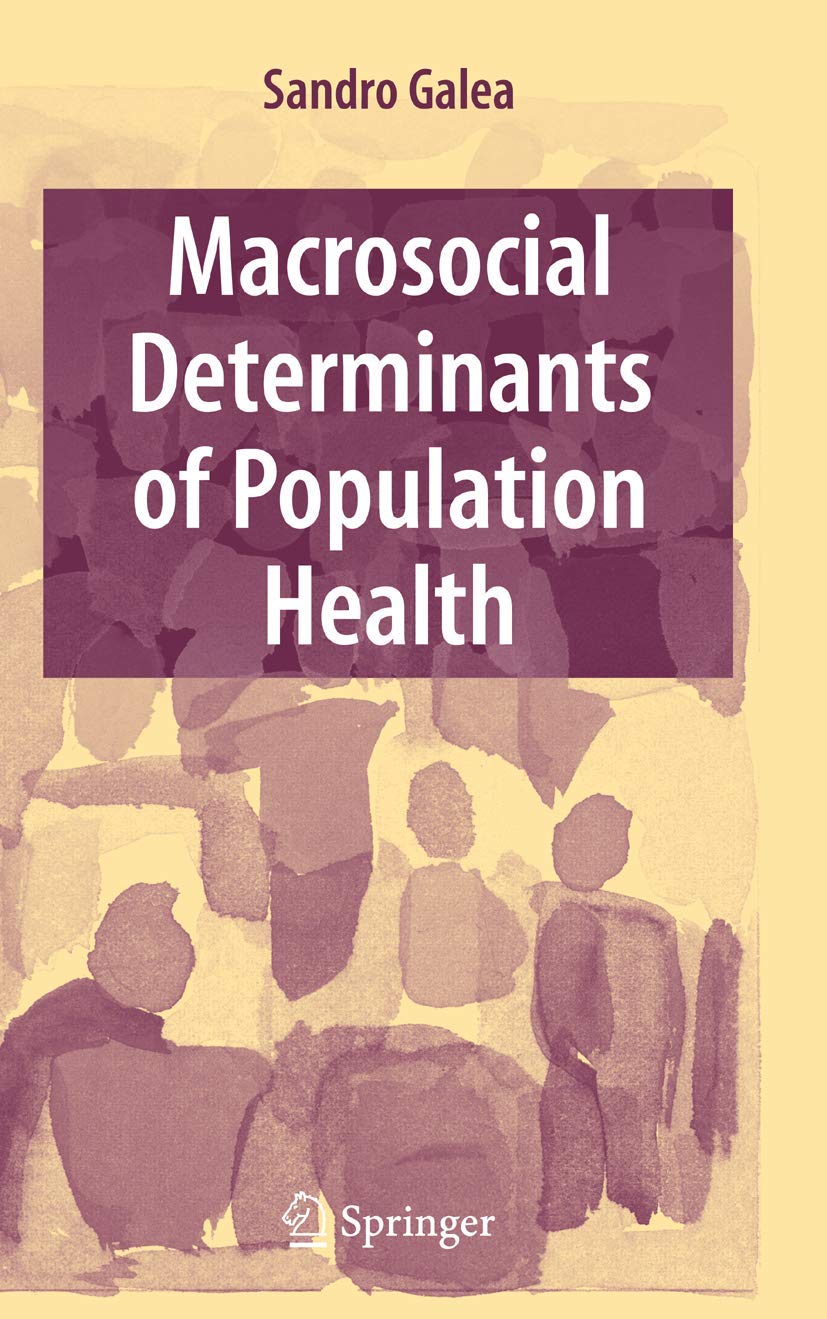
Macrosocial Determinants of Population Health - Essential
Macrosocial Determinants of Population Health - Essential
Price subject to change. Tap below for current.
Couldn't load pickup availability
In this review of Macrosocial Determinants of Population Health the bottom line is clear: this is a disciplined, field-building text for readers wanting to understand how broad social forces shape health at the population level. The book is best for graduate students, researchers, and public health practitioners who need a rigorous synthesis of how culture, mass media, political systems, and migration influence health and disease. Its single biggest reason to buy is the systematic integration by Sandro Galea that turns diverse empirical chapters into practical, usable conclusions for population-level interventions.
Key Features
- Comprehensive scope: Covers social determinants such as culture, mass media, political systems, and migration to provide a wide lens on population health influences.
- Field-building approach: Emphasizes systematic methods for studying macrosocial factors so readers can translate findings into research designs and policy-relevant work.
- Integrative chapters: Galea's closing chapters synthesize evidence across sections into clear implications for public health practice and strategy.
- Interdisciplinary relevance: Useful to public health, epidemiology, sociology, health promotion, and health policy audiences seeking cross-cutting frameworks.
- Focus on population strategies: Stresses how macrosocial interventions can influence traditional risk factors rather than only targeting individuals.
Who It's For
This volume is aimed primarily at graduate students, academic researchers, and public health professionals who require a theoretical and empirical foundation for incorporating macrosocial determinants into study design or policy work. Its tone and structure suit those who expect disciplined argumentation and integrative conclusions rather than a quick practical manual.
Readers seeking step-by-step program planning for community-level interventions or a brief practitioner handbook may need a companion text with more operational guidance. The book is not aimed at a general audience looking for light reading on health topics.
Pros & Cons
Pros
- Provides a broad, coherent framework for understanding how culture and political systems affect population health.
- Galea's integrative chapters help convert chapter-specific findings into usable lessons for policy and research.
- Draws contributors from multiple disciplines, increasing its relevance across fields such as sociology and epidemiology.
Cons
- Not a how-to implementation guide; readers wanting detailed operational protocols will need additional resources.
Specifications
| Title | Macrosocial Determinants of Population Health |
| Editor / Author | Sandro Galea |
| Scope | Culture, mass media, political systems, migration, and population strategies |
| Disciplinary relevance | Public health, epidemiology, sociology, health policy |
| Approach | Systematic field-building and integrative synthesis |
| Use case | Research, graduate study, policy development |
Our Verdict
Macrosocial Determinants of Population Health is a valuable, theory-rich collection that belongs on the shelf of anyone building research or policy work around social drivers of health. It offers strong methodological framing and actionable synthesis from Galea that make it good value for students and professionals seeking to move beyond individual-level explanations toward population strategies.
Frequently Asked Questions
Does this book cover policy implications?
Yes. Multiple chapters and Galea's integrative sections draw implications for public health policy and population-level strategies.
Is it suitable for undergraduate reading?
It is more suited to graduate students and researchers because of its theoretical and empirical emphasis, though motivated undergraduates could use it with guidance.
Does the book include practical intervention steps?
It emphasizes how macrosocial factors shape risk and strategy but is not a step-by-step implementation manual; supplementary practice-focused texts are recommended for operational planning.
Editor's Take
This book is a theory-rich, interdisciplinary resource for graduate students and public health professionals who need a systematic synthesis of how macrosocial forces shape health; it offers strong methodological framing and integrative guidance for policy and research.

Recently viewed
Recently viewed products will appear here as customers browse the store.