

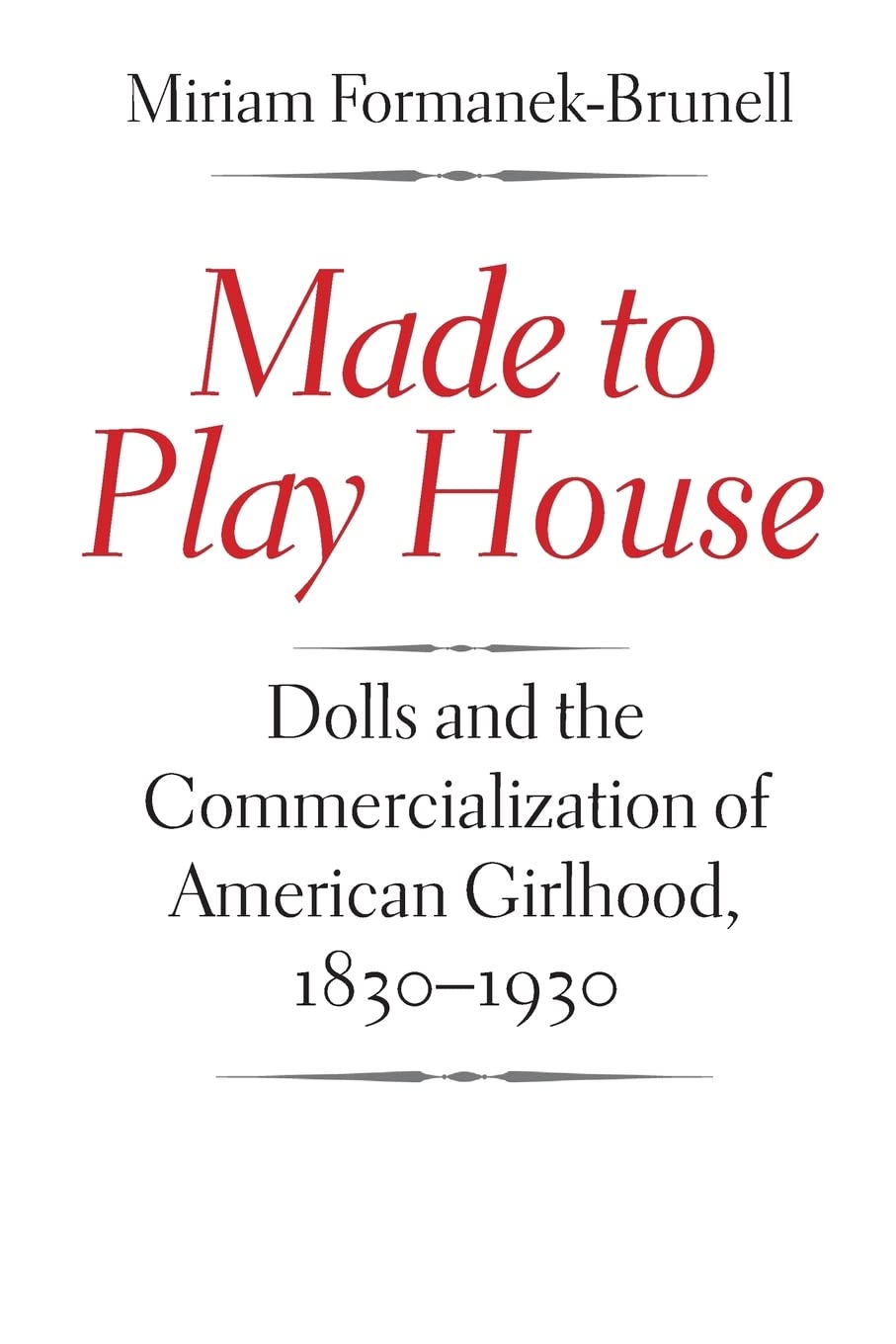
Made to Play House Dolls and the Commercialization of American
Made to Play House Dolls and the Commercialization of American
Price subject to change. Tap below for current.
Couldn't load pickup availability
In this review of Made to Play House, Miriam Formanek-Brunell offers a thoughtful, well-researched look at the development of dolls and their cultural meanings from 1830 to 1930. The book is best for readers who want a scholarly but readable social history that connects material culture, gender roles, and consumer practices; the single biggest reason to buy is its sustained use of primary sources to show how dolls shifted from homemade rag figures to mass-produced fashion dolls and toys shaped by commercial interests.
Key Features
- Historical scope: Covers a century of change, tracing the doll industry from antebellum rag dolls through Gilded Age fashion dolls to early 20th century commercialization, giving readers a long view of cultural shifts.
- Primary sources: Draws on magazines, advertising, autobiographies, juvenile literature, patents, and photographs to ground arguments in contemporaneous evidence.
- Illustrated: Includes period photographs and images of dolls that help readers visualize manufacturing, dress, and play across decades.
- Gender analysis: Shows how men, women, and girls each participated in constructing dolls and gender, useful for readers interested in gender studies and childhood history.
- Readable scholarship: Written in an engaging style that balances academic research with narrative examples, making it suitable for non-specialists and students.
Who It's For
This book is ideal for historians, museum professionals, collectors of dolls and toys, and readers interested in gender and material culture who want a documented account of how commercial forces and social expectations shaped American girlhood. It will also appeal to craft and hobby readers curious about the roots of dollmaking and sewing traditions reflected in rag dolls.
Readers seeking a how-to craft manual, a modern parenting guide, or a brief consumer overview should look elsewhere; the book is a focused social history rather than a practical or pictorial coffee-table volume.
Pros & Cons
Pros
- Thorough use of contemporary sources allows for convincing historical arguments and vivid context.
- The illustrated material complements textual analysis and helps document visual changes in dolls and dress.
- Accessible prose makes complex social history readable for non-specialist audiences.
Cons
- Scholarly focus means the book does not provide craft instructions or modern collector pricing information.
Specifications
| Title | Made to Play House: Dolls and the Commercialization of American Girlhood, 1830-1930 |
| Author | Miriam Formanek-Brunell |
| Subject | Social history of the American doll industry |
| Time period covered | 1830-1930 |
| Source material | Magazines, advertising, autobiographies, juvenile literature, patents, photographs |
| Includes | Illustrations and images of dolls |
Our Verdict
Made to Play House is a valuable, well-documented study for anyone interested in how toys and commerce shaped ideas of girlhood and domesticity. Its strengths are the primary-source evidence and readable analysis, making it a good value for students, curators, and thoughtful collectors seeking historical context rather than craft instruction.
Frequently Asked Questions
Does this book include images of historical dolls?
Yes. The book is illustrated with period photographs and images that support the textual history.
Is the book suitable for casual hobbyists?
It is readable for non-specialists but focuses on social history rather than craft tutorials or modern collecting guides.
What time span does the book cover?
The study traces the American doll industry and play from about 1830 through 1930.
Editor's Take
Made to Play House is a well-documented social history that uses primary sources and illustrations to trace how dolls and commercialization shaped American girlhood, making it valuable for students, curators, and thoughtful collectors.

Recently viewed
Recently viewed products will appear here as customers browse the store.