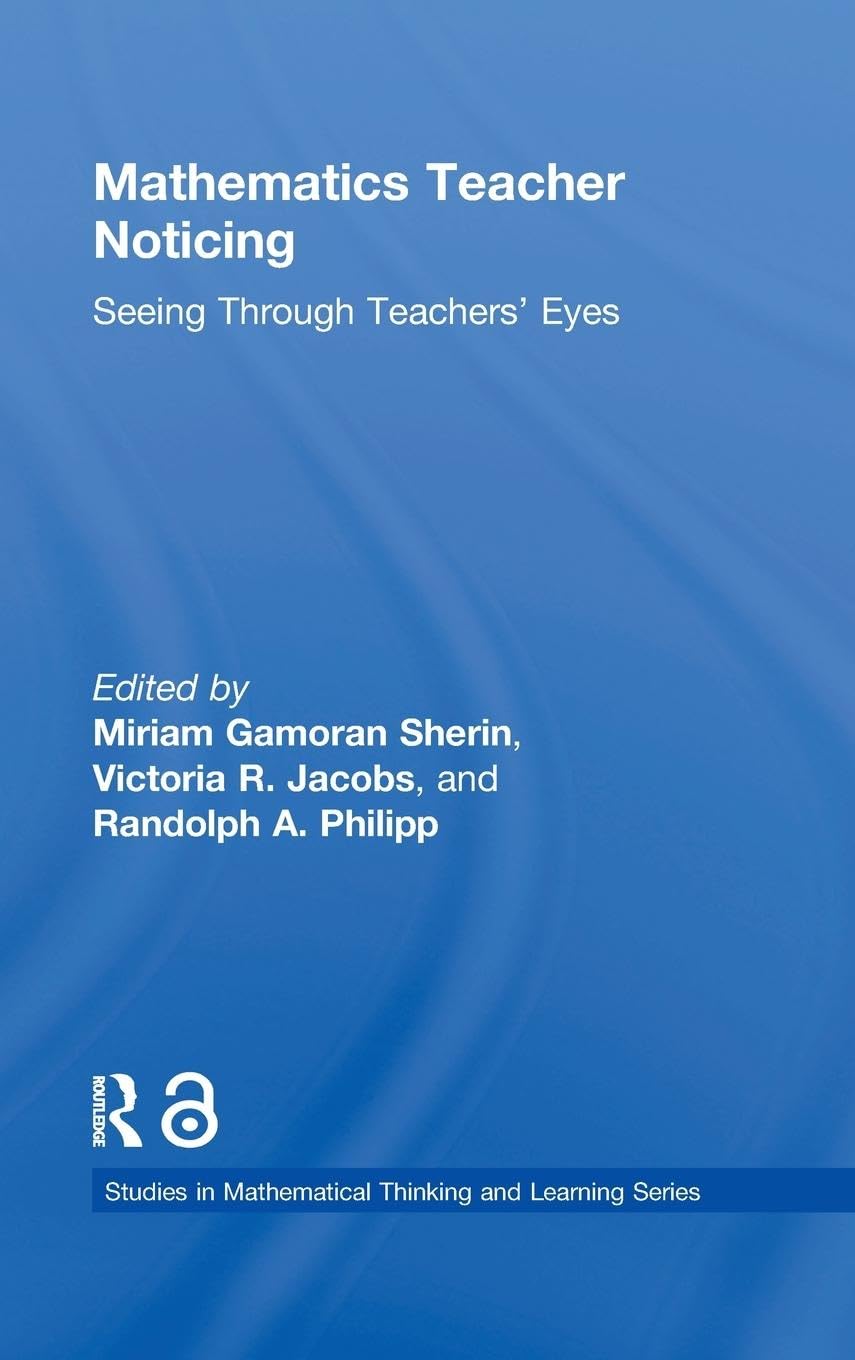
Mathematics Teacher Noticing: Insights for Effective Teaching
Mathematics Teacher Noticing: Insights for Effective Teaching
Price subject to change. Tap below for current.
Couldn't load pickup availability
The book Mathematics Teacher Noticing offers a comprehensive exploration of how teachers can enhance their instructional practices through a deeper understanding of student thinking. Authored by experts Miriam Sherin, Vicki Jacobs, and Randy Philipp, this insightful volume is part of the Studies in Mathematical Thinking and Learning Series.
One of the key themes in Mathematics Teacher Noticing is the importance of observing and interpreting student responses during lessons. By focusing on these interactions, educators can tailor their teaching strategies to better meet the needs of their students. This book provides practical frameworks and examples that illustrate how noticing can lead to improved student engagement and learning outcomes.
The authors delve into various aspects of teacher noticing, including the cognitive processes involved and the impact of professional development on teachers' abilities to notice effectively. Through rich case studies and research findings, readers will gain valuable insights into the strategies for enhancing teacher awareness in the classroom.
Another significant aspect covered in the book is the role of collaboration among educators. The authors emphasize that sharing observations and experiences with colleagues can foster a culture of continuous improvement. By engaging in discussions about student thinking, teachers can develop a more nuanced understanding of their practice and enhance their instructional effectiveness.
Furthermore, Mathematics Teacher Noticing addresses the challenges that teachers face in implementing these strategies. The authors provide actionable recommendations for overcoming common obstacles, such as time constraints and varying levels of experience among staff. This makes the book not only a theoretical guide but also a practical resource for educators.
In addition to its focus on teacher practices, the book also highlights the significance of student perspectives. Understanding how students approach mathematical problems is crucial for teachers aiming to foster a supportive learning environment. The authors encourage educators to consider students' thought processes and to create opportunities for students to express their reasoning.
Overall, Mathematics Teacher Noticing is an essential read for educators who are committed to improving their teaching methods. It provides a rich blend of theory and practice, making it a valuable addition to any mathematics educator's library. With its focus on observation, collaboration, and student engagement, this book equips teachers with the tools they need to enhance their practice and ultimately improve student learning.
Share