

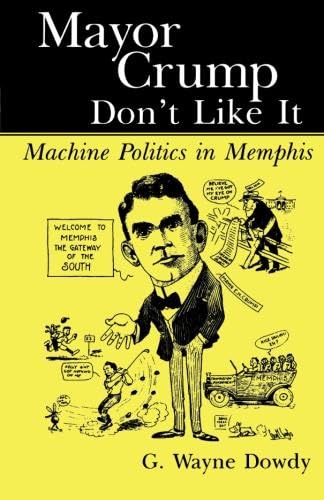
Mayor Crump Don't Like It: Machine Politics in Memphis - Historical
Mayor Crump Don't Like It: Machine Politics in Memphis - Historical
Price subject to change. Tap below for current.
Couldn't load pickup availability
In this review of Mayor Crump Don't Like It: Machine Politics in Memphis, the reviewer finds a focused, richly contextual history aimed at readers who want to understand how local power shaped modern Southern politics. The book profiles Edward Hull Crump and argues that his biracial, multiethnic coalition remade Memphis into a modern southern metropolis; for those interested in the political realignment of the 1930s and the mechanics of urban governance, this work provides a detailed case study and historical narrative worth reading.
Key Features
- Historical focus: Provides a concentrated look at Edward Hull Crump and his role in reshaping Memphis politics during the early 20th century.
- Political realignment context: Explains how thousands of African Americans shifted voting patterns in the 1930s and how that remapped national and local politics.
- Urban governance detail: Describes Crump's expansion of city regulatory power and efforts to increase government efficiency in Memphis.
- Public utility development: Chronicles the establishment of a publicly owned electric utility as part of Crump's modernization program.
- Infrastructure achievements: Documents Crump's role securing a comprehensive flood control system for portions of the lower Mississippi Delta.
Who It's For
This book is best suited to students, local historians, and readers of American political history who want a case study of machine politics and municipal transformation in the segregated South. It will be especially useful for those researching how municipal leaders built coalitions that crossed racial and ethnic lines in a period of dramatic electoral change.
Readers seeking a broad survey of national politics without city-level detail or those who prefer personal memoirs over analytical narrative should look elsewhere; this is a focused historical account centered on Crump's policies, institutions, and the political consequences in Memphis and the Mississippi Delta.
Pros & Cons
Pros
- Detailed account of Edward Hull Crump's influence on Memphis politics and modernization efforts.
- Clear explanation of the 1930s political realignment and its local effects on voting behavior and party loyalties.
- Useful coverage of concrete policy outcomes, including public utilities and flood control initiatives.
Cons
- Not a general primer on national political history; its focus on Memphis and Crump limits broader generalizations.
Specifications
| Title | Mayor Crump Don't Like It: Machine Politics in Memphis |
| Author | G. Wayne Dowdy |
| Subject | Municipal politics and modern Democratic Party development |
| Geographic focus | Memphis and portions of the lower Mississippi Delta |
| Historical period | Early 20th century, emphasis on the 1930s |
| Key themes | Machine politics, biracial coalition, public utilities, flood control |
Our Verdict
Mayor Crump Don't Like It is a valuable, well-focused study for anyone researching Southern municipal power and the political realignment of the 1930s. It offers concrete examples of policy achievements and coalition-building that make it good value for students and local historians seeking a case study of how a city leader modernized urban governance.
Frequently Asked Questions
Does this book cover Crump's policy accomplishments?
Yes. The review notes coverage of regulatory expansion, a publicly owned electric utility, and flood control projects tied to Crump's administration.
Is this a national political history?
No. The focus is local and regional, centered on Memphis and the lower Mississippi Delta while explaining its national political implications.
Who wrote the book?
The author is G. Wayne Dowdy, who frames Crump's role in building a biracial, multiethnic coalition during the era of Democratic realignment.
Editor's Take
A focused, well-documented study useful to students and local historians; it explains how Edward H. Crump built a biracial coalition that modernized Memphis and influenced Democratic realignment.

Recently viewed
Recently viewed products will appear here as customers browse the store.