

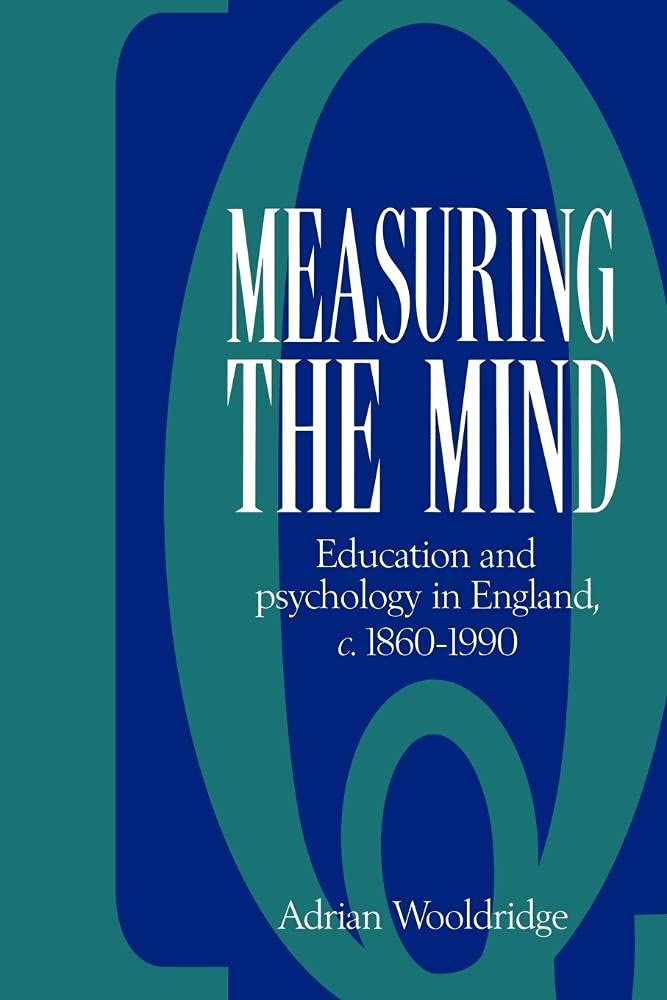
Measuring the Mind: Education and Psychology in England c.1860-c.1990
Measuring the Mind: Education and Psychology in England c.1860-c.1990
Price subject to change. Tap below for current.
Couldn't load pickup availability
In this review of Measuring the Mind readers get a focused history that explains why psychologists shaped interwar educational policy and why their influence waned after the war. Adrian Wooldridge argues that many of the leading figures were educational progressives and political radicals who promoted intelligence testing as a tool of child-centered education. This book is best for readers who want a thoughtful, idea-driven account of educational psychology, policy formation and the meritocratic ideal rather than a technical manual on testing methods.
Key Features
- Historical thesis: Presents the central claim that psychologists who dominated policy between the wars were progressives and radicals, clarifying an often-misunderstood period of educational reform.
- Four thematic focus areas: Organizes the narrative around the emergence of educational psychology, histories of ideas on child development, experts shaping policy, and the rise and fall of a meritocratic ideal.
- Policy perspective: Explores how intelligence testing was defended as an instrument of education tailored to children rather than adult convenience, offering context for modern debates.
- Intellectual biography: Traces the political inspirations and trajectories of psychologists involved in schooling reform, helping readers connect ideas with historical actors.
- Accessible argument: Written as a sustained argument for readers interested in history, policy and the social meaning of testing without heavy technical jargon.
Who It's For
This book suits historians of education, political scientists and graduate students looking for a compact, interpretive history of educational psychology in England from c.1860 to c.1990. It will also inform teachers and policy analysts curious about the intellectual roots of intelligence testing and meritocratic ideals.
Readers seeking detailed methodological guidance on psychometrics or a comprehensive biography of a single figure should look elsewhere; this is an interpretive, thematic history that emphasizes ideas and policy impact over technical procedure.
Pros & Cons
Pros
- Provides a clear, arguable thesis about the progressive and radical roots of interwar educational psychologists.
- Organizes material around four coherent themes, which helps clarify complex intellectual history.
- Relates educational ideas to broader political ideals, such as meritocracy, giving readers useful context for policy change.
Cons
- Not a technical guide to intelligence testing methods, so specialists in psychometrics may find it light on methodological detail.
Specifications
| Title | Measuring the Mind: Education and Psychology in England c.1860-c.1990 |
| Author | Adrian Wooldridge |
| Main themes | Emergence of educational psychology; child development ideas; experts in policy; meritocratic rise and fall |
| Geographic focus | England |
| Chronological scope | c.1860 to c.1990 |
| Approach | Interpretive history of ideas and policy |
Our Verdict
Measuring the Mind is a rewarding read for anyone interested in how educational psychology influenced schooling and social ideals in England. It offers a persuasive, well-framed argument about the progressive politics behind intelligence testing and is good value for readers seeking intellectual and policy history rather than technical detail.
Frequently Asked Questions
Does this book cover how intelligence tests were designed?
Answer. The book discusses intelligence testing in the context of policy and pedagogy rather than providing technical design or psychometric procedures.
What time period does the book examine?
Answer. It covers roughly c.1860 through c.1990 with particular emphasis on the interwar years and postwar decline of the meritocratic ideal.
Is this a biography of the psychologists involved?
Answer. The book traces the political inspirations and careers of several psychologists but focuses on ideas and policy influence rather than full biographical detail.
Editor's Take
Measuring the Mind delivers a persuasive interpretive history showing how progressive psychologists shaped English education and how meritocratic ideals influenced policy; ideal for readers of intellectual and policy history.

Recently viewed
Recently viewed products will appear here as customers browse the store.