

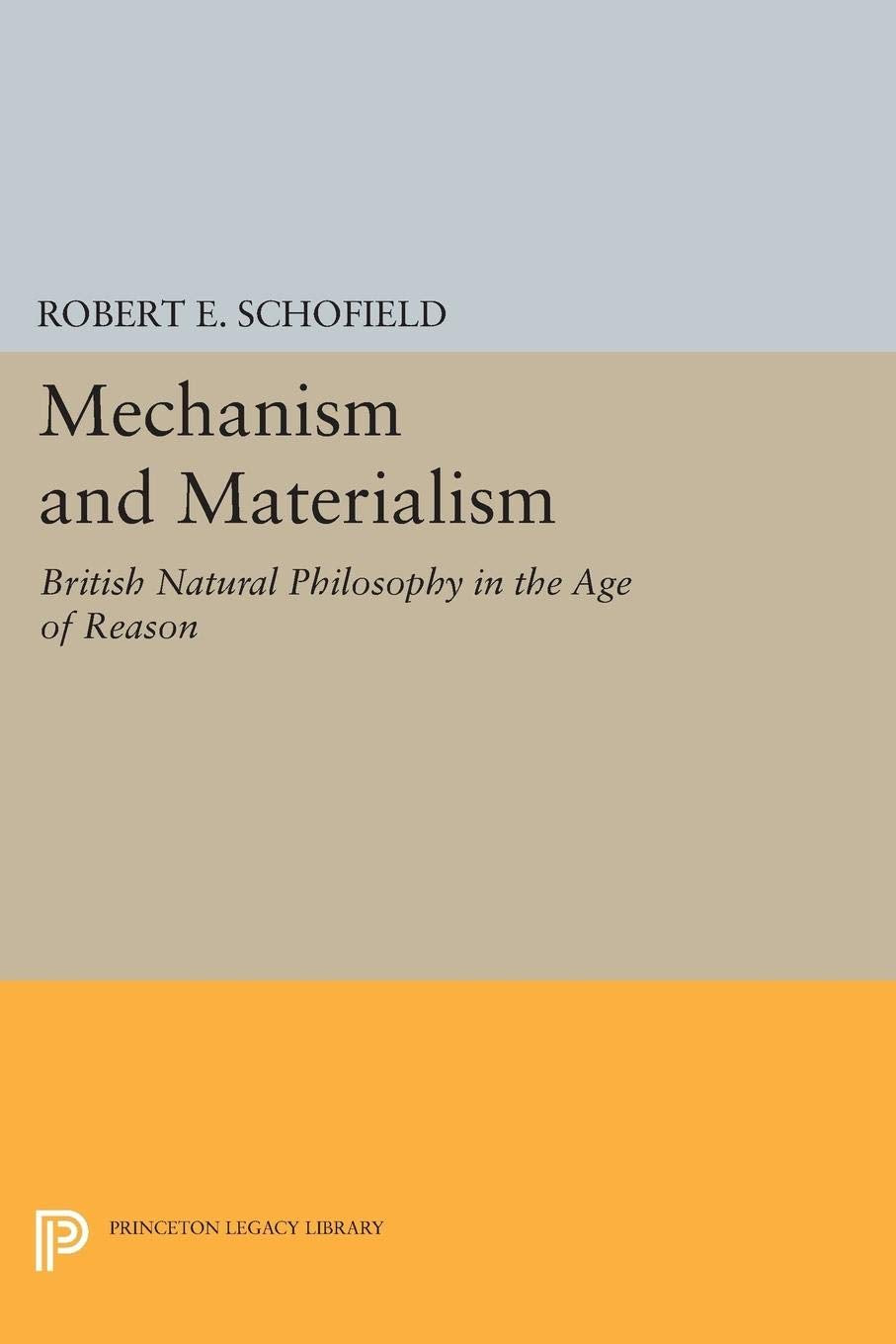
Mechanism and Materialism: British Natural Philosophy in an Age
Mechanism and Materialism: British Natural Philosophy in an Age
Price subject to change. Tap below for current.
Couldn't load pickup availability
In this review of Mechanism and Materialism the reviewer finds a rigorous, historically grounded exploration best suited to readers who want a deep, contextual study of 18th century British science. Robert E. Schofield traces two competing interpretations of matter - mechanistic and materialistic - and explains how those views grew from Newtonian foundations; the single biggest reason to buy is the book's integrated approach that connects experiments, continental influences, natural theology, and institutional change in a single narrative.
Key Features
- Comprehensive historical scope: The book integrates developments across areas of experimental natural philosophy to show broader intellectual trends.
- Comparative concepts: Schofield contrasts mechanistic and materialistic accounts of matter to clarify shifts in interpretation from 1687 to the early 19th century.
- Newtonian framework: Explanations rest on different interpretations of Newton, helping readers understand how one set of empirical results produced divergent theories.
- Contextual connections: The narrative ties scientific ideas to Continental influences and natural theology, offering a richer view of intellectual exchange.
- Scholarly synthesis: By integrating experiments, institutional changes, and theology the book becomes a useful reference for understanding the period as a whole.
Who It's For
Schofield's analysis is ideal for graduate students, historians of science, and informed general readers who want a serious, evidence-based account of British natural philosophy in the Age of Reason. Those seeking to understand how experimental practice, interpretation, and theology interacted will find the book especially rewarding.
Readers wanting a brief introduction or a popular science narrative should look elsewhere; the text assumes patience with detailed intellectual history and may be dense for casual readers who prefer narrative biographies or simplified summaries.
Pros & Cons
Pros
- Thorough integration of multiple strands of experimental natural philosophy gives a clear picture of changing interpretations.
- Gives precise attention to the role of Newtonian thought, clarifying how one framework supported different theories.
- Places British developments in an international and theological context, widening its usefulness for historians.
Cons
- The detailed, scholarly tone can be dense and may deter casual readers seeking an accessible overview.
Specifications
| Title | Mechanism and Materialism: British Natural Philosophy in An Age of Reason |
| Author | Robert E. Schofield |
| Subject | History of science and natural philosophy |
| Focus period | Late 17th century to early 19th century |
| Main themes | Mechanism, materialism, Newtonian interpretation |
| Approach | Integrated intellectual and institutional history |
Our Verdict
Mechanism and Materialism is a valuable scholarly resource for those studying the intellectual history of science; it rewards readers who want a careful synthesis of experiments, theory, and context. While not light reading, it represents excellent value for historians and advanced students seeking a coherent explanation of why mechanistic ideas gave way to materialistic ones and how Newtonian thought shaped both.
Frequently Asked Questions
Does this book cover experimental practice as well as theory?
Yes. Schofield integrates developments in experimental natural philosophy alongside theoretical interpretation to show how practice influenced ideas.
Is prior knowledge of Newton required?
Helpful but not strictly required; familiarity with Newtonian concepts makes parts of the argument easier to follow.
Who will benefit most from reading this work?
Graduate students, historians of science, and readers interested in intellectual history will get the most from its detailed synthesis.
Editor's Take
Mechanism and Materialism is a rigorous, well-synthesized study that rewards historians and advanced students with a clear account of how mechanistic and materialistic interpretations evolved within Newtonian contexts.

Recently viewed
Recently viewed products will appear here as customers browse the store.