

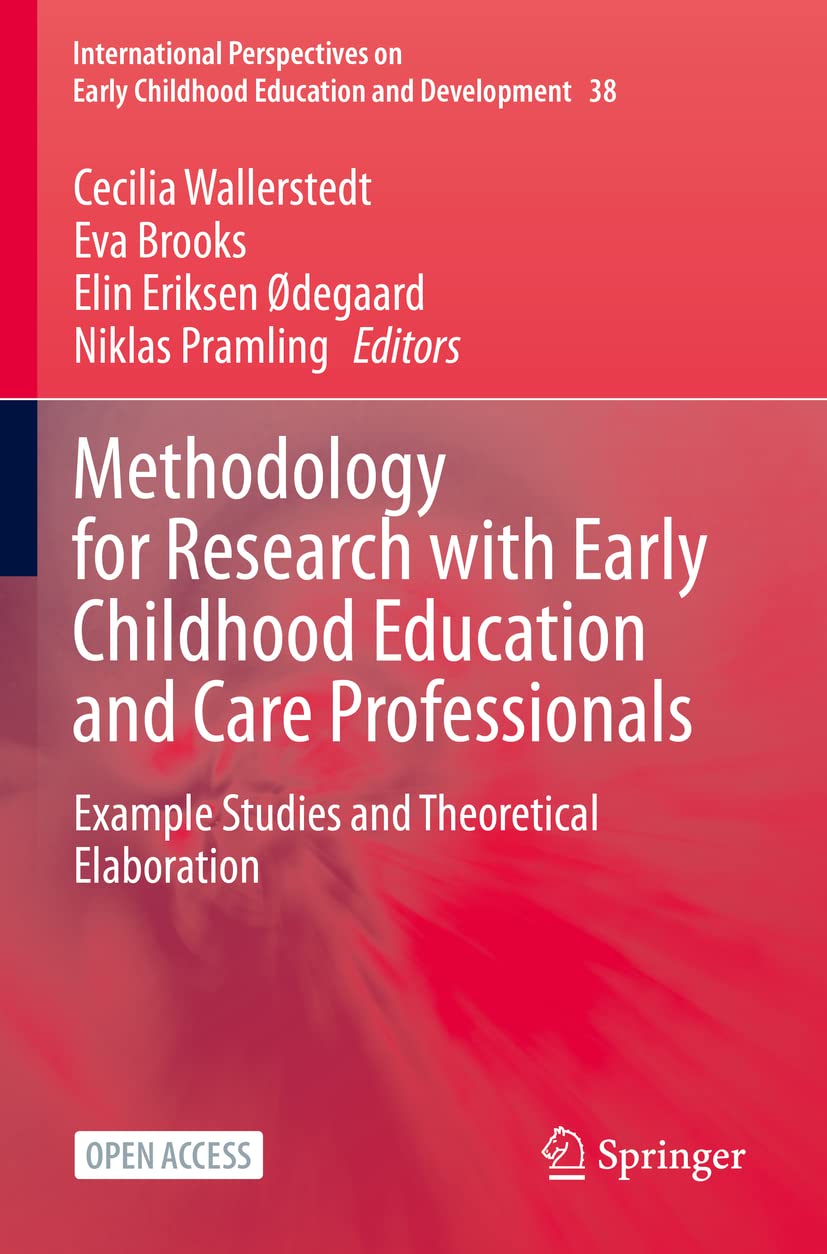
Methodology for Research with Early Childhood Education and Care
Methodology for Research with Early Childhood Education and Care
Price subject to change. Tap below for current.
Couldn't load pickup availability
In this review of Methodology for Research with Early Childhood Education and Care Professionals the bottom line is clear: this open access volume is for researchers and practitioners who want a rigorous, practice-linked framework for collaborative studies. The book documents a rising tradition of collaborative knowledge building in early childhood education and care (ECEC) and explains why approaches such as design studies, action studies, Learning Studies and Lesson Studies can be seen as part of a shared methodological tradition. It is strongest as a methodological reference that ties practical development to empirically grounded theoretical insight.
Key Features
- Collaborative focus: Explains how researchers and ECEC personnel can jointly develop knowledge, making research directly relevant to everyday practice.
- Range of approaches: Describes multiple study types including design studies, action studies, Learning Studies and Lesson Studies so readers can compare methods.
- Theoretical elaboration: Connects practical interventions to broader theory, helping readers translate findings into conceptual insights.
- Practice-oriented examples: Uses example studies to show how collaborative research and development can be carried out in real ECEC settings.
- Open access availability: Being openly accessible removes access barriers and supports wider uptake by practitioners and researchers alike.
Who It's For
This book is aimed primarily at early childhood researchers, doctoral students and ECEC professionals who want to collaborate on research that shapes practice. It will be particularly useful for teams planning design-based or action-oriented projects who need a framework to link intervention work with theoretical development.
Those seeking a step-by-step classroom curriculum or a quick how-to manual for daily lesson planning should look elsewhere; the book is methodological and conceptual rather than a practitioner's activity guide. Library buyers and university instructors who teach research methods in education will find it a strong supplemental text.
Pros & Cons
Pros
- Clearly frames collaborative knowledge building as a coherent tradition connecting multiple research approaches.
- Provides concrete example studies that illustrate theory-practice links for ECEC settings.
- Accessible format as an open access title maximizes reach for practitioners and researchers.
Cons
- Not designed as a practical, day-to-day curriculum resource, so classroom teachers seeking immediate lesson materials may find it too methodological.
Specifications
| Title | Methodology for Research with Early Childhood Education and Care Professionals |
| Series | International Perspectives on Early Childhood Education and Development |
| Author / Editor | Cecilia Wallerstedt |
| Focus | Collaborative knowledge building in ECEC |
| Approaches Covered | Design studies; action studies; Learning Studies; Lesson Studies; research and development studies |
| Access | Open access |
Our Verdict
Methodology for Research with Early Childhood Education and Care Professionals is a valuable methodological resource for researchers and practitioner-research teams who want to develop empirically grounded theory while improving ECEC practice. Its clear treatment of design and action-based approaches and open access format make it good value for university libraries and research groups, though it is not a substitute for hands-on classroom activity guides.
Frequently Asked Questions
Is this book suitable for classroom teachers?
Answer. Classroom teachers will gain useful perspectives on collaborative research, but those seeking immediate lesson plans should consult practice-focused manuals.
What research approaches does the book cover?
Answer. It covers design studies, action studies, Learning Studies, Lesson Studies and combined research and development studies as examples of collaborative knowledge building.
Is the book freely available?
Answer. Yes, it is published as an open access title to ensure wide availability for researchers and practitioners.
Editor's Take
A valuable methodological resource for researchers and practitioner-research teams, this open access volume clearly explains collaborative knowledge building and links practical interventions to theoretical development, though it is not a hands-on classroom guide.

Recently viewed
Recently viewed products will appear here as customers browse the store.