

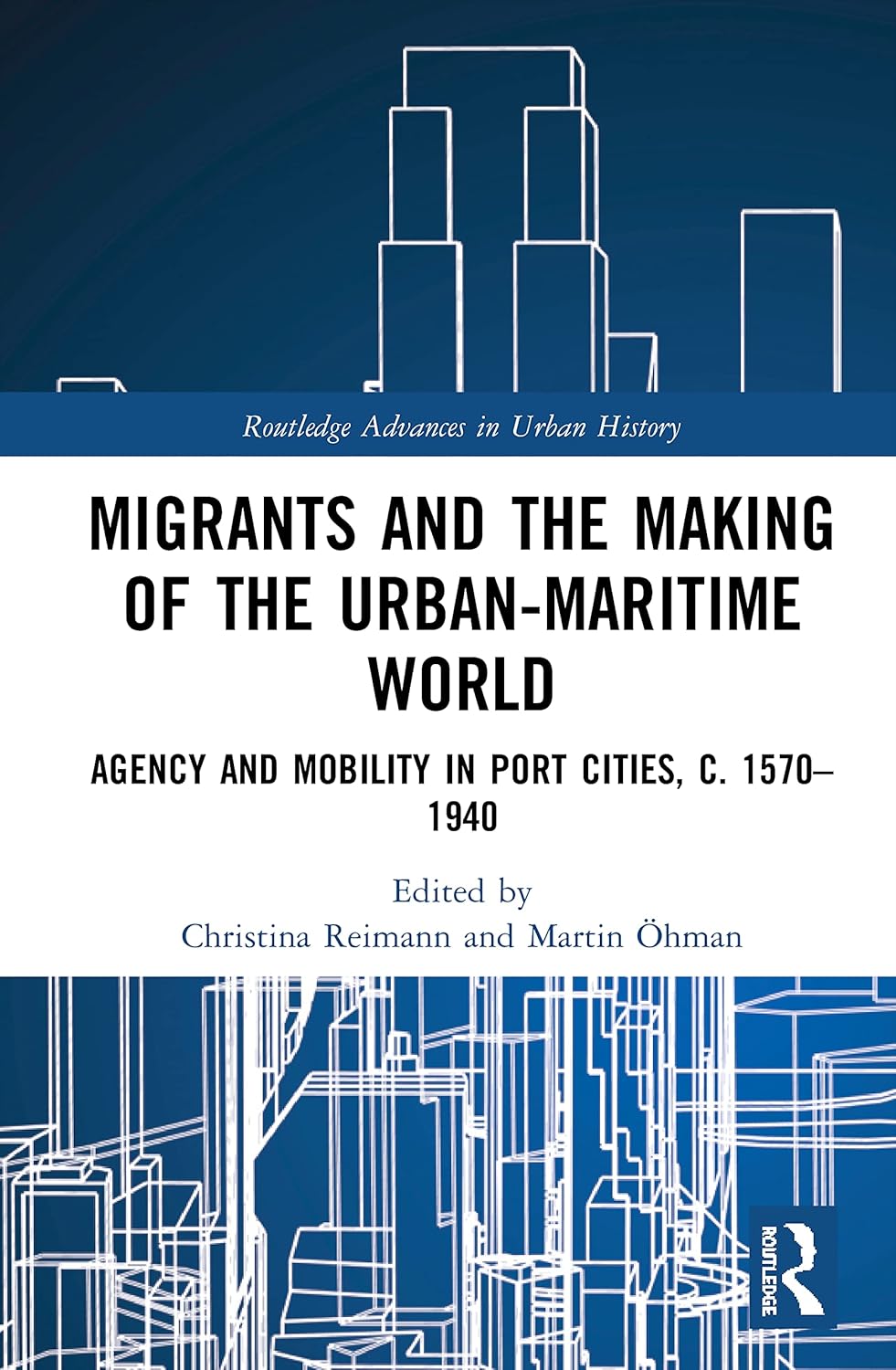
Migrants and the Making of the Urban-Maritime World - Scholarly
Migrants and the Making of the Urban-Maritime World - Scholarly
Price subject to change. Tap below for current.
Couldn't load pickup availability
In this review of Migrants and the Making of the Urban-Maritime World, the reviewer finds a focused, scholarly collection that will appeal to historians, urban studies scholars, and graduate students interested in ports, migration and transnational exchange. The volume's central contribution is its careful tracing of how migrants shaped port city environments and cultures across the ages of sail and steam; readers seeking evidence-based, archival-rooted analysis of urban-maritime interactions will find the coverage consistently illuminating and grounded in primary material.
Key Features
- Scope: The book examines a wide historical span, showing how port cities functioned as nodes for goods, people and ideas across the ages of sail and steam, which helps readers see long-term continuities and change.
- Focus on migrants: Chapters emphasize migrant agency in shaping the built environment and sociocultural life of ports, offering concrete examples of contributions by seafarers, traders and those seeking new homes.
- Interdisciplinary outlook: The essays connect economic, social and material histories so readers gain a multifaceted picture of urban-maritime worlds rather than a single narrow narrative.
- Geographic relevance: While addressing global flows, the volume includes material relevant to European and Scandinavian contexts, useful for researchers of Sweden and northern Europe.
- Primary evidence: The book draws on archival sources and case studies, providing the empirical grounding that scholars and advanced students require for further work.
Who It's For
The collection is best for historians of migration, urban history scholars, maritime historians and graduate students seeking well-documented case studies about how mobile populations shaped port cities. It will also serve as a useful seminar text for courses on ports, global urbanism or transnational exchanges.
Readers looking for a breezy general audience narrative or a single-author synthesis should look elsewhere; this is an edited academic volume that privileges focused essays and archival depth over populist storytelling.
Pros & Cons
Pros
- Strong archival grounding that supports concrete claims about migrants' contributions to urban and maritime landscapes.
- Clear thematic throughline emphasizing the two-way relationship between migrants and port cities, aiding comparative reading across chapters.
- Useful relevance for European and Scandinavian contexts, with material that can inform regional studies and teaching.
Cons
- As an edited academic volume, the essays vary in tone and approach, so readers seeking a uniform narrative may find unevenness between chapters.
Specifications
| Title | Migrants and the Making of the Urban-Maritime World |
| Series | Routledge Advances in Urban History |
| Editors | Christina Reimann, Martin Ohman |
| Subject | Urban history, migration, maritime studies |
| Geographic focus | Port cities with relevance to Europe and Scandinavia |
| Historical scope | Ages of sail and steam; long-term urban-maritime exchanges |
Our Verdict
Migrants and the Making of the Urban-Maritime World is a valuable academic collection for specialists and graduate students who need empirically rich essays on how migrants shaped port cities. Its archival focus and cross-cutting themes make it good value for researchers seeking case studies and comparative insights, though general readers should expect dense, scholarly prose rather than a popular narrative.
Frequently Asked Questions
Does this volume cover specific port cities?
Yes; the collection uses case studies of port cities to illustrate broader patterns, with attention to European and Scandinavian material where relevant.
Is this book suitable for undergraduate courses?
It is most suitable for advanced undergraduates or graduate seminars; instructors should be aware of the scholarly tone and assign selected chapters rather than the whole volume.
Does the book address disease and biological exchange?
Yes; the book explicitly notes the movement of bacteria and viruses among other biological and material transfers through port cities as part of global exchange.
Editor's Take
A valuable edited collection for scholars and graduate students, offering archival case studies that show how migrants shaped port cities across the ages of sail and steam; dense scholarly prose makes it best for academic use.

Recently viewed
Recently viewed products will appear here as customers browse the store.