

Military Leadership in the British Civil Wars - Strategic Analysis
Military Leadership in the British Civil Wars - Strategic Analysis
Price subject to change. Tap below for current.
Couldn't load pickup availability
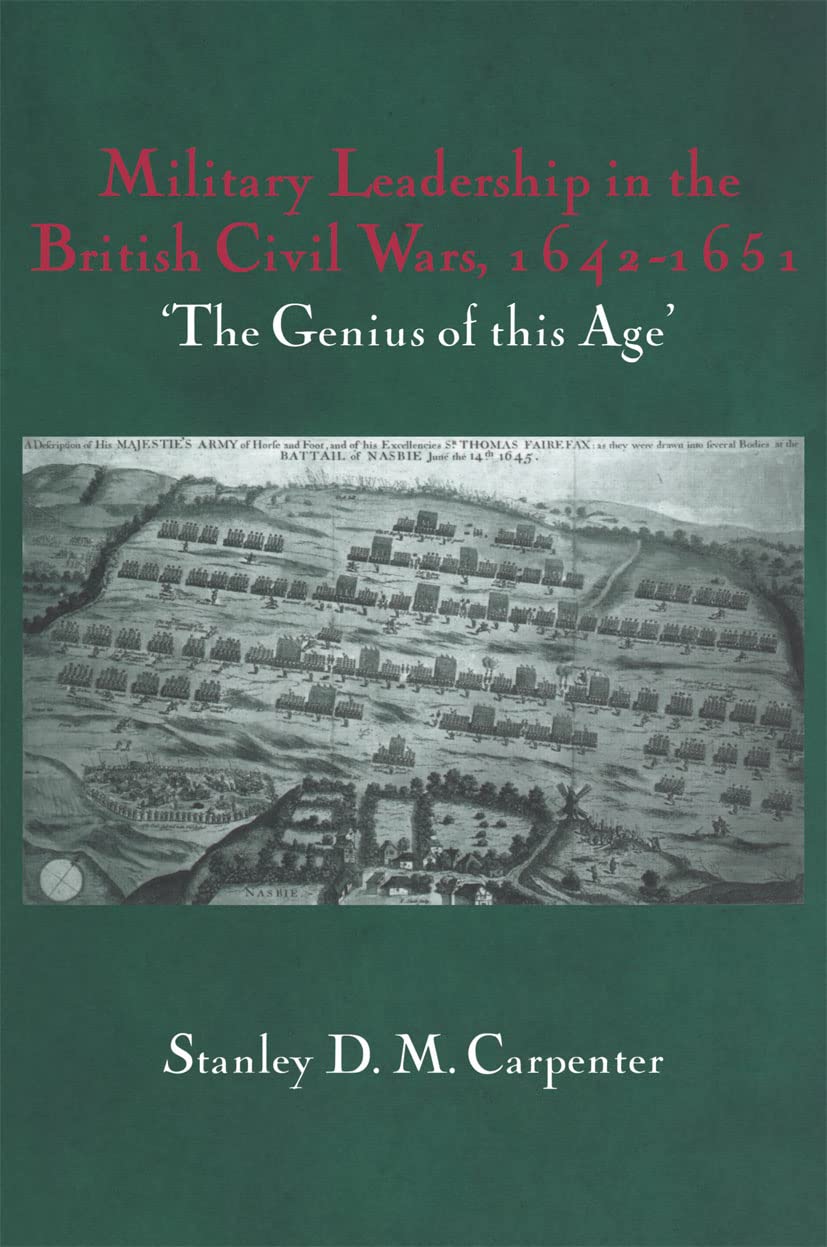
In this review of Military Leadership in the British Civil Wars, 1642-1651: 'The Genius of this Age' the reviewer finds a focused, argument-driven study aimed at readers interested in how command quality shaped the parliamentary victory. Stanley D.M. Carpenter reframes familiar political and social explanations by insisting military leadership deserves central attention, offering a concise operational narrative of northern England and Scotland that will change how military history readers think about outcomes of the wars.
Key Features
- Argument-driven focus: The book foregrounds the role of effective military leadership as the decisive factor behind parliamentary success, helping readers reassess standard explanations.
- Concise strategic narrative: Carpenter provides a clear operational overview of campaigns in northern England and Scotland that orients readers to the sequence of events and command decisions.
- Thematic clarity: The work compares leadership effectiveness to guidance systems, making the concept accessible to readers new to military theory.
- Scope concentrated on 1642-1651: By limiting the study to the British Civil Wars period, the book delivers focused analysis without extensive digressions into unrelated eras.
- Accessible to general readers: The prose and structure aim at a general military history audience rather than only academic specialists, easing comprehension of operational matters.
- Reassessment of outcomes: The study challenges readers to incorporate leadership quality into explanations of war results, broadening interpretive frameworks.
Who It's For
Military history readers and students seeking a targeted analysis of command effectiveness will find this book valuable, particularly those interested in how strategic and operational leadership influenced the parliamentary victory. Readers who appreciate concise, argument-led works that connect human agency to campaign outcomes will gain new perspectives from Carpenter's approach.
Those looking for a full social, economic, or religious history of the period should look elsewhere; this is not a broad survey of causes but a study that intentionally centers on leadership and operational narrative rather than exhaustive background detail.
Pros & Cons
Pros
- Clear argument that elevates military leadership as a primary explanatory factor for parliamentary success.
- Concise operational narrative of northern England and Scotland that clarifies campaign sequences and command choices.
- Accessible writing that bridges military theory and general historical readership.
Cons
- The narrow focus on leadership means readers seeking wider social or economic context may find the scope limited.
Specifications
| Title | Military Leadership in the British Civil Wars, 1642-1651 |
| Subtitle/Series | 'The Genius of this Age' (Cass Military Studies) |
| Author | Stanley D.M. Carpenter |
| Geographic focus | Northern England and Scotland |
| Chronological focus | 1642-1651 |
| Audience | General military history readers |
Our Verdict
Carpenter's study is a concise, persuasive examination of how effective command shaped the parliamentary victory and is recommended for military history readers who want a focused operational account. It offers good value to those seeking to reframe causal explanations of the wars by placing leadership firmly at the centre of analysis.
Frequently Asked Questions
Does this book cover both England and Scotland?
Yes, the narrative concentrates on northern England and Scotland during the 1642-1651 conflicts.
Is this a general survey of the British Civil Wars?
No, it is a focused study on military leadership and operational narrative rather than a broad social or economic survey.
Who will benefit most from this book?
Readers interested in military command, strategy and the operational reasons behind parliamentary victory will gain the most from this work.
Editor's Take
Carpenter offers a concise, persuasive study arguing that effective military leadership was decisive in the parliamentary victory; recommended for military history readers who want a focused operational account.

Recently viewed
Recently viewed products will appear here as customers browse the store.