

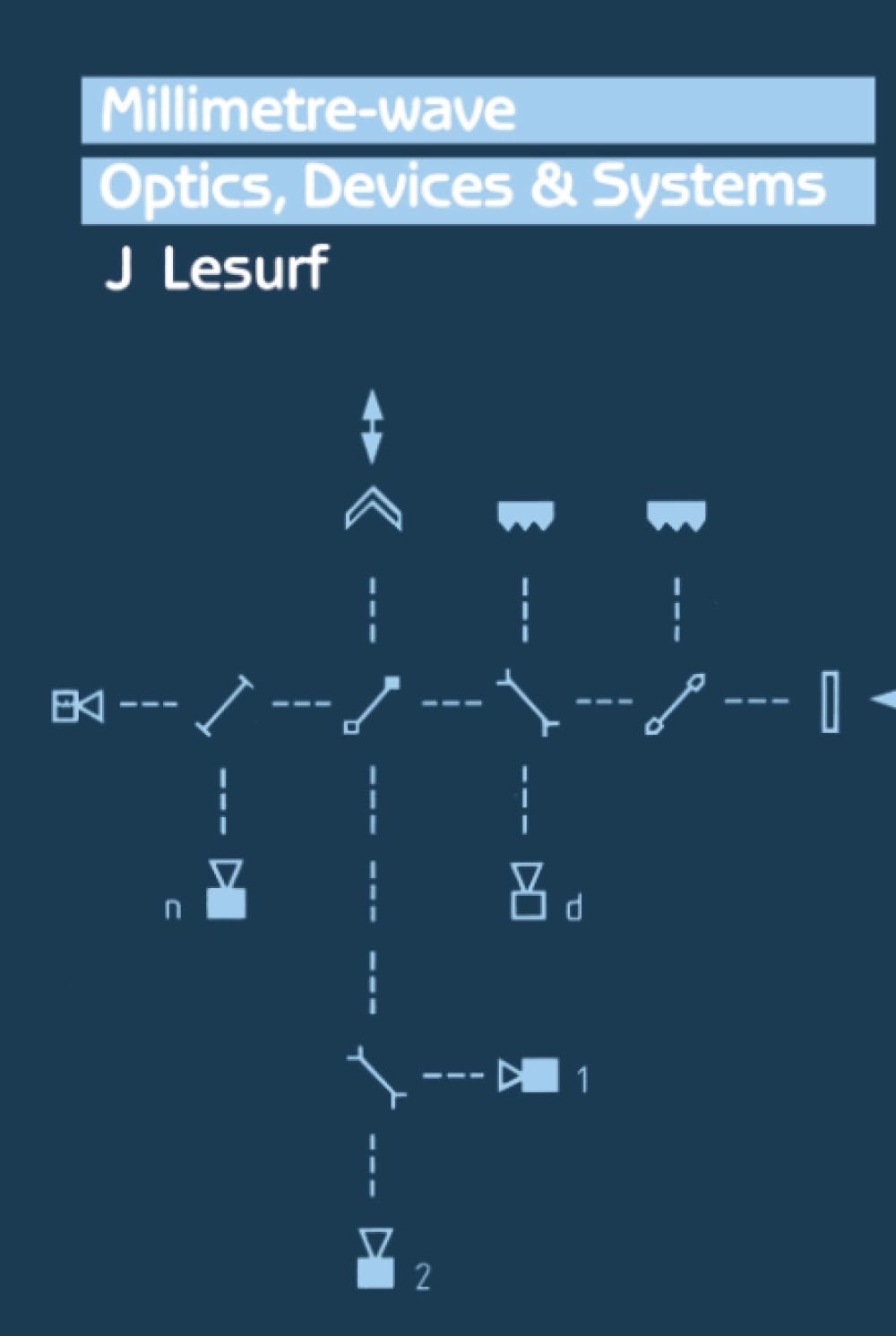
Millimetre-Wave Optics, Devices and Systems - Advanced Text
Millimetre-Wave Optics, Devices and Systems - Advanced Text
Price subject to change. Tap below for current.
Couldn't load pickup availability
Our review of Millimetre-Wave Optics, Devices and Systems finds it to be a focused, academically rigorous text aimed at advanced undergraduates and postgraduates who need a unified treatment of quasi-optical techniques. The book's single biggest reason to buy is its clear synthesis of ideas from Gaussian beam mode theory, antenna theory and transmission line theory so readers can see the common principles linking optics and electronics. This review explains who benefits most and what the book delivers in terms of conceptual depth and applicability.
Key Features
- Unified theoretical approach: Brings together Gaussian beam mode theory and antenna theory to show the underlying unity between optics and electronics, helping readers form a coherent conceptual framework.
- Focus on quasi-optical techniques: Describes the fundamental physics of quasi-optical methods used in instruments that process millimetre-wave signals, making practical design ideas accessible.
- Systems perspective: Covers devices and system design so readers can move from component-level understanding to the needs of complete millimetre-wave instruments.
- Targeted academic level: Written for advanced undergraduates and postgraduates, the text assumes mathematical maturity and builds on prior coursework in electromagnetics and optics.
- Cross-disciplinary relevance: Useful for engineers working at the interface of microwave and infrared techniques who need methods drawn from both fields.
Who It's For
Millimetre-Wave Optics, Devices and Systems is best for graduate students, research engineers and academic instructors seeking a compact, theory-driven resource that links Gaussian beam concepts with antenna and transmission line theory. It is particularly well suited to those working on instrumentation, sensing or communication systems operating in the millimetre-wavelength region.
Those who should look elsewhere include beginners with little background in electromagnetics or readers who want a catalog of commercial products and step-by-step lab exercises; the book prioritizes fundamental physics and system-level ideas over introductory tutorials or vendor-specific guidance.
Pros & Cons
Pros
- Clear synthesis of optics and electronics that helps readers understand common principles across domains.
- Concentrated discussion of quasi-optical techniques relevant to millimetre-wave instrumentation.
- Appropriate depth for advanced undergraduates and postgraduate study, making it suitable for coursework or research reference.
- Emphasis on both devices and systems supports practical system design thinking, not just isolated theory.
Cons
- Not intended as an introductory textbook; readers without prior electromagnetics may find the material challenging.
Specifications
| Title | Millimetre-Wave Optics, Devices and Systems |
| Author | J.C.G Lesurf |
| Subject focus | Quasi-optical techniques and millimetre-wave system design |
| Intended audience | Advanced undergraduates and postgraduates |
| Coverage | Gaussian beam theory, antenna and transmission line theory, devices and systems |
| Application areas | Commercial, industrial and military millimetre-wave instruments |
Our Verdict
For readers with an appropriate technical background, this book is a compact, well-focused resource that successfully unifies concepts from optics and electronics for millimetre-wave work. It represents good value as a reference for coursework and research because it prioritizes fundamental physics and system design over introductory material, making it especially useful to graduate students and practicing engineers moving between microwave and infrared methods.
Frequently Asked Questions
Is this book suitable for beginners?
The book is aimed at advanced undergraduates and postgraduates and assumes prior knowledge of electromagnetics, so beginners may find it difficult.
Does it cover practical system design?
Yes, it addresses devices and system design for instruments processing millimetre-wave signals, linking theory to system-level considerations.
What theoretical topics are emphasized?
Gaussian beam mode theory, antenna theory and transmission line theory are brought together to show the unity of optics and electronics in the millimetre-wave region.
Editor's Take
For readers with relevant background, this compact text unifies Gaussian beam, antenna and transmission line theory and is a valuable reference for graduate study and system design in the millimetre-wave region.

Recently viewed
Recently viewed products will appear here as customers browse the store.