

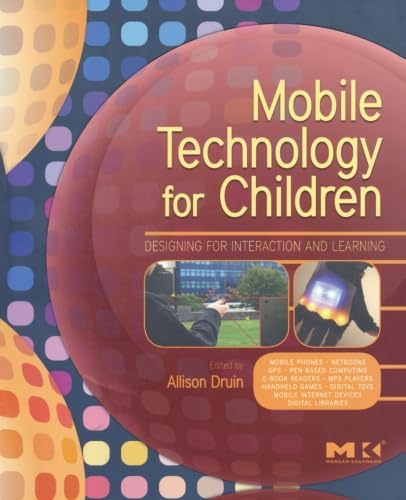
Mobile Technology for Children: Designing for Interaction and Learning
Mobile Technology for Children: Designing for Interaction and Learning
Price subject to change. Tap below for current.
Couldn't load pickup availability
In this review of Mobile Technology for Children: Designing for Interaction and Learning the bottom line is clear: this edited volume is for researchers, designers, educators, and policy makers who need a thoughtful, multidisciplinary look at how mobile devices affect children's learning. The book gathers international contributors and emphasizes design processes, evaluation, and real-world impact rather than gadget specs, making it a useful resource for anyone who wants practical, research-informed guidance on creating mobile experiences that support children.
Key Features
- Multidisciplinary contributions: Chapters from academics, industry designers, and policy makers provide a range of perspectives useful for understanding design tradeoffs.
- Design-focused content: Practical discussion of interaction and interface decisions helps designers apply research findings to real products for children.
- Global viewpoints: Contributors from nine countries bring varied cultural and educational contexts to the discussion of mobile learning.
- Learning and evaluation emphasis: The book examines how mobile devices are evaluated in educational settings, assisting educators in assessing impact.
- Policy and practice links: Chapters that bridge policy considerations and design choices help inform responsible development of child-focused technology.
- Edited collection format: Multiple voices offer concrete examples and case studies rather than a single theoretical stance, broadening applicability.
Who It's For
This book is aimed at HCI researchers, interaction designers, educational technologists, and graduate students who need a rigorous, practice-oriented look at how mobile devices support learning for children. It is especially valuable for those who design apps, toys, or curricula and want to ground choices in documented studies and cross-national experience.
Those seeking a step-by-step programming tutorial, appliance-level device specs, or a single-author manifesto on child development should look elsewhere; the book's strength lies in its edited, multi-author format and in guiding design and evaluation rather than offering code samples or hardware blueprints.
Pros & Cons
Pros
- Wide range of expert viewpoints gives a rounded understanding of design and impact for child-centered mobile technology.
- Practical chapters on evaluation methods help educators and researchers assess learning outcomes.
- Global contributor base highlights cultural differences and broadens relevance beyond a single market.
Cons
- As an edited volume, depth varies by chapter, so readers seeking uniform detail in every topic may find inconsistency.
Specifications
| Title | Mobile Technology for Children: Designing for Interaction and Learning |
| Series | Morgan Kaufmann Series in Interactive Technologies |
| Editor / Author | Allison Druin |
| Content focus | Design, interaction, learning, evaluation, and policy for children's mobile devices |
| Contributor scope | Contributors from nine countries across academia, industry, and non-profits |
| Primary audience | Designers, researchers, educators, and policy makers |
Our Verdict
Mobile Technology for Children is a valuable, practice-oriented compilation for professionals who design or study mobile learning for children; its multidisciplinary chapters and emphasis on evaluation make it good value for those seeking research-informed guidance even if chapter depth varies. Recommended for teams and students who need context and methods to guide responsible design.
Frequently Asked Questions
Does this book focus on hardware or software?
It focuses on interaction design, evaluation, and learning impact rather than device hardware specifications.
Who contributed to the book?
Chapters are written by academics, industry designers, and policy makers from nine countries, offering multiple perspectives.
Is this suitable for classroom teachers?
Yes; educators interested in assessing mobile learning and applying design principles will find applicable evaluation methods and case studies.
Editor's Take
This edited volume is a practical, research-informed resource for designers, researchers, and educators focused on mobile learning for children; its multidisciplinary chapters and evaluation emphasis make it a worthwhile guide despite variable chapter depth.

Recently viewed
Recently viewed products will appear here as customers browse the store.