

More Statistical and Methodological Myths and Urban Legends - Guide
More Statistical and Methodological Myths and Urban Legends - Guide
Price subject to change. Tap below for current.
Couldn't load pickup availability
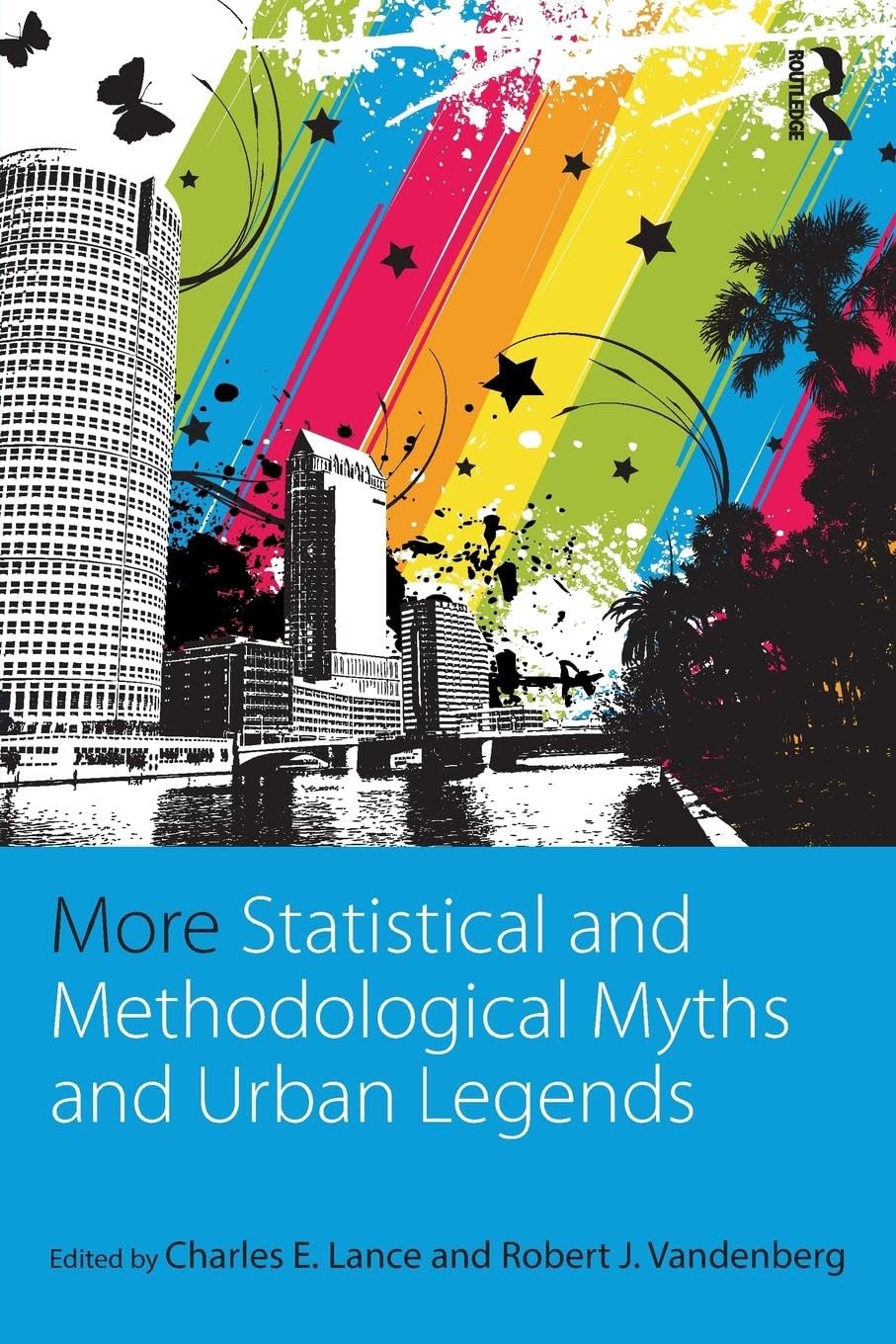
In this review of More Statistical and Methodological Myths and Urban Legends the bottom line is clear: this book is for researchers, graduate students, and applied statisticians who want a rigorous debunking of common methodological criticisms and a practical guide to better practices. Charles E. Lance takes a scholarly but readable approach to cataloging persistent myths such as claims about common method bias, low item-to-subject ratios, limited generalizability, and small effect sizes, and explains their historical basis and correct interpretation.
Key Features
- Myth analysis: Each chapter examines a widely cited methodological critique and explains what the critique actually implies for study design and interpretation.
- Historical context: Readers gain insight into how certain critiques became part of research lore and how that history affects current practice.
- Practical guidance: The book outlines proper research techniques that help avoid common mistakes and misinterpretations when designing studies and reporting results.
- Focused topics: Coverage includes sample size requirements, missing data bias in correlation matrices, and item-to-subject ratio concerns to aid applied decision making.
- Accessible tone: The writing balances technical explanation with criticism that is approachable for advanced students and practicing researchers.
Who It's For
This book is best suited to graduate students in psychology, education, and social sciences, as well as applied statisticians and researchers who regularly face reviewer critiques about methodology. It is particularly useful for those who need to defend or improve their study design and reporting against familiar but sometimes-misapplied standards.
Those looking for a beginner's introduction to statistics or a comprehensive textbook on statistical methods should look elsewhere; this title assumes some prior familiarity with research design and statistical concepts and is oriented toward correcting misconceptions rather than teaching fundamentals.
Pros & Cons
Pros
- Clear explanations of why certain critiques like common method bias or low item-to-subject ratios are misapplied in many reviews.
- Provides historical perspective that helps readers understand the origin of methodological lore.
- Offers concrete guidance on proper research techniques that improve study design and reporting.
Cons
- Not a primer: readers without basic statistical background may find some chapters assume prior knowledge.
Specifications
| Title | More Statistical and Methodological Myths and Urban Legends |
| Author | Charles E. Lance |
| Subject area | Statistics and Research Methodology |
| Topics covered | Sample size, missing data bias in correlation matrices, item-to-subject ratios, generalizability, effect size interpretation |
| Intended audience | Researchers, graduate students, applied statisticians |
| Focus | Debunking methodological myths and outlining proper techniques |
Our Verdict
More Statistical and Methodological Myths and Urban Legends is a valuable corrective for anyone who faces routine methodological critiques in peer review or grant work; it provides useful context and actionable advice without pretending to be a basic statistics textbook. For researchers who already know the fundamentals, this book is good value because it helps sharpen defenses and improve study design where misconceptions otherwise persist.
Frequently Asked Questions
Does this book explain how to handle missing data?
Yes. The book addresses missing data bias specifically in correlation matrices and discusses implications for analysis and interpretation.
Is this suitable for beginners in statistics?
Not really; the text assumes a working knowledge of research design and statistical concepts and is aimed at correcting misconceptions rather than teaching basics.
Will it help with responding to peer review critiques?
Yes. A central purpose is to catalog common methodological critiques and provide historical and practical responses useful in reviewer rebuttals and methodological revisions.
Editor's Take
This book is a practical corrective for researchers facing common methodological critiques; it explains the history and correct interpretation of claims like common method bias and offers actionable guidance for better research practice.

Recently viewed
Recently viewed products will appear here as customers browse the store.