

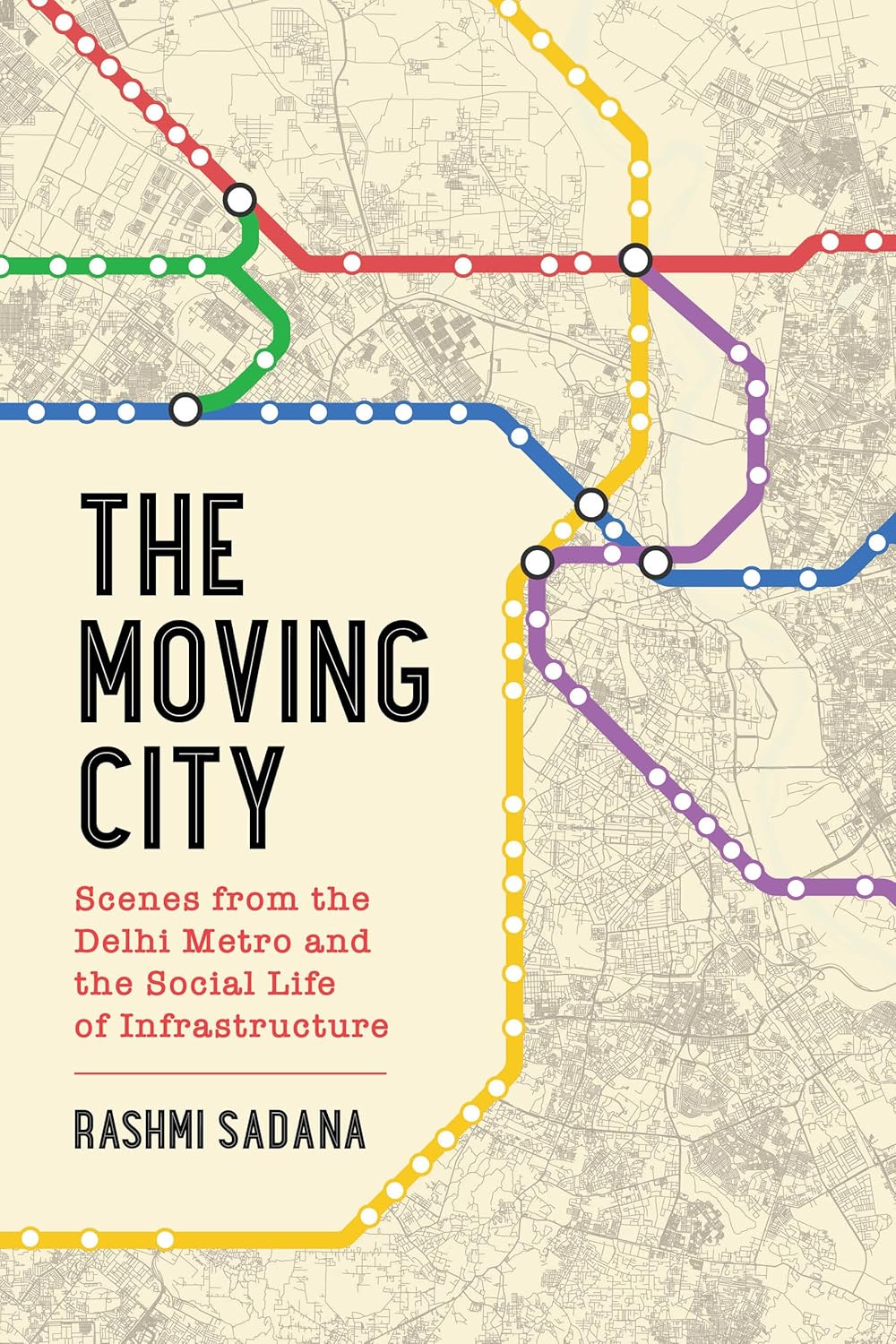
Moving City: Scenes from the Delhi Metro and the Social Life
Moving City: Scenes from the Delhi Metro and the Social Life
Price subject to change. Tap below for current.
Couldn't load pickup availability
In this review of Moving City by Rashmi Sadana the reviewer finds a thoughtful, narrative-driven study best suited to readers who want an intimate, human-centered account of urban change. The book's single biggest reason to buy is its ethnographic approach: Sadana follows people through the Delhi Metro to reveal how a large infrastructure project reshapes everyday life, aspiration, and inequality in ways that conventional policy reports rarely capture. This is a review for readers interested in urban studies, social anthropology, and contemporary India rather than a technical manual on engineering.
Key Features
- Ethnographic storytelling: The book uses vignettes and close observation to let readers experience the Metro stop by stop, bringing social detail and human voices into focus.
- Urban transformation lens: It situates the Metro as a driver of citywide change and shows how infrastructure interacts with housing, labor, and mobility.
- Focus on inequality: Sadana lays bare how the Metro both enables mobility and concretizes social differences, offering a balanced, critical perspective.
- Attention to gendered experiences: The narrative highlights how women and men navigate the built environment differently and how that shapes daily urban life.
- Accessible prose: The writing is vivid and transportive, helping readers unfamiliar with Delhi visualize scenes and social rhythms.
Who It's For
This book will appeal to students and readers of urban studies, anthropology, and South Asian social sciences who want a qualitative, narrative account of infrastructure in everyday life. It is also useful to policy-minded readers who seek the human impacts of projects often discussed only in technical or economic terms.
Readers looking for a technical history of Metro engineering, construction blueprints, or a strictly statistical evaluation of costs and ridership should look elsewhere, as the book intentionally foregrounds lived experience and social analysis over engineering detail.
Pros & Cons
Pros
- The vivid ethnographic vignettes create a strong sense of place and personhood across Metro stations.
- It offers a nuanced critique of how infrastructure can both empower and exclude, useful for classroom discussion.
- The prose is engaging and accessible, making complex social themes readable for a general audience.
Cons
- The focus on lived experience means readers seeking technical or quantitative data on the Metro will find limited coverage.
Specifications
| Title | Moving City: Scenes from the Delhi Metro and the Social Life of Infrastructure |
| Author | Rashmi Sadana |
| Subject areas | Urban studies; Social sciences; Cultural & Ethnic Studies |
| Primary approach | Ethnographic vignettes and social analysis |
| Geographic focus | Delhi, India |
| Key themes | Infrastructure, mobility, inequality, gender, urban life |
Our Verdict
Moving City is a valuable purchase for readers who want a humane, observant account of how a major transit project reshapes city life. Its strength is in narrative ethnography that converts stations and commutes into scenes of social meaning, making it good value for students and engaged readers seeking insight into the social life of infrastructure.
Frequently Asked Questions
Does the book focus on technical Metro details?
No; the emphasis is ethnographic observation and social analysis rather than engineering or construction specifics.
Is this suitable for classroom use?
Yes; the book works well for courses in urban studies, anthropology, and South Asian studies as a case study of infrastructure and everyday life.
Who is the author?
Rashmi Sadana is the author who situates personal stories and scenes within broader discussions of urban change.
Editor's Take
Moving City is a humane, narrative-driven study that uses ethnographic vignettes to reveal how the Delhi Metro reshapes mobility, gendered experience, and urban inequality, making it a strong choice for students and readers of urban studies.

Recently viewed
Recently viewed products will appear here as customers browse the store.