

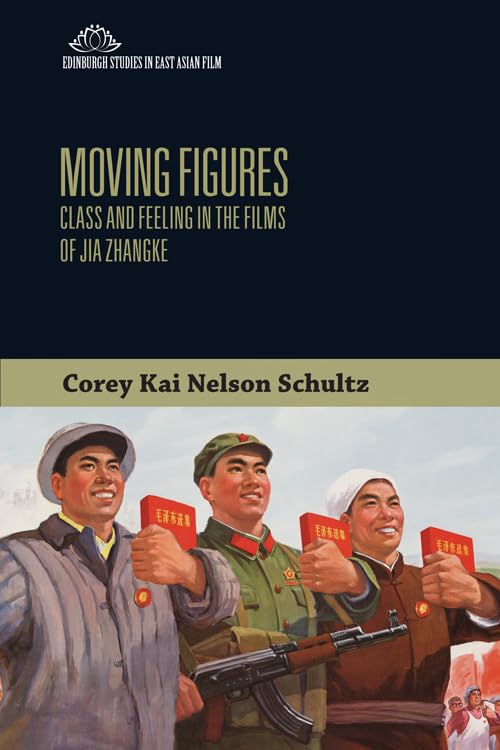
Moving Figures: Class and Feeling in the Films of Jia Zhangke
Moving Figures: Class and Feeling in the Films of Jia Zhangke
Price subject to change. Tap below for current.
Couldn't load pickup availability
In this review of Moving Figures: Class and Feeling in the Films of Jia Zhangke, the reviewer argues this book is essential for film scholars and advanced students interested in contemporary Chinese cinema. The single biggest reason to buy is its focused analysis of how Jia Zhangke's films construct archetypal social figures and evoke emotional responses tied to China's Reform Era. The book reads as a sustained, readable intervention that links representation, cinematography and the affective experience of class in a way that rewards careful study rather than casual browsing.
Key Features
- Focused thematic analysis: The text traces the archetypal figures of worker, peasant, soldier, intellectual and entrepreneur, clarifying how these roles organize Jia Zhangke's narratives and social critique.
- Historical framing: The book situates Jia's films in the context of China's Reform Era and the shift from state-run economics to market capitalism, which helps readers understand the films' social backdrop.
- Cinematographic reading: The author analyses how Jia's camerawork and visual choices create structures of feeling that make social change felt as much as told.
- Affective approach: By emphasizing audience emotion and affect, the book moves beyond plot summaries to explain why Jia's cinema resonates across different social locations.
- Scholarly yet accessible prose: The book balances academic rigor with clear argumentation, making it usable for seminars and advanced individual study.
Who It's For
This book is aimed primarily at film studies scholars, graduate students, and researchers focusing on Chinese cinema or on theories of class and affect in film. Readers seeking close readings of Jia Zhangke's films and an argument-driven examination of how cinematic techniques produce social feeling will find the book particularly valuable.
Those looking for a general history of Chinese film, a comprehensive biography of Jia Zhangke, or a beginner's introduction to film theory may want a more generalist text first; Moving Figures assumes some prior familiarity with Jia's major works and with basic film-critical terminology.
Pros & Cons
Pros
- Provides a tight, concept-driven account of class figures that clarifies recurring character types across Jia's films.
- Connects formal cinematography to emotional and social effects, offering a useful model for affective film analysis.
- Places films in the Reform Era context, giving readers a clear political and economic frame for interpretation.
Cons
- The specialized focus and assumed background may be challenging for casual readers or newcomers to Jia Zhangke's work.
Specifications
| Title | Moving Figures: Class and Feeling in the Films of Jia Zhangke |
| Series | Edinburgh Studies in East Asian Film |
| Author / Editor | Corey Kai Nelson Schultz |
| Primary focus | Class figures and affect in Jia Zhangke's films |
| Historical scope | China's Reform Era from 1979 onward |
| Approach | Cinematography, representation and structures of feeling |
Our Verdict
Moving Figures is a focused, well-argued study that will repay close reading by scholars and advanced students of Chinese cinema. Its strength is the clear linkage of character archetypes, cinematic technique and the affective experience of social transition, making it a good value for those studying Jia Zhangke or film and class more broadly.
Frequently Asked Questions
Does this book require prior knowledge of Jia Zhangke's films?
Some familiarity is helpful; the book engages with specific films and assumes readers know key works.
Is the book theoretical or descriptive?
The book blends theoretical analysis with descriptive close readings, emphasizing affect and cinematography alongside representation.
Is this suitable for undergraduate courses?
It is best for upper-level undergraduates or graduate seminars where students have prior background in film studies.
Editor's Take
Moving Figures is a focused, well-argued study linking character archetypes, cinematography and the affective experience of China's Reform Era, recommended for scholars and advanced students of Chinese cinema.

Recently viewed
Recently viewed products will appear here as customers browse the store.