

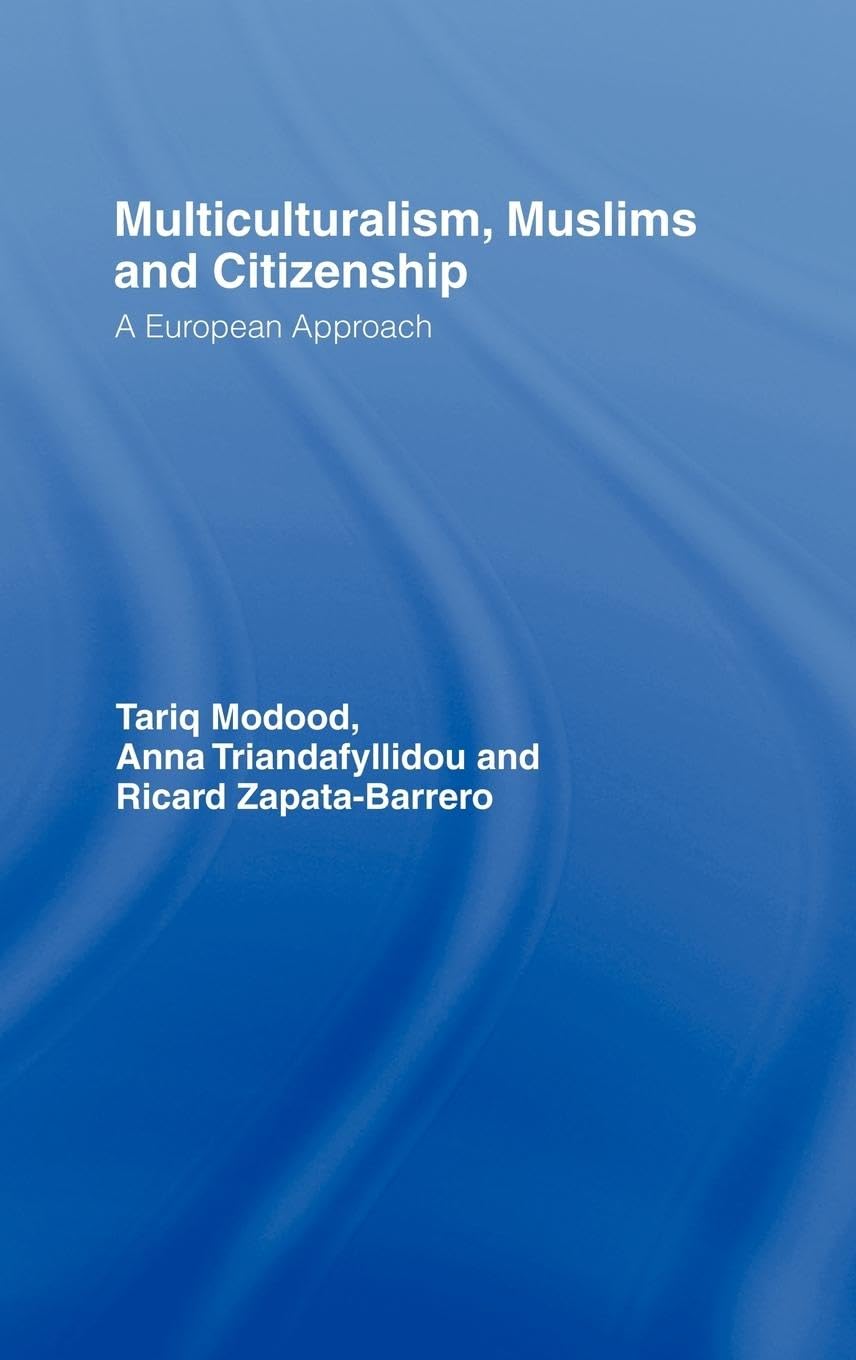
Multiculturalism, Muslims and Citizenship: A European Approach
Multiculturalism, Muslims and Citizenship: A European Approach
Price subject to change. Tap below for current.
Couldn't load pickup availability
In this review of Multiculturalism, Muslims and Citizenship: A European Approach, the book is presented as an essential resource for scholars and policy analysts seeking a comparative, Europe-centered account of multiculturalism and citizenship. The collection's single biggest reason to read is its argument that prevailing political theory and EU policy are often shaped by an American liberalism that does not fit Europe's distinct history of immigration, ethnic diversity and religious pluralism. This review highlights how the volume brings together national case studies and a theoretical framework to reassess citizenship in Western Europe.
Key Features
- European perspective: The book foregrounds a Europe-specific critique of multiculturalism that helps readers understand why American-derived theories may misread European realities.
- Theoretical framework: Contributors jointly develop a theoretical foundation that ties comparative case studies to wider debates about liberalism and citizenship.
- Comparative national studies: The volume includes multiple country-focused chapters that let readers compare policy responses and social dynamics across Western Europe.
- Focus on religion and ethnicity: It highlights how non-white, ethnic and religious groups, particularly Muslim communities, challenge existing notions of citizenship in Europe.
- Diverse authorship: Leading scholars contribute complementary perspectives that broaden the book's intellectual range and empirical grounding.
Who It's For
This book is best suited to academics, graduate students and policy researchers in political theory, social sciences and cultural studies who need a rigorous, Europe-focused critique of multiculturalism. It is especially useful for readers investigating immigration, citizenship law and the political integration of Muslim communities.
Readers looking for an introductory or popular overview of immigration politics may find the collection dense; those seeking prescriptive how-to policy manuals rather than comparative theoretical analysis should look elsewhere.
Pros & Cons
Pros
- Provides a focused European analysis that corrects assumptions based on American experiences.
- Offers a coherent theoretical framework linking national case studies to broader debates.
- The comparative chapters give concrete examples of how religion and ethnicity affect notions of citizenship across countries.
Cons
- The book's scholarly tone and depth make it less accessible for casual readers seeking a brief overview.
Specifications
| Title | Multiculturalism, Muslims and Citizenship: A European Approach |
| Editors/Authors | Tariq Modood, Ricard Zapate-Barrero, Anna Triandafyllidou |
| Subject | Multiculturalism, immigration, citizenship in Europe |
| Approach | Comparative national case studies with theoretical analysis |
| Focus groups | Muslim, ethnic and religious minorities in Western Europe |
| Intended audience | Scholars, policy researchers, advanced students |
Our Verdict
Multiculturalism, Muslims and Citizenship offers a valuable, Europe-centered reassessment of liberal theory and citizenship that is well worth buying for researchers and students focused on migration and ethnic studies. Its comparative framework and attention to religious and ethnic challenges make it particularly helpful for understanding contemporary policy debates, and it represents good intellectual value for readers seeking depth rather than a quick primer.
Frequently Asked Questions
Does this book include case studies from multiple European countries?
Yes. The collection assembles comparative national case studies that illustrate differing European responses to multiculturalism and immigration.
Is the book suitable for undergraduate courses?
It can be used in advanced undergraduate or graduate courses, though some chapters assume familiarity with political theory and migration studies.
Does it offer policy recommendations?
While rooted in theoretical critique and empirical cases, the volume primarily reassesses frameworks rather than presenting a simple policy manual.
Editor's Take
This Europe-focused collection reassesses multiculturalism and citizenship with comparative national studies and a coherent theoretical framework, making it valuable for researchers and advanced students interested in migration, religion and policy.

Recently viewed
Recently viewed products will appear here as customers browse the store.