

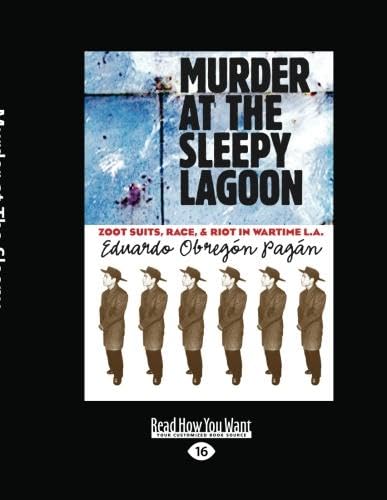
Murder At The Sleepy Lagoon: Zoot Suits, Race, And Riot In Wartime L.A
Murder At The Sleepy Lagoon: Zoot Suits, Race, And Riot In Wartime L.A
Price subject to change. Tap below for current.
Couldn't load pickup availability
In this review of Murder At The Sleepy Lagoon, Eduardo Obregon Pagan delivers a thorough social history aimed at readers who want context beyond headlines. The book is best for anyone studying 20th century American race relations or California history; its chief value is reconstructing the 1942 trial and the subsequent Zoot Suit Riot with attention to social tensions and local lives rather than sensational myth. Pagan argues persuasively that the convictions and riot grew from entrenched racial and class pressures, and the narrative approach makes those forces clear without sacrificing careful archival research.
Key Features
- Comprehensive social history: The book traces both the Sleepy Lagoon murder trial and the Zoot Suit Riot together to show how legal outcomes and street violence were tied to broader social tensions.
- Case reconstruction: Pagan reconstructs the lives of the murder victim and the accused to provide human context that clarifies why the trial unfolded as it did.
- Argument-driven narrative: The author contends the convictions were based on limited evidence and situates those convictions within patterns of race and class conflict, offering readers a clear interpretive lens.
- Local focus: The book centers on wartime Los Angeles to reveal how military presence, policing, and community relations combined to spark the riot five months after the trial.
- Accessible to non-specialists: Pagan writes for both scholars and interested general readers, making complex social history understandable without oversimplifying the issues.
Who It's For
Readers interested in American race relations, California or Los Angeles history, and legal history will find this book especially useful; it provides documentary context and narrative clarity for the Sleepy Lagoon case and the Zoot Suit Riot. Graduate students, local historians, and instructors seeking a readable case study of wartime social tensions will also appreciate the book's sourcing and argument.
Those looking for a short overview or a lightweight narrative textbook may want something briefer, since Pagan's approach is detailed and analytic rather than a quick magazine-style retelling. Fiction readers seeking dramatized accounts should look elsewhere; this is historical interpretation and social reconstruction.
Pros & Cons
Pros
- Deep archival research supports a clear interpretation of how racial and social tensions produced legal and street violence.
- The paired treatment of the trial and the riot helps readers see causation and context rather than isolated events.
- Readable prose makes complex social history accessible to non-specialists.
Cons
- The book's detailed, analytic focus means it is longer and denser than a brief popular summary; casual readers may find the pace deliberate.
Specifications
| Title | Murder At The Sleepy Lagoon: Zoot Suits, Race, And Riot In Wartime L.A. |
| Author | Eduardo Obregon Pagan |
| Subject | Sleepy Lagoon murder trial and 1943 Zoot Suit Riot |
| Focus | Social history of wartime Los Angeles |
| Approach | Reconstruction of lives, archival research, interpretive argument |
| Primary themes | Race, class, law, wartime social tensions |
Our Verdict
Eduardo Obregon Pagan's book is a well-researched and persuasive account that connects a controversial trial and a violent riot to deeper patterns of racial and social conflict in wartime Los Angeles. Serious readers of history of the Americas or local California history will find it worth the investment for its documentation and interpretive clarity.
Frequently Asked Questions
Does this book cover both the trial and the riot?
Yes. Pagan provides the first comprehensive social history that links the Sleepy Lagoon trial with the subsequent Zoot Suit Riot.
Is this suitable for academic use?
Yes. The book's archival research and interpretive argument make it appropriate for courses on race, legal history, or California history.
Is the book a quick read?
No. The treatment is detailed and analytic, so readers seeking a brief overview may find it more dense than a short popular account.
Editor's Take
Eduardo Obregon Pagan offers a well-researched social history linking the Sleepy Lagoon trial and the Zoot Suit Riot; serious readers of California and American race history will find it valuable for its documentation and interpretive clarity.

Recently viewed
Recently viewed products will appear here as customers browse the store.