

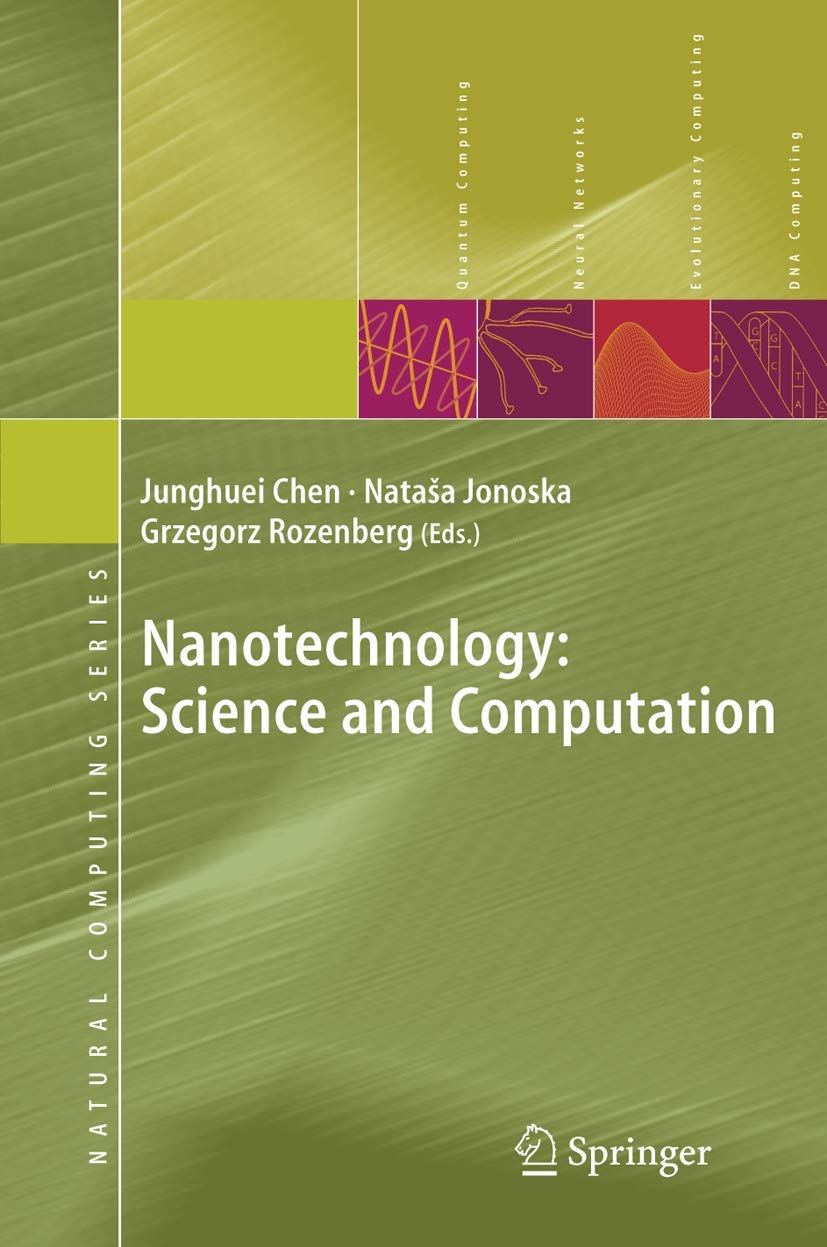
Nanotechnology: Science and Computation - Authoritative Nanoscale
Nanotechnology: Science and Computation - Authoritative Nanoscale
Price subject to change. Tap below for current.
Couldn't load pickup availability
In this review of Nanotechnology: Science and Computation the book is presented as a focused, academic resource for researchers and advanced students working at the intersection of molecular design and computation. The single biggest reason to buy is its authoritative perspective: contributions from leading researchers consolidate current work on DNA self-assembly, molecular motors, molecular electronics and related topics into a single volume that is useful for planning experiments or deepening theoretical understanding. Readers should expect a dense, research-oriented text rather than a casual introduction.
Key Features
- Comprehensive coverage: Chapters survey DNA self-assembly, three-dimensional structures and surface layer protein assembly to give a broad view of nanoscale design approaches.
- Interdisciplinary focus: The book links concepts from molecular biology, materials science and computation to help readers apply computational ideas to physical nanosystems.
- Molecular computing topics: Discussions of gene assembly and membrane computing provide theoretical frameworks useful for algorithmic modeling of biomolecular processes.
- Practical research relevance: Sections on molecular motors and molecular electronics connect laboratory phenomena to potential device applications for experimental planning.
- Expert contributors: The anthology format gathers perspectives from leading researchers, making the work a reliable snapshot of active research directions.
Who It's For
The book is best suited for graduate students, postdocs and professionals in nanoscience, bioengineering and theoretical computer science who need an authoritative reference on molecular self-assembly and computation. It is ideal for readers planning research projects or literature reviews who require detailed, research-level discussion rather than introductory material.
Those seeking a beginner-friendly textbook or hands-on experimental protocols should look elsewhere: the volume emphasizes conceptual frameworks and current research results rather than step-by-step lab methods or elementary introductions to molecular biology.
Pros & Cons
Pros
- Broad, research-focused scope that integrates nanoscale engineering with computational theory.
- High-quality, expert-authored chapters that summarize active research areas like DNA self-assembly.
- Useful coverage of both theoretical models and applications such as molecular electronics and motors.
Cons
- The text is dense and assumes prior knowledge, making it less accessible to novices.
Specifications
| Title | Nanotechnology: Science and Computation (Natural Computing Series) |
| Authors / Editors | Junghuei Chen, Natasha Jonoska, Grzegorz Rozenberg |
| Subject areas | DNA self-assembly, molecular electronics, membrane computing |
| Audience | Graduate students, researchers, industry scientists |
| Format | Academic research anthology |
| Focus | Nanoscale science, molecular devices, computational processes of biomolecules |
Our Verdict
Nanotechnology: Science and Computation is a strong value for researchers who need a concise compilation of current work linking molecular design and computation. Its expert chapters and interdisciplinary focus make it a worthwhile addition to a research library, though newcomers should pair it with more introductory texts before tackling the material.
Frequently Asked Questions
Is this book suitable for undergraduate students?
No. The book targets graduate-level readers and researchers and assumes prior knowledge in molecular and computational concepts.
Does it include experimental protocols?
Not as a primary focus. The book emphasizes conceptual and theoretical research rather than step-by-step lab methods.
Which topics are covered in detail?
Detailed topics include DNA self-assembly in 2D and 3D, molecular motors, molecular electronics, gene assembly and membrane computing.
Editor's Take
A strong, research-focused anthology that compiles expert perspectives on DNA self-assembly, molecular electronics and molecular computing; ideal for graduate students and researchers who need an authoritative reference.

Recently viewed
Recently viewed products will appear here as customers browse the store.