

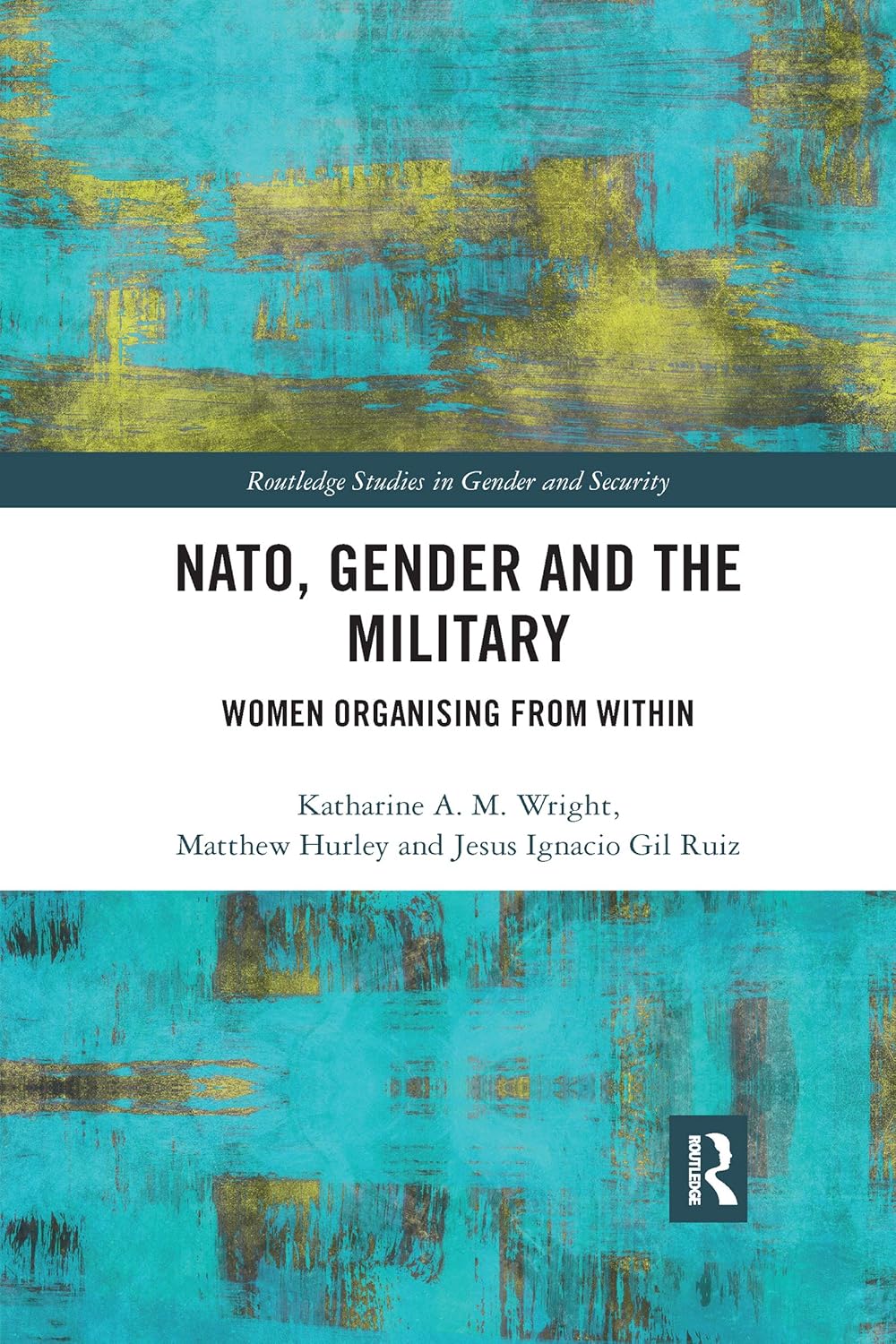
NATO, Gender and the Military - Critical of NATO's Gender Politics
NATO, Gender and the Military - Critical of NATO's Gender Politics
Price subject to change. Tap below for current.
Couldn't load pickup availability
In this review of NATO, Gender and the Military the authors offer a focused account of how NATO has engaged with gender issues over decades, and why that history matters for scholars, policy makers and gender advocates. The book draws on newly declassified NATO documents to trace organising by NATO women and gendermen and argues that NATO functions as an institution of international hegemonic masculinity; this review finds the book best for readers wanting documentary evidence and institutional analysis rather than a general primer on gender theory.
Key Features
- Primary evidence base: Uses newly declassified NATO documents to provide first-hand archival insight into NATO's internal discussions and actions on gender.
- Institutional lens: Frames NATO as an institution of international hegemonic masculinity, helping readers understand how gender norms are reproduced across member states.
- Organising stories: Highlights the efforts of NATO women and gendermen who organised within NATO, offering concrete examples of advocacy inside a resistant institution.
- Historical depth: Presents a long-established engagement with gender issues, tracing continuities and tensions across decades rather than focusing only on recent policy shifts.
- Critical analysis: Examines the masculinist protection logic that shapes NATO policy, useful for critical scholars and students of security studies.
- Interdisciplinary relevance: Connects gender studies and international security, making it valuable for both social scientists and practitioners.
Who It's For
The book is best suited to academics, postgraduate students and policy analysts who want a documentary, institution-focused study of gender in security institutions; it is especially useful for those researching NATO, military sociology or the politics of gendered norms. Readers seeking concrete policy toolkits or how-to guidance for gender mainstreaming operations should look elsewhere, as the book prioritises archival evidence and critical interpretation over prescriptive manuals.
It will also appeal to historians of international organisations and activists who want to understand internal organising in a major defence alliance. Casual readers or those new to gender theory without prior background in security studies may find the tone and depth challenging.
Pros & Cons
Pros
- Provides unique access to newly declassified NATO documents that strengthen its arguments with primary evidence.
- Offers a clear institutional critique by identifying NATO as shaped by hegemonic masculinity, which sharpens understanding of systemic barriers.
- Documents organising efforts by NATO personnel, giving voice to internal advocates and historical agency.
- Bridges gender studies and security studies in a way that supports interdisciplinary research.
Cons
- The book is analytic and documentary rather than prescriptive, so readers looking for practical implementation advice may be disappointed.
- Dense archival detail and specialist framing could be challenging for general audiences unfamiliar with NATO or gender theory.
Specifications
| Title | NATO, Gender and the Military |
| Series | Routledge Studies in Gender and Security |
| Authors / Editors | Katharine Wright, Matthew Hurley, Jesus Ignacio Gil Ruiz |
| Evidence base | Newly declassified NATO documents |
| Thematic focus | Institutional gender norms and hegemonic masculinity in NATO |
| Audience | Academics, policy analysts, gender and security researchers |
Our Verdict
For readers who want a rigorous, document-driven account of how NATO has engaged with gender, this volume is a valuable contribution that combines archival evidence with clear institutional critique; it is good value for scholars and policy analysts seeking depth and primary-source insight, though practitioners wanting step-by-step implementation guidance should complement it with more practice-oriented texts.
Frequently Asked Questions
Does this book use primary source material?
Yes. The study draws on newly declassified NATO documents to build its account of internal debates and organising.
Is the book suitable for practitioners seeking gender mainstreaming guidance?
Not primarily; the emphasis is on archival evidence and critical analysis rather than prescriptive implementation tools.
Who are the editors or main authors?
The volume is associated with Katharine Wright, Matthew Hurley and Jesus Ignacio Gil Ruiz and is part of a Routledge series on gender and security.
Editor's Take
A document-driven, archival study ideal for scholars and policy analysts interested in NATO and gender; it offers rigorous institutional critique and primary-source insight but is not a practical implementation guide.

Recently viewed
Recently viewed products will appear here as customers browse the store.