

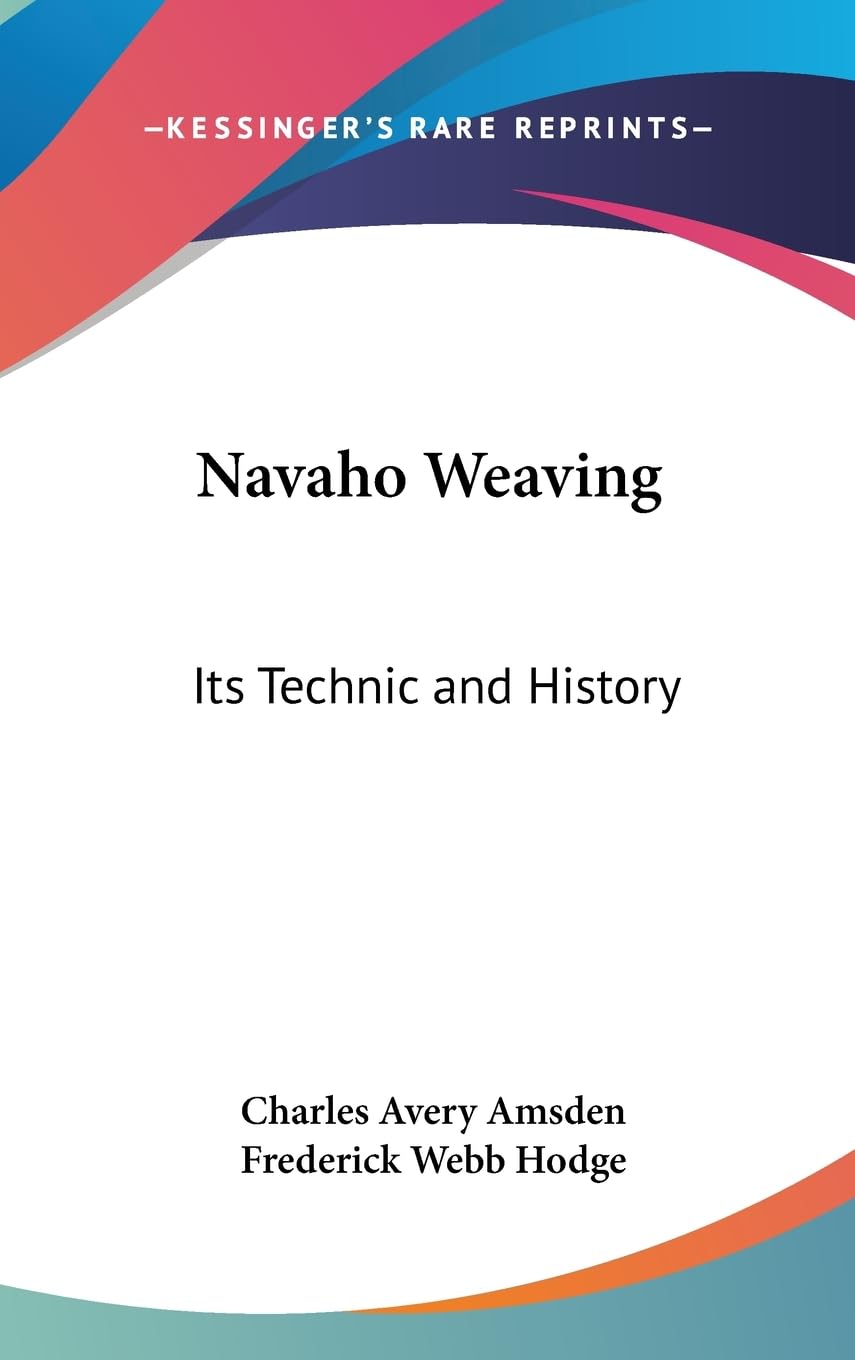
Navaho Weaving: Its Technic and History - Detailed Weaving Guide
Navaho Weaving: Its Technic and History - Detailed Weaving Guide
Price subject to change. Tap below for current.
Couldn't load pickup availability
Our review of Navaho Weaving: Its Technic and History finds it most valuable for students of textile history and practicing weavers who want a historically grounded manual. The book combines a clear historical narrative with diagram-rich technical instruction, making it useful as both a reference and a workshop companion. Readers will appreciate the emphasis on loom setup, warp and weft techniques, and the documented evolution of Navajo rug designs. This review focuses on the practical usefulness of the illustrations and the balance between history and step-by-step weaving guidance.
Key Features
- Historical context: Traces the influence of Spanish settlers and the development of the Navajo rug, helping readers understand cultural and chronological origins.
- Technical instruction: Explains essential weaving elements such as warp and weft and loom use, providing practical direction for handweavers.
- Illustrations and photographs: Numerous images of rugs and weavers clarify pattern layouts and real examples of finished work.
- Diagrams and charts: Visual diagrams and charts break down complex steps into understandable stages for learners.
- Facsimile reprint: A scarce antiquarian facsimile preserves original text and plate layouts for historical accuracy and reference use.
Who It's For
This book is primarily for textile historians, collectors, and intermediate to advanced weavers who want to study traditional Navajo techniques and the historical development of rug patterns. The blend of history and technical detail makes it a suitable classroom or library reference for courses on Native American art or textile crafts.
Beginners who expect a modern, step-by-step beginner workbook with contemporary materials lists may find the older style and facsimile reprint format less accessible; they should look for instructional titles with basic project walkthroughs and updated materials guidance.
Pros & Cons
Pros
- Well-documented historical narrative that situates Navajo weaving in cultural context.
- Detailed technical coverage of warp, weft, and loom that benefits practicing weavers.
- Illustrations, photographs, diagrams, and charts that make complex techniques easier to visualize.
Cons
- The facsimile reprint format can feel dated and may lack modern instructional layout and contemporary materials references.
Specifications
| Title | Navaho Weaving: Its Technic and History |
| Authors | Charles Avery Amsden, Frederick Webb Hodge |
| Content focus | History and technical weaving techniques |
| Illustrations | Photographs, diagrams and charts of rugs and processes |
| Format | Scarce antiquarian facsimile reprint |
| Subjects | Navajo weaving, textile history, loom techniques |
Our Verdict
Navaho Weaving: Its Technic and History is a strong value for readers who want an historically faithful manual with technical depth; it pairs cultural background with usable instruction and visual aids, making it worth acquiring for historians and experienced weavers despite the older facsimile presentation.
Frequently Asked Questions
Does this book include practical weaving instructions?
Yes. It covers warp and weft techniques, loom use, and includes diagrams and charts to guide practical weaving work.
Is this a modern reprint or the original text?
It is a facsimile reprint of the original antiquarian work, preserving original layout and illustrations.
Who will benefit most from this book?
Textile historians, collectors, and intermediate to advanced handweavers seeking historical and technical detail will benefit most.
Editor's Take
Navaho Weaving: Its Technic and History is a historically faithful facsimile that pairs cultural background with detailed technical instruction and useful illustrations, making it a good value for historians and experienced weavers.

Recently viewed
Recently viewed products will appear here as customers browse the store.