

Neurodevelopmental Disorders Research Methods Handbook
Neurodevelopmental Disorders Research Methods Handbook
Price subject to change. Tap below for current.
Couldn't load pickup availability
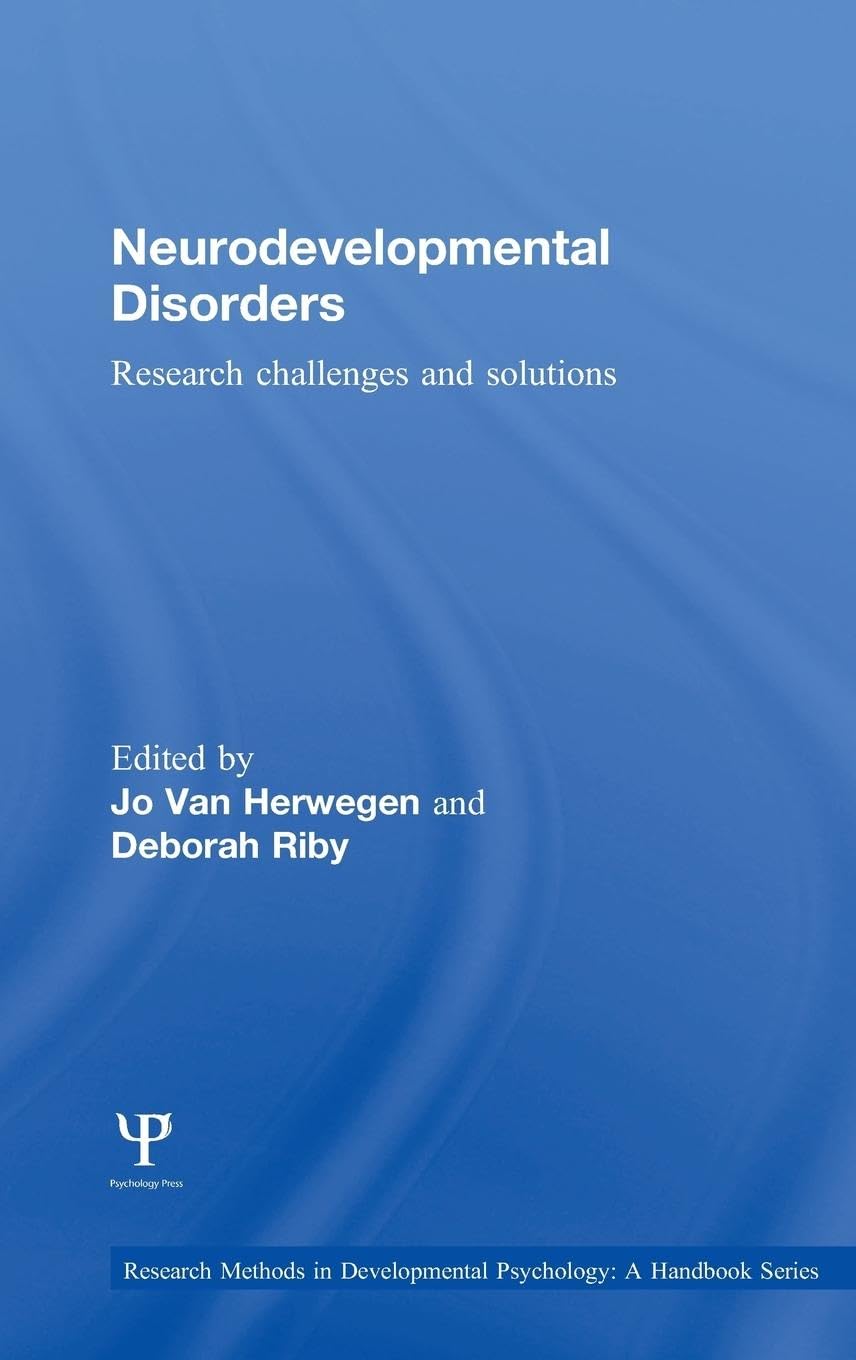
In this review of Neurodevelopmental Disorders: Research Challenges and Solutions the focus is on scholars and clinicians who need a rigorous, research-led overview of the field. Edited by Jo Van Herwegen and Deborah Riby, this handbook compiles multidisciplinary perspectives and practical approaches to studying conditions such as Autism Spectrum Disorders, Williams syndrome and Down syndrome. The single biggest reason to buy is its breadth: 14 chapters arranged across three sections provide both conceptual framing and disorder-specific research strategies that are directly useful for researchers, postgraduate students and advanced practitioners.
Key Features
- Comprehensive coverage: The volume surveys general research challenges and solutions that apply across multiple neurodevelopmental conditions, helping readers situate individual studies within broader methodological debates.
- Disorder-specific chapters: Detailed chapters on conditions including Williams syndrome, Autism Spectrum Disorders, Down syndrome and Fragile X offer examples of how methods are applied to particular diagnostic groups.
- Multidisciplinary perspective: Contributors draw on psychology, psychiatry, education and neuroscience to show how different approaches can be integrated when designing studies.
- Practical research focus: The handbook emphasizes research design and methodological solutions rather than purely theoretical exposition, making it useful for planning empirical work.
- Edited collection format: The three-section structure and 14 chapters allow readers to target either general issues or disorder-specific guidance efficiently.
Who It's For
This book is aimed at researchers, doctoral students and clinicians who require a focused, methodologically minded reference for designing and interpreting studies in neurodevelopmental disorders. It serves as a concise handbook for those who already have some background in developmental psychology or neuroscience and need up-to-date discussion of research challenges.
Those seeking an introductory textbook for undergraduates or a practitioner's manual with step-by-step clinical protocols should look elsewhere; the content assumes familiarity with research terminology and prioritizes methodological discussion over basic clinical training.
Pros & Cons
Pros
- Broad, multidisciplinary coverage supports cross-field collaboration and comparative study design.
- Disorder-specific chapters translate general research issues into concrete examples for conditions like ADHD and Fragile X.
- Practical emphasis on research challenges helps readers plan better empirical work and avoid common methodological pitfalls.
Cons
- The edited handbook format means chapter quality and depth can vary, so readers may need to consult additional sources for deep dives on particular methods.
Specifications
| Title | Neurodevelopmental Disorders: Research Challenges and Solutions |
| Editors/Authors | Jo Van Herwegen, Deborah Riby |
| Format | Edited handbook with 14 chapters |
| Coverage | General research challenges and disorder-specific studies |
| Sample disorders discussed | Williams syndrome, Autism Spectrum Disorders, Down syndrome, Fragile X, ADHD |
| Approach | Multidisciplinary: psychology, psychiatry, education, neuroscience |
Our Verdict
Neurodevelopmental Disorders: Research Challenges and Solutions is a worthwhile purchase for researchers and advanced students who need a methodologically oriented reference across multiple conditions. Its multidisciplinary chapters and disorder-specific examples provide good value for anyone planning empirical studies in developmental psychology or related fields.
Frequently Asked Questions
Does this book cover specific disorders in depth?
The handbook includes disorder-specific chapters that apply methodological discussion to conditions such as Autism Spectrum Disorders and Down syndrome, suitable for targeted research planning.
Is this suitable for undergraduate coursework?
It is better suited to postgraduate students and researchers because it assumes familiarity with research methods rather than serving as an introductory textbook.
Does the book integrate multiple disciplines?
Yes, contributors draw on psychology, psychiatry, education and neuroscience to offer multidisciplinary research perspectives.
Editor's Take
A methodologically focused, multidisciplinary handbook ideal for researchers and postgraduate students planning empirical studies in neurodevelopmental disorders, offering disorder-specific examples and practical research guidance.

Recently viewed
Recently viewed products will appear here as customers browse the store.