

New Global Cities in Latin America and Asia - Urban Change
New Global Cities in Latin America and Asia - Urban Change
Price subject to change. Tap below for current.
Couldn't load pickup availability
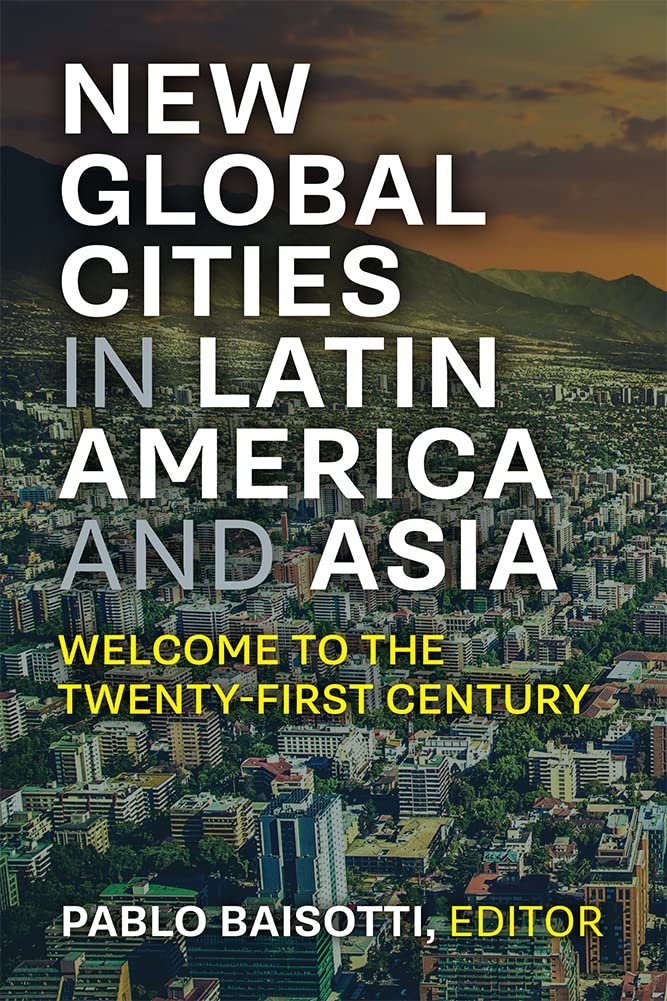
In this review of New Global Cities in Latin America and Asia: Welcome to the Twenty-First Century, the book is recommended for readers who want an interdisciplinary examination of urban transformation beyond the usual Western case studies. Pablo Baisotti offers a persuasive argument that these metropolises deserve attention not only for their material growth but for the social complexities they generate, and that is the single biggest reason to read it: the book reframes what counts as a global city by pairing progress with persistent social challenges.
Key Features
- Comparative framework: The book directly compares Latin American and Asian cities to reveal shared patterns and divergent outcomes useful for scholars and planners.
- Interdisciplinary approach: Baisotti draws from multiple social sciences to map relationships within cities, enriching urban analysis beyond narrow economic readings.
- Focus on social problems: It examines organized crime, drug trafficking, slums and inequality as central forces shaping contemporary urban life.
- Theoretical contribution: The text challenges orthodox views on global cities and offers new conceptual tools for understanding twenty-first century urbanity.
- Regional attention: By centering historically secondary regions, the book expands the geographic scope of global city literature and highlights understudied metropolises.
Who It's For
The book is best for graduate students, urban scholars, policy analysts and planners who need a critical, comparative perspective on cities in Latin America and Asia; practitioners seeking context for urban problems will find the case comparisons particularly illuminating. Anyone interested in global urban theory will appreciate the book's effort to broaden canonical examples.
Readers looking for a how-to manual for urban policy, a narrowly quantitative atlas, or a popular travel narrative should look elsewhere; the book is analytical and theoretical rather than prescriptive or guidebook-style.
Pros & Cons
Pros
- The comparative emphasis provides fresh insights into shared challenges across continents.
- The interdisciplinary method connects social, economic and political dimensions in a coherent narrative.
- By foregrounding crime, slums and inequality, the book presents a realistic picture of modern urban change.
Cons
- The analytical focus means readers seeking prescriptive solutions or detailed policy toolkits may find the book limited.
Specifications
| Title | New Global Cities in Latin America and Asia: Welcome to the Twenty-First Century |
| Author | Pablo Baisotti |
| Scope | Comparative analysis of Latin American and Asian cities |
| Approach | Interdisciplinary social science perspective |
| Main themes | Urban growth, organized crime, slums, inequality, modernity |
| Intended audience | Scholars, students, policy analysts |
Our Verdict
Pablo Baisotti's book is a valuable, thought-provoking contribution for readers who want to rethink global cities through comparative, interdisciplinary lenses. It is good value for scholars and advanced students because it expands the empirical and theoretical terrain of urban studies while candidly addressing social problems that accompany twenty-first century urban growth.
Frequently Asked Questions
Does this book compare specific cities?
Yes, it contrasts metropolises in Latin America and Asia to draw broader conclusions about urban change and shared challenges.
Is it accessible to nonacademic readers?
The book is analytical and best suited to readers comfortable with scholarly argument; interested general readers can gain insight but may find the tone academic.
Does the book offer policy prescriptions?
It emphasizes analysis and theoretical reframing over step-by-step policy solutions, so practitioners seeking toolkits may need to supplement it with applied studies.
Editor's Take
Pablo Baisotti's comparative, interdisciplinary study reframes global city theory by pairing urban growth with social challenges; recommended for scholars and advanced students seeking broader empirical and theoretical perspectives.

Recently viewed
Recently viewed products will appear here as customers browse the store.