

NEXAFS Spectroscopy - Practical Guide to Near Edge X-ray Absorption
NEXAFS Spectroscopy - Practical Guide to Near Edge X-ray Absorption
Price subject to change. Tap below for current.
Couldn't load pickup availability
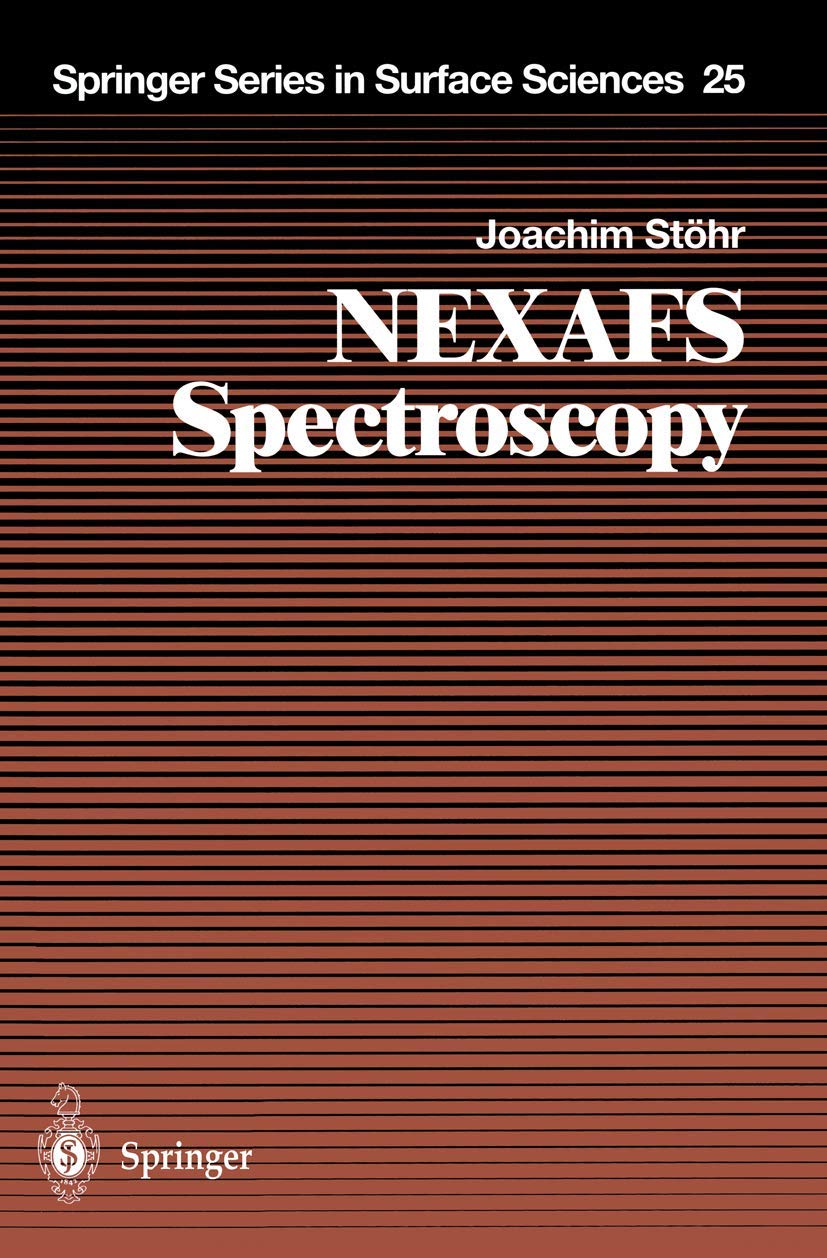
In this review of NEXAFS Spectroscopy, the conclusion is straightforward: this book is the best single-volume introduction to near edge X-ray absorption fine structure for students and researchers who need a clear, methodical explanation of both theory and experimental practice. Joachim Stohr builds concepts from basics and demonstrates the technique's power for probing the electronic and crystallographic structure of low-Z molecules on surfaces, making this text especially valuable for surface chemists and materials scientists seeking a thorough, readable reference.
Key Features
- Comprehensive foundation: The book develops NEXAFS concepts from an elementary level so readers without prior X-ray absorption experience can follow the theory.
- Theory and experiment unified: It presents both theoretical background and experimental techniques together to show how measurements relate to electronic and structural interpretation.
- Focus on low-Z molecules: The text concentrates on hydrogen, carbon, nitrogen, oxygen and fluorine containing species relevant to surface chemistry and thin films.
- Practical technique coverage: Detailed experimental descriptions help researchers design and interpret NEXAFS measurements on molecular adsorbates and interfaces.
- Educational clarity: Material is organized for students and researchers, making it suitable as a course text or a laboratory reference.
Who It's For
This book is ideal for graduate students, postdocs and experimentalists in surface science, materials science and physical chemistry who want a structured introduction to NEXAFS and how it reveals information on bonding and orientation of low-Z molecules at surfaces. The combination of theory and experimental guidance makes it useful for those planning or interpreting synchrotron-based X-ray absorption experiments.
Those seeking a brief handbook or a pictorial atlas of spectra may want a more compact reference; similarly, specialists already deeply versed in advanced many-body X-ray theory might find parts of the elementary development redundant. For generalist chemists who need practical insight into surface-sensitive spectroscopy, however, this remains a strong choice.
Pros & Cons
Pros
- Clear pedagogical development that makes NEXAFS accessible to readers without prior spectroscopy background.
- Integrated presentation of experimental technique and interpretation supports practical application in the lab.
- Concentrated coverage of low-Z molecules makes it directly relevant to surface chemistry and materials research.
Cons
- Not a quick reference for practitioners who need a concise summary; the thorough treatment is inherently detailed.
Specifications
| Title | NEXAFS Spectroscopy (Springer Series in Surface Sciences) |
| Author | Joachim Stohr |
| Subject focus | Near edge X-ray absorption fine structure (NEXAFS) |
| Primary application | Study of low-Z molecules bonded to surfaces |
| Audience | Students and researchers in surface science and materials science |
| Approach | Unified theoretical and experimental treatment |
Our Verdict
NEXAFS Spectroscopy is a well structured, practical textbook that delivers both the theoretical grounding and experimental detail needed to apply near edge X-ray absorption to surface problems. Students and researchers who want to understand how NEXAFS probes electronic and crystallographic structure of low-Z molecular layers will find strong value here and a book that pays dividends in laboratory planning and data interpretation.
Frequently Asked Questions
Does this book assume prior X-ray spectroscopy knowledge?
The book develops concepts from an elementary level so it does not require extensive prior X-ray absorption experience.
What types of molecules are emphasized?
The focus is on low-Z molecules containing H, C, N, O and F that are commonly encountered in surface chemistry.
Is the book theoretical or experimental?
It provides a unified treatment of both theory and experimental techniques to connect measurement and interpretation.
Editor's Take
NEXAFS Spectroscopy is a well structured, practical textbook that provides both theoretical grounding and experimental detail for applying near edge X-ray absorption to study low-Z molecular layers, making it a strong choice for students and researchers in surface and materials science.

Recently viewed
Recently viewed products will appear here as customers browse the store.