

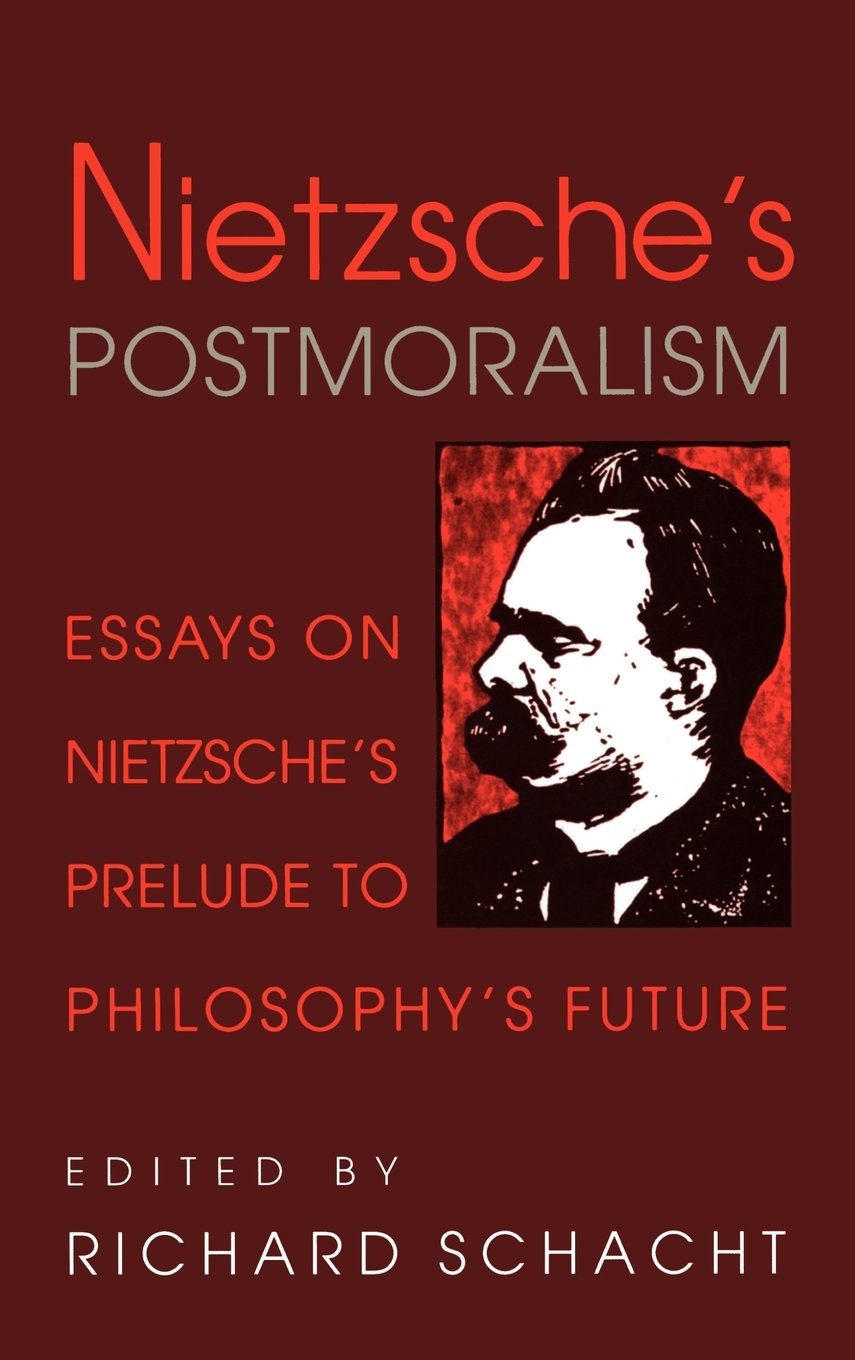
Nietzsche's Postmoralism: Essays on Nietzsche's Prelude
Nietzsche's Postmoralism: Essays on Nietzsche's Prelude
Price subject to change. Tap below for current.
Couldn't load pickup availability
In this review of Nietzsche's Postmoralism Richard Schacht has gathered nine essays that take Nietzsche's call in Beyond Good and Evil seriously: to reinterpret and revalue traditional philosophical commitments. The collection will most appeal to readers who want a rigorous, constructive reading of Nietzsche as a thinker who reconstructs rather than simply deconstructs. For those seeking a concise introduction the book is denser than a survey, but for readers interested in contemporary implications for values, virtue, and moral concepts, this volume offers sustained, analytical essays that clarify Nietzsche's postmoral agenda.
Key Features
- Focused thematic essays: Each of the nine contributors examines a distinct aspect of Nietzsche's claim that philosophy must move into a postmoral mode, providing multiple angles on the same core argument.
- Reconstructive interpretation: The collection argues that Nietzsche's work is reconstructive rather than merely critical, which helps readers see how his ideas can reorient modern ethical thinking.
- Close reading of Beyond Good and Evil: The essays track Nietzsche's proposal for new philosophers and show how that proposal shapes concepts of virtue and morality today.
- Interdisciplinary relevance: Contributors connect Nietzsche's postmoral program to issues in self-understanding and social values, making the work useful for philosophy and social theory readers.
- Scholarly yet accessible tone: The essays balance academic rigor with clear exposition, helping informed general readers follow complex reinterpretations.
Who It's For
This volume is best for graduate students, scholars, and serious readers of modern Western philosophy who want a concentrated, interpretive look at Nietzsche's proposal for philosophy's future. Those already familiar with Beyond Good and Evil will get the most from the fine-grained analysis and debates among contributors.
Readers seeking a beginner's overview or a brief introduction to Nietzsche should look elsewhere; this collection assumes prior exposure to the text and to debates in moral philosophy. It is not a textbook or a pocket guide, but rather a set of sustained essays for close study.
Pros & Cons
Pros
- Careful textual work clarifies Nietzsche's call for new philosophers and makes his project feel actionable for contemporary theory.
- Varied perspectives across nine interpreters expose readers to multiple constructive readings of postmoralism.
- The emphasis on reconstruction offers a fresh corrective to readings that treat Nietzsche only as a critic.
Cons
- Not suited to newcomers: the essays presuppose familiarity with Nietzsche's texts and concepts, limiting accessibility for casual readers.
Specifications
| Title | Nietzsche's Postmoralism: Essays on Nietzsche's Prelude to Philosophy's Future |
| Editor / Author | Richard Schacht |
| Contents | Nine interpretive essays on Nietzsche's postmoral agenda |
| Primary focus | Reinterpretation and revaluation after Beyond Good and Evil |
| Approach | Reconstructive reading of Nietzsche's philosophy |
| Intended audience | Scholars, graduate students, serious readers of philosophy |
Our Verdict
Nietzsche's Postmoralism is a thoughtful, rigorous collection that rewards readers who want to deepen their understanding of Nietzsche as a reconstructive thinker. While not an introductory volume, it offers valuable, focused essays that illuminate how Nietzsche's call for reinterpretation shapes contemporary thinking about values and virtue, making it good value for specialists and committed students.
Frequently Asked Questions
Does this book focus on a single Nietzsche work?
The essays are centered on themes from Beyond Good and Evil and its proposal for a postmoral philosophy.
Who edited the collection?
The volume is assembled under the direction of Richard Schacht, who frames the interpretive focus on postmoralism.
Is this suitable as an introductory text?
No, the collection assumes prior familiarity with Nietzsche and is aimed at readers seeking deeper interpretive analysis.
Editor's Take
Nietzsche's Postmoralism is a rigorous collection that treats Nietzsche as a reconstructive thinker; it is best for scholars and serious students seeking deep analysis rather than a beginner's introduction.

Recently viewed
Recently viewed products will appear here as customers browse the store.