

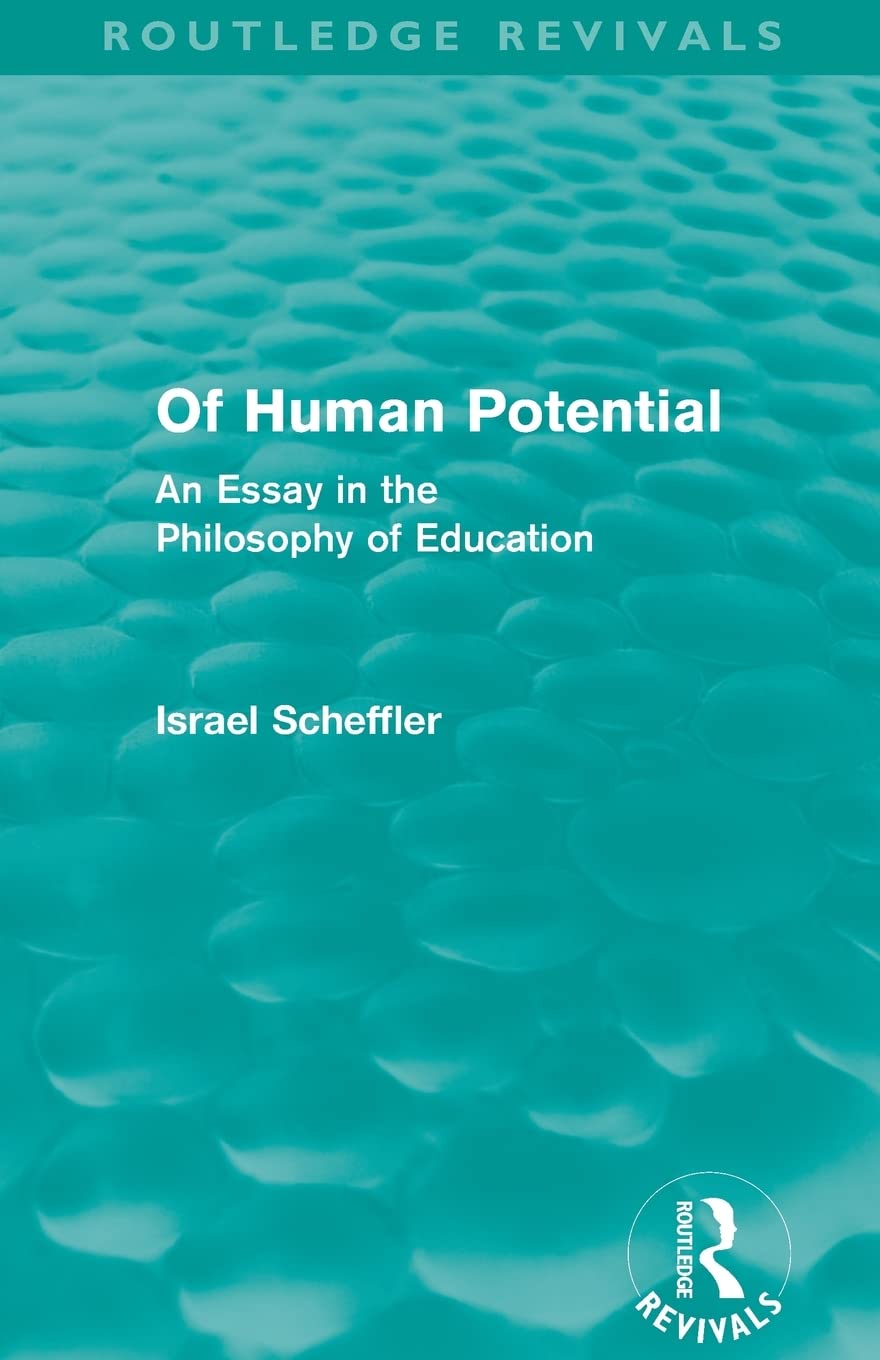
Of Human Potential: An Essay in the Philosophy of Education
Of Human Potential: An Essay in the Philosophy of Education
Price subject to change. Tap below for current.
Couldn't load pickup availability
In this review of Of Human Potential, Israel Scheffler offers a careful, analytic account of a concept central to educators and policy-makers. The book is best suited for readers who want a thoughtful, philosophical challenge to common assumptions about human development; its single biggest reason to buy is that it systematically demythologises the idea of potential, replacing fuzzy platitudes with clearer conceptual tools useful for educational theory and policy. This review focuses on how Scheffler reconstructs the notion of potential and why that reconstruction matters for practice.
Key Features
- Analytical reconstruction: Scheffler breaks down the traditional myths around potential so readers gain clearer conceptual distinctions to guide educational thinking.
- Philosophical rigour: The book applies sustained philosophical argumentation that sharpens how policy-makers and educators justify decisions.
- Practical orientation: Scheffler links theory to practice by interpreting implications for policy-making and educational planning.
- Historical perspective: The discussion locates modern uses of potential within older philosophical assumptions, helping readers see roots of current practice.
- Concise scope: As a focused essay first published in 1985, it delivers a compact treatment that is suitable for course reading or targeted professional reflection.
Who It's For
Of Human Potential will appeal most to graduate students, educational theorists, curriculum designers and policy-makers who need a rigorous framework for thinking about ability and development. Those who teach courses in education theory or philosophy of education will find Scheffler's arguments useful as seminar material or as a counterpoint to more empirical work.
Readers seeking practical classroom techniques or step-by-step pedagogical programs should look elsewhere; this is a philosophical essay that improves conceptual clarity rather than offering lesson plans or empirical interventions.
Pros & Cons
Pros
- Offers clear analytical dismantling of myths, which helps refine educational discourse.
- Connects philosophical insight to policy issues, making theory relevant to practitioners.
- Concise and focused, so readers can engage with core ideas without excessive digression.
Cons
- The book is theoretical rather than empirical, so readers hoping for data-driven guidance may be disappointed.
Specifications
| Title | Of Human Potential: An Essay in the Philosophy of Education |
| Author / Brand | Israel Scheffler |
| First published | 1985 (original essay) |
| Scope | Philosophy of education; conceptual analysis |
| Focus | Demythologising the concept of human potential |
| Audience | Educators, policy-makers, students of education theory |
Our Verdict
For readers who need sharper conceptual tools rather than empirical prescriptions, Of Human Potential is a valuable investment: Scheffler's analytic approach clears away popular misconceptions and makes the notion of potential more usable for ethical and policy deliberation. It represents good value for those engaged in education theory or policy inquiry.
Frequently Asked Questions
Is this book practical for classroom teachers?
The book is primarily philosophical and improves conceptual understanding rather than providing classroom activities.
Does Scheffler address policy-making directly?
Yes; the essay concludes with an interpretation of policy-making in education and reflections on the ideal education of a policy-maker.
Is this a long, exhaustive volume?
No; it is a focused essay aimed at analytic reconstruction of a single concept rather than an encyclopedic treatment.
Editor's Take
Scheffler's Of Human Potential is a concise, philosophically rigorous essay that clarifies and reconstructs the notion of potential, making it valuable for educators and policy-makers who need clearer conceptual tools rather than empirical teaching methods.

Recently viewed
Recently viewed products will appear here as customers browse the store.