

Operational Aspects of Oil and Gas Well Testing - Practical Handbook
Operational Aspects of Oil and Gas Well Testing - Practical Handbook
Price subject to change. Tap below for current.
Couldn't load pickup availability
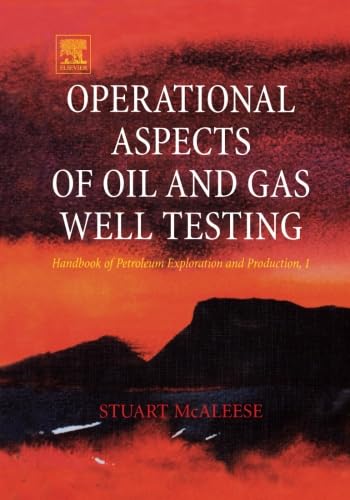
In this review of Operational Aspects of Oil and Gas Well Testing the reviewer finds it a focused, practical handbook for engineers and operations staff who plan and execute well testing. The single biggest reason to buy is its clear emphasis on safety and detailed operational planning, which reflects the reality that well testing is often the most hazardous routine activity on a production site. Readers seeking a compact, practice-oriented reference will appreciate the concentration on safe, well planned execution rather than broad theory.
Key Features
- Safety focus: Emphasises why well testing is considered one of the most hazardous routine operations and outlines the need for rigorous planning to reduce risk.
- Operational guidance: Covers practical steps and considerations for planning and executing tests so teams can follow a structured approach on site.
- Planning emphasis: Stresses the importance of detailed preparation, helping teams anticipate hazards and organise resources effectively.
- Targeted scope: Concentrates on well testing operations specifically, which makes the material directly applicable to field engineers and supervisors.
- Handbook format: Designed as a reference that can be consulted during preparation and execution phases, rather than a long theoretical treatise.
Who It's For
This handbook is for practising petroleum engineers, operations supervisors, well test coordinators and safety officers who need a concise, operationally oriented guide to planning and executing well tests. It is well suited for those who require a reference they can consult when organising high risk activities on well sites.
Those seeking deep academic theory on reservoir behaviour or a comprehensive textbook on petroleum engineering fundamentals should look elsewhere; this title is strongest as a practical guide to the operational and safety aspects of well testing rather than a broad engineering primer.
Pros & Cons
Pros
- Clear safety-first perspective that reflects industry reality and helps shape stronger test planning.
- Practical, operations-focused content that is directly usable by field teams during planning and execution.
- Handbook-style layout makes it easy to consult specific topics quickly during preparation.
Cons
- Scope is deliberately narrow, so readers wanting extensive theoretical background or reservoir analysis will need additional texts.
Specifications
| Title | Operational Aspects of Oil and Gas Well Testing |
| Author | Stuart McAleese |
| Format | Handbook / practical guide |
| Primary focus | Planning and execution of well testing operations |
| Safety emphasis | High; identifies well testing as most hazardous routine operation |
| Intended audience | Field engineers, supervisors and safety officers |
Our Verdict
Operational Aspects of Oil and Gas Well Testing is a useful, pragmatic handbook for professionals responsible for planning and carrying out well tests. Its strong emphasis on safety and operational planning makes it good value for on-site staff who need straightforward guidance to reduce risk and improve execution. Those wanting extensive theory should supplement it, but for operational teams this book is a practical asset.
Frequently Asked Questions
Does this handbook cover safety procedures?
Yes. It highlights the high hazard nature of well testing and stresses rigorous planning and execution to mitigate risk.
Who benefits most from reading it?
Field engineers, test coordinators, supervisors and safety officers involved in well testing will gain the most practical benefit.
Is it a technical textbook on reservoir analysis?
No. The book focuses on operational and safety aspects rather than in-depth reservoir theory, so additional texts may be needed for that purpose.
Editor's Take
A practical, safety-focused handbook ideal for field engineers and supervisors who plan and execute well testing; strong operational guidance makes it a valuable reference though it lacks deep reservoir theory.

Recently viewed
Recently viewed products will appear here as customers browse the store.