

Optimal Control of Nonlinear Processes - Dynamic Optimization Guide
Optimal Control of Nonlinear Processes - Dynamic Optimization Guide
Price subject to change. Tap below for current.
Couldn't load pickup availability
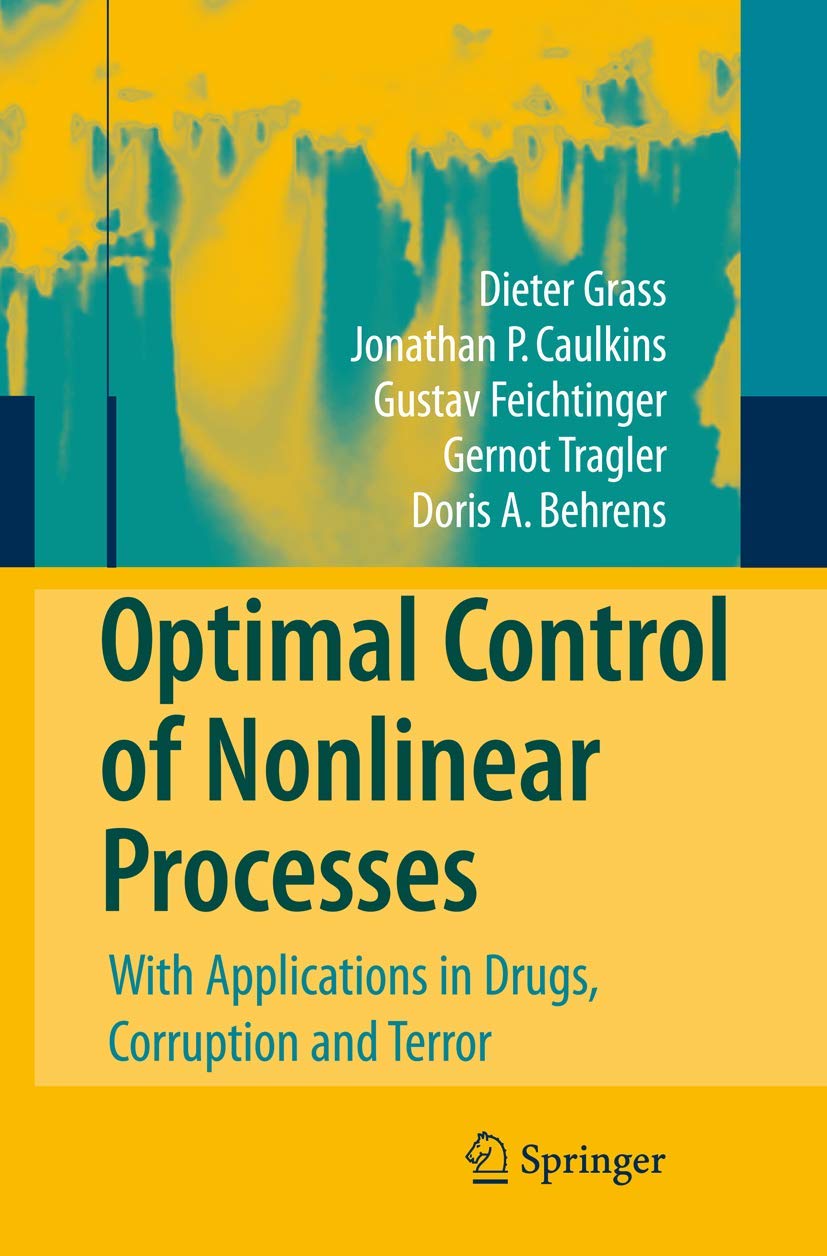
In this review of Optimal Control of Nonlinear Processes: With Applications in Drugs, Corruption, and Terror, the bottom line is that this volume is best for researchers and advanced students who need a bridge between rigorous mathematics and applied social problems. The book teaches modern dynamic optimization with a focus on practical modeling, and its single biggest reason to buy is the clear connection it draws between Pontryagin's Maximum Principle and emerging policy domains, making complex theory usable for economists and applied mathematicians.
Key Features
- Dynamic optimization focus: Provides a sustained treatment of optimal control methods so readers can apply them to time-dependent decision problems.
- Interdisciplinary applications: Demonstrates how control theory maps to social problems such as drug policy, corruption, and terrorism interventions.
- Mathematical rigor: Presents proofs and formalism that make Pontryagin's Maximum Principle accessible to scholars with a quantitative background.
- Population and incentives framing: Explains how populations, incentives, and interventions fit naturally into optimal control formulations for policy analysis.
- Bridge to economics of crime: Serves as a lively introduction that connects technical methods to hot topics in the economics of crime and policy research.
Who It's For
This book is aimed at graduate students, researchers, and practitioners in applied mathematics, economics, and public policy who already have some comfort with differential equations and optimization. It is especially useful for those developing models of population dynamics or policy interventions where time and control matter.
It is not a beginner textbook for readers without mathematical background, nor is it a light popular treatment; readers seeking gentle introductions or nontechnical overviews of crime and policy should look elsewhere.
Pros & Cons
Pros
- Strong link between theory and application makes it practical for modelers.
- Clear exposition of Pontryagin's Maximum Principle supports deeper understanding.
- Relevant examples from drugs, corruption, and terror broaden traditional optimal control uses.
Cons
- Requires prior mathematical training, so accessibility is limited for general readers.
Specifications
| Title | Optimal Control of Nonlinear Processes: With Applications in Drugs, Corruption, and Terror |
| Primary subject | Dynamic optimization and optimal control |
| Applications covered | Drugs, corruption, terror, and population interventions |
| Mathematical emphasis | Pontryagin's Maximum Principle and related methods |
| Intended audience | Graduate students, researchers, applied economists |
| Approach | Mathematical introduction with applied examples |
Our Verdict
Optimal Control of Nonlinear Processes is a valuable, application-minded text for scholars who want to turn dynamic optimization into usable models for social policy. Its rigorous treatment of Pontryagin's Maximum Principle and focus on drugs, corruption, and terror make it good value for researchers seeking a bridge from mathematics to topical economic problems.
Frequently Asked Questions
Is this book suitable for classroom use?
Yes, it works well as a graduate-level course supplement for classes on optimal control or dynamic optimization with applied examples.
Do I need a strong math background?
Yes, familiarity with differential equations and optimization is necessary to follow the formalism and proofs.
Does it cover policy examples?
Yes, the book explicitly applies control methods to drug policy, corruption, and terrorism modeling.
Editor's Take
This application-focused text gives researchers and advanced students a rigorous, practical bridge from Pontryagin's Maximum Principle to policy modeling in drugs, corruption, and terror, making it good value for those with sufficient math background.

Recently viewed
Recently viewed products will appear here as customers browse the store.