

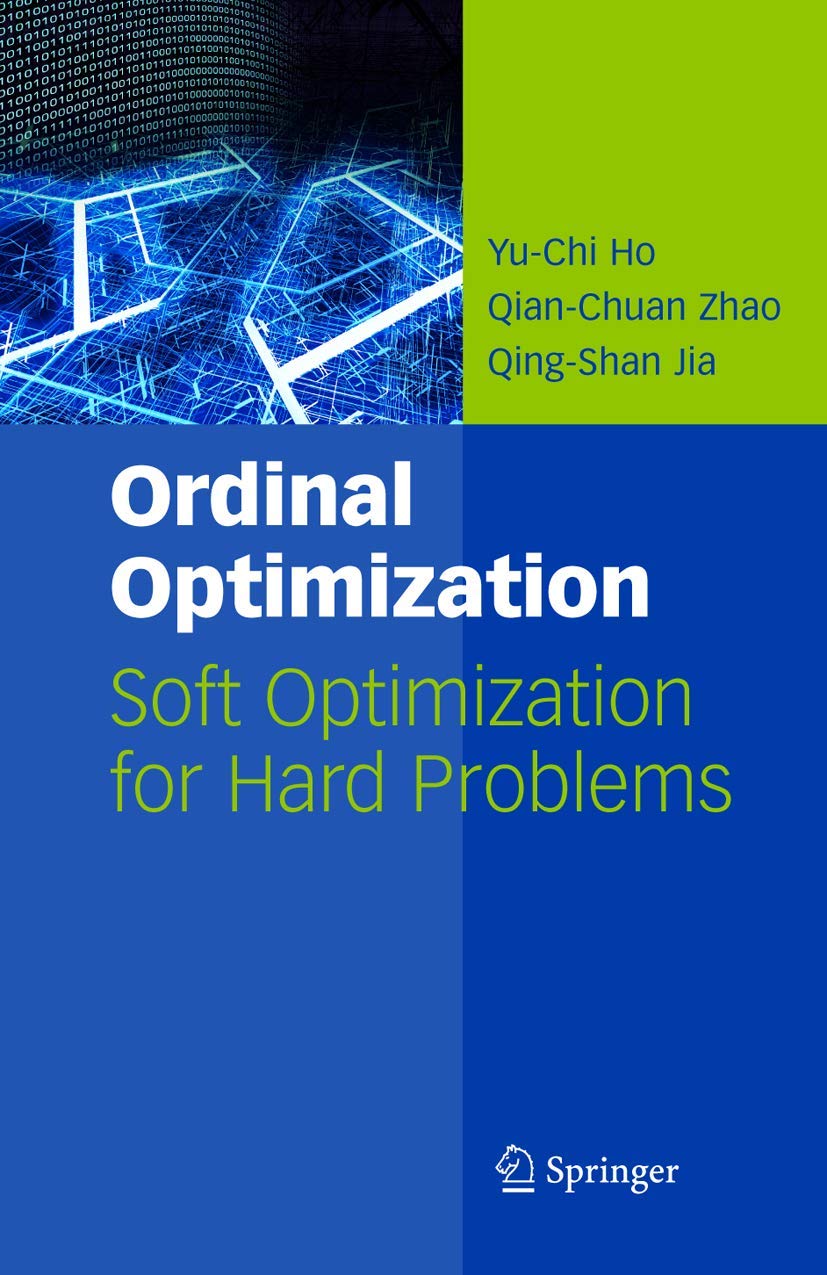
Ordinal Optimization: Soft Optimization for Hard Problems
Ordinal Optimization: Soft Optimization for Hard Problems
Price subject to change. Tap below for current.
Couldn't load pickup availability
In this review of Ordinal Optimization: Soft Optimization for Hard Problems, the authors present a focused treatment of an alternative approach to computationally heavy search and simulation tasks. The bottom line: this book is for researchers and practitioners who face simulation-based optimization or combinatorial search where full cardinal evaluation is expensive, and it makes a convincing case that a softer ordinal approach can yield dramatic gains in efficiency. The review finds the text most valuable as a methodological reference and as a gateway to applied success stories rather than an introductory textbook for novices.
Key Features
- Focused methodology: The book is the first to concentrate solely on ordinal optimization, providing a cohesive presentation of the approach and its rationale.
- Efficiency emphasis: It documents how ordinal methods can achieve many orders of magnitude improvement in computational efficiency for search-based problems.
- Practical orientation: The authors include multiple applications and success stories that demonstrate how the methodology is applied to real simulation models and computation-intensive systems.
- Historical development: The text traces continuous development of ordinal optimization since 1992, offering context for how the methodology matured into a complete toolkit.
- Handling stochastic and discrete choices: The book addresses optimization under stochastic effects and discrete decision variables common in simulation models.
Who It's For
The book is aimed primarily at graduate students, researchers, and practitioners in areas such as simulation optimization, operations research, and machine learning who need robust, computationally efficient search techniques; it is especially relevant when model evaluations are costly or noisy. Readers looking to implement or adapt ordinal methods in engineering, logistics, or AI applications will find concrete guidance and motivating case material.
It is less suitable as a general introduction to optimization for beginners with no background in simulation or statistical thinking, and those seeking a step-by-step coding tutorial will need to complement this text with implementation-focused resources.
Pros & Cons
Pros
- Provides a comprehensive, focused account of ordinal optimization methodology not available elsewhere in a single volume.
- Clearly highlights the potential for dramatic computational savings in simulation-based search problems.
- Includes numerous applied examples and success stories that help bridge theory to practice.
Cons
- Not a step-by-step programming manual; readers seeking code-first guidance may need supplementary materials.
Specifications
| Title | Ordinal Optimization: Soft Optimization for Hard Problems |
| Authors | Yu-Chi Ho; Qian-Chuan Zhao; Qing-Shan Jia |
| Focus | Ordinal optimization methodology and applications |
| Application scope | Simulation models, computation-intensive models, stochastic and discrete choices |
| Historical coverage | Development of methodology since 1992 |
| Primary benefit | Orders of magnitude improvement in computational efficiency |
Our Verdict
Ordinal Optimization: Soft Optimization for Hard Problems is a strong methodological resource for researchers and practitioners confronting costly simulation or search tasks; its focused treatment of ordinal approaches and documented efficiency gains make it a worthwhile investment for those seeking scalable alternatives to full cardinal evaluation.
Frequently Asked Questions
Is this book practical for applied work?
Yes. It includes applied examples and success stories that illustrate how ordinal methods are used in real simulation and optimization problems.
Do I need a strong math background to benefit?
A working familiarity with optimization and simulation concepts is helpful; the book is aimed at graduate-level readers and practitioners rather than complete beginners.
Does the book include implementation code?
It focuses on methodology and applications rather than step-by-step coding, so readers should supplement it with implementation resources when needed.
Editor's Take
Ordinal Optimization: Soft Optimization for Hard Problems is a solid methodological resource for researchers and practitioners using simulation-based or computation-intensive optimization; its focused coverage and documented efficiency gains make it good value for those needing scalable alternatives to full evaluation.

Recently viewed
Recently viewed products will appear here as customers browse the store.