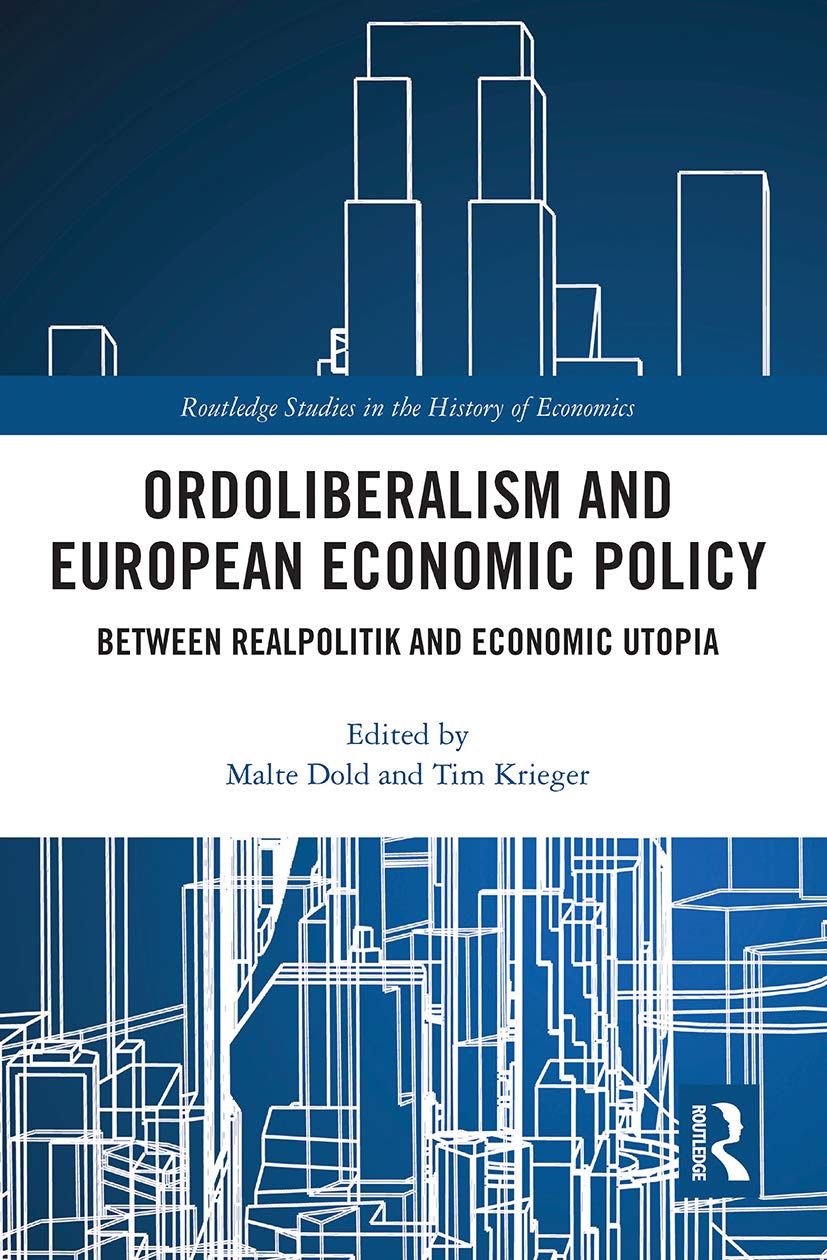
Ordoliberalism and European Economic Policy: A Comprehensive Study
Ordoliberalism and European Economic Policy: A Comprehensive Study
Price subject to change. Tap below for current.
Couldn't load pickup availability
The book Ordoliberalism and European Economic Policy offers an in-depth analysis of the economic principles that have shaped Europe. Authored by Malte Dold and Tim Krieger, this work delves into the historical context and theoretical foundations of ordoliberalism, making it essential for anyone interested in European economic frameworks.
One of the key features of this book is its exploration of the impact of ordoliberalism on contemporary economic policies. The authors meticulously examine how these principles have influenced various European institutions and their decision-making processes. This analysis is crucial for understanding the current economic landscape in Europe.
Furthermore, the book discusses the role of government intervention in the economy, a central tenet of ordoliberal thought. Dold and Krieger argue that a balanced approach between market freedom and regulatory oversight is vital for sustainable economic growth. This perspective is particularly relevant in today's globalized economy.
Readers will appreciate the comprehensive coverage of historical developments that led to the establishment of ordoliberalism as a dominant economic philosophy in Germany and beyond. The authors trace the evolution of these ideas from their inception to their current applications, providing a rich context for understanding their significance.
In addition to theoretical discussions, the book includes practical case studies that illustrate the application of ordoliberal principles in real-world scenarios. These examples help to bridge the gap between theory and practice, making the content accessible to both scholars and practitioners.
Moreover, the authors engage with contemporary debates surrounding European economic governance and the challenges posed by globalization. They critically assess the effectiveness of existing policies and propose potential reforms that align with ordoliberal values. This forward-thinking approach is essential for anyone looking to navigate the complexities of modern economic policy.
Overall, Ordoliberalism and European Economic Policy is a vital resource for students, researchers, and policymakers alike. Its thorough examination of ordoliberalism provides valuable insights into the economic challenges facing Europe today. This book is a must-read for those who wish to deepen their understanding of the intersection between economic theory and policy.
Share