

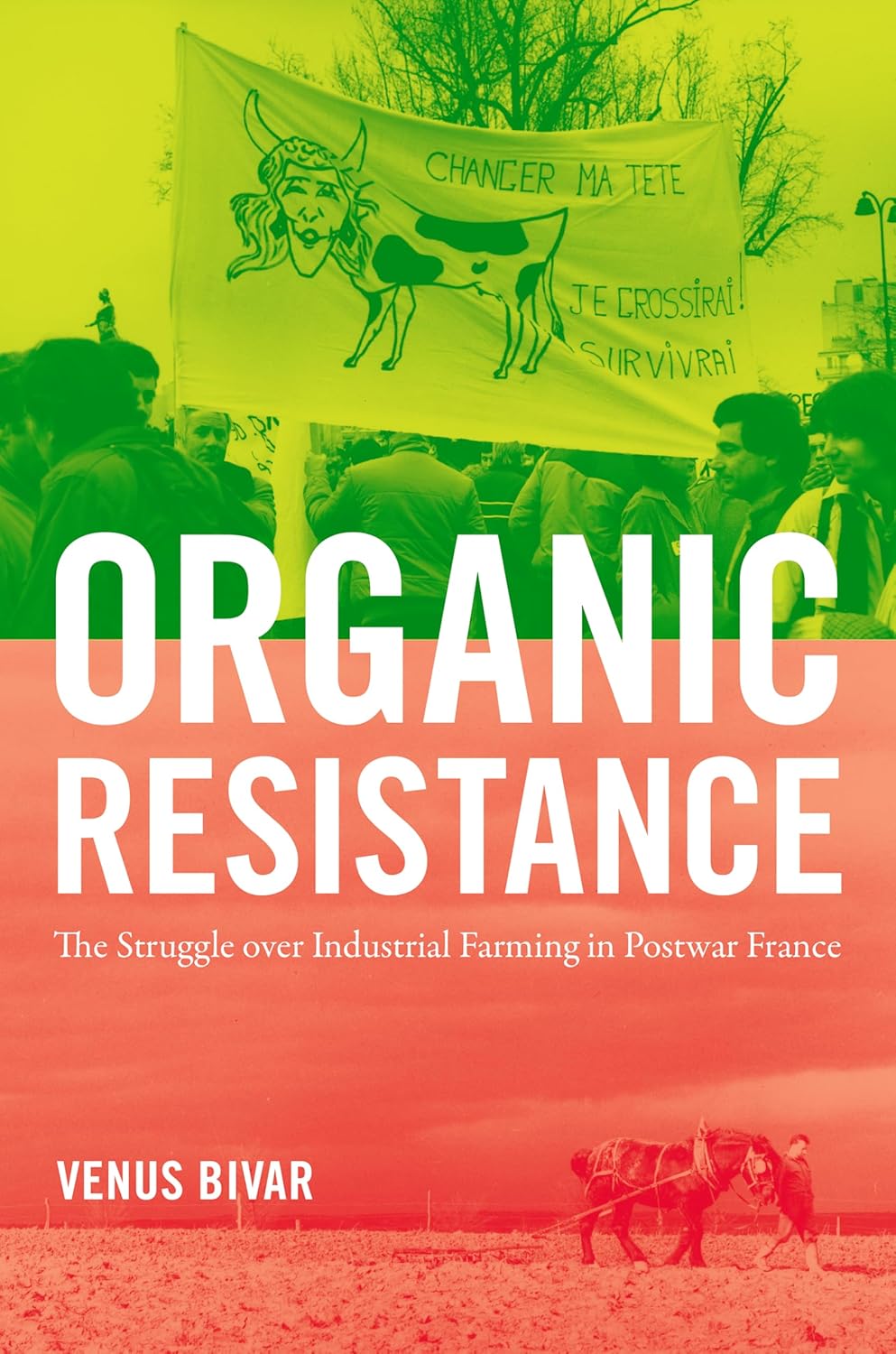
Organic Resistance: The Struggle over Industrial Farming in Postwar
Organic Resistance: The Struggle over Industrial Farming in Postwar
Price subject to change. Tap below for current.
Couldn't load pickup availability
In this review of Organic Resistance: The Struggle over Industrial Farming in Postwar France the reviewer argues this is essential reading for anyone interested in agricultural history, environmental movements, or modern French society. Venus Bivar reframes familiar images of the French countryside by tracing the clash between industrial agriculture and the early organic movement, making the book most valuable for readers who want a rigorous, narrative-driven account of postwar rural change rather than a nostalgic portrait. The single biggest reason to buy is its focused analysis of how economic modernization and environmental activism intersected to reshape farming in France.
Key Features
- Historical scope: Bivar covers the postwar decades to show how policy and market forces drove consolidation and mass production in French agriculture.
- Focus on organic origins: The book traces the development of the organic farming movement alongside state-led modernization to explain their points of collision and convergence.
- Political and economic lens: Emphasis on farmers as businessmen highlights global trade and market pressures rather than romantic rural life.
- Movement and protest analysis: The narrative examines the rise of an agricultural protest movement that shaped national debates on farming and environment.
- Integration of environmentalism: Bivar foregrounds environmental concerns as a driving force in the shift toward alternative farming methods.
Who It's For
This book will suit historians, policy students, and agricultural researchers looking for a detailed account of France's postwar agricultural transformation, and for readers interested in the origins of modern organic farming and environmental activism. Its analytic tone makes it a good fit for academic courses or seminar reading on rural history and food systems.
Casual readers seeking a light cultural travelogue about French villages or purely culinary perspectives should look elsewhere; the book is more focused on economic and political change than on lifestyle or recipes.
Pros & Cons
Pros
- Clear presentation of how economic modernization influenced farming choices and structures across postwar decades.
- Strong coverage of the early organic movement that connects grassroots activism to larger policy shifts.
- Useful synthesis of environmentalism and agricultural protest that clarifies competing visions for rural France.
Cons
- The book's emphasis on political economy means it is less about daily farm-life detail or culinary culture than many readers might expect.
Specifications
| Title | Organic Resistance: The Struggle over Industrial Farming in Postwar France |
| Subtitle series | Flows, Migrations, and Exchanges |
| Author | Venus Bivar |
| Focus areas | Postwar agriculture, organic movement, environmentalism |
| Geographic scope | France |
| Approach | Historical, political-economic, movement analysis |
Our Verdict
Organic Resistance is a well-argued, research-driven study that reframes the familiar image of French farming by showing how markets, policy, and activism shaped its modern course. Scholars and readers interested in environmental history or agricultural policy will find clear value in its focused analysis; those wanting rural color or culinary anecdotes may find it less satisfying.
Frequently Asked Questions
Does this book cover the origins of organic farming in France?
Yes. The book traces the development of the organic movement alongside broader postwar agricultural change.
Is the book more academic or popular in tone?
The tone is analytical and research-oriented, suitable for academic readers and informed general readers.
Does it discuss environmental activism?
Yes. Environmentalism and agricultural protest are central themes in the narrative.
Editor's Take
Organic Resistance offers a focused, research-driven account of how postwar modernization, market forces, and environmental activism reshaped French farming; it is recommended for scholars and readers interested in agricultural history and policy.

Recently viewed
Recently viewed products will appear here as customers browse the store.