

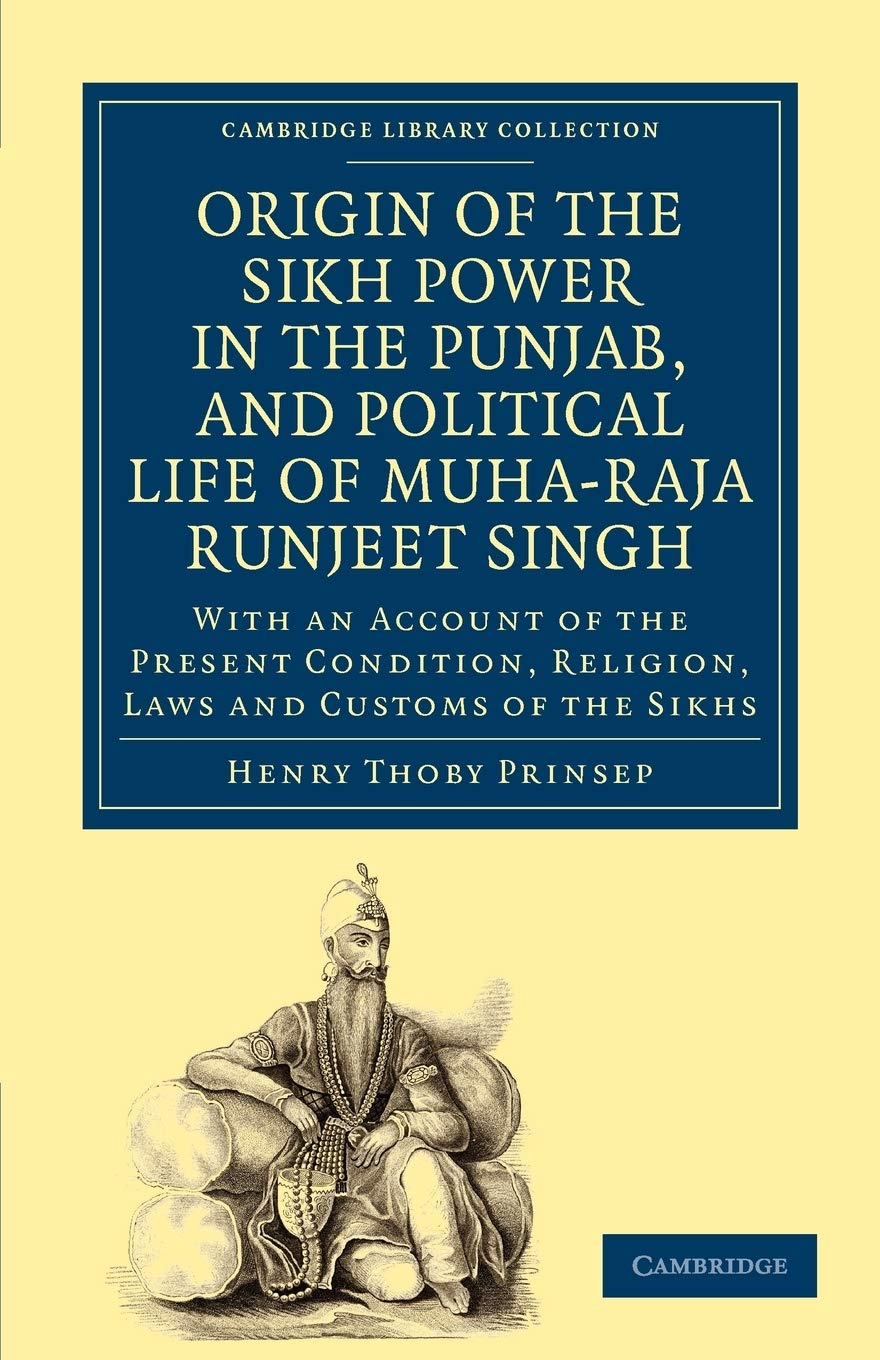
Origin of the Sikh Power in the Punjab - Historical
Origin of the Sikh Power in the Punjab - Historical
Price subject to change. Tap below for current.
Couldn't load pickup availability
In this review of Origin of the Sikh Power in the Punjab, the reviewer finds a compact historical account valuable to readers seeking a contemporary 19th-century perspective on the rise of Ranjit Singh and the political life of the Punjab. Compiled from reports by Captain William Murray and edited by Henry T. Prinsep, this edition offers primary-era insight into Sikh history, law, religion and the political conditions leading up to mid-19th century conflict. It is best for history students, researchers and collectors who want an early administrative viewpoint rather than a modern synthesised narrative.
Key Features
- Primary-era compilation: The work is based on a report gathered by the late political agent at Umbala, providing contemporaneous administrative observations useful for primary-source research.
- Focused subject matter: The book traces the rise of Runjeet Singh and the political life of the Punjab, supplying focused coverage of leadership and state formation in the late 18th and early 19th centuries.
- Context of British engagement: Readers gain context on how the Sikh empire weakened after Ranjit Singh's death and the lead-up to the Anglo-Sikh conflicts of the 1840s.
- Authoritative editor: Edited and presented by Henry T. Prinsep, a former East India Company official with long service in India, which adds administrative perspective to the narrative.
- Wide topical reach: Alongside political history, the report discusses religion, laws and the present condition of the Punjab as understood in the 1830s, helping comparative historians and cultural scholars.
Who It's For
This edition suits students of South Asian history, researchers focusing on Sikh political institutions, and collectors of 19th-century colonial-era writings who need a document that reflects contemporary British administrative view. The book is especially useful when combined with modern scholarship to balance period perspective with recent historiography.
It is less suitable for readers seeking an accessible popular history or a modern, critical interpretation of Sikh society; those audiences should look for recent syntheses that incorporate archaeological evidence and postcolonial analysis rather than a period political report.
Pros & Cons
Pros
- Provides a direct administrative-era account useful as a primary source for research into the Punjab and Ranjit Singh's era.
- Offers detailed contemporary observations on religion, laws and social condition not commonly found in later summaries.
- Edited by an experienced East India Company official, giving readers insight into how colonial administrators recorded regional politics.
Cons
- Perspective is that of 19th-century British officials and may carry contemporary biases; consulting modern works is advisable for balanced interpretation.
Specifications
| Title | Origin of the Sikh Power in the Punjab |
| Editor/Author | Henry T. Prinsep (editor of report) |
| Source material | Report gathered by Captain William Murray, political agent at Umbala |
| Publication era | Originally published 1834 |
| Subjects covered | History, political life, religion, laws and condition of the Punjab |
| Geographic focus | Punjab region, northern India |
Our Verdict
Origin of the Sikh Power in the Punjab is a worthwhile acquisition for historians and researchers who need a contemporary administrative report on Ranjit Singh's rise and the Punjab's condition in the 1830s. While the account reflects colonial viewpoints and should be read alongside modern analysis, it delivers valuable primary-era detail and context that justify its value for scholarly use and serious collectors.
Frequently Asked Questions
Is this work a primary source?
Yes, the book is based on a report compiled from the observations of a political agent in the 1830s, so it functions as a near-contemporary administrative source.
Who prepared the material for publication?
Captain William Murray gathered the original information; Henry T. Prinsep edited and prepared the report for publication after Murray's death.
Does it include discussion of the Anglo-Sikh wars?
The book explains the weakening of Ranjit Singh's empire and provides context for the later Anglo-Sikh conflicts, though it predates many later analyses of those wars.
Editor's Take
A valuable primary-era report edited by Henry T. Prinsep that offers administrative insight into Ranjit Singh's rise and the Punjab's condition in the 1830s; essential for researchers and collectors when read alongside modern analysis.

Recently viewed
Recently viewed products will appear here as customers browse the store.