

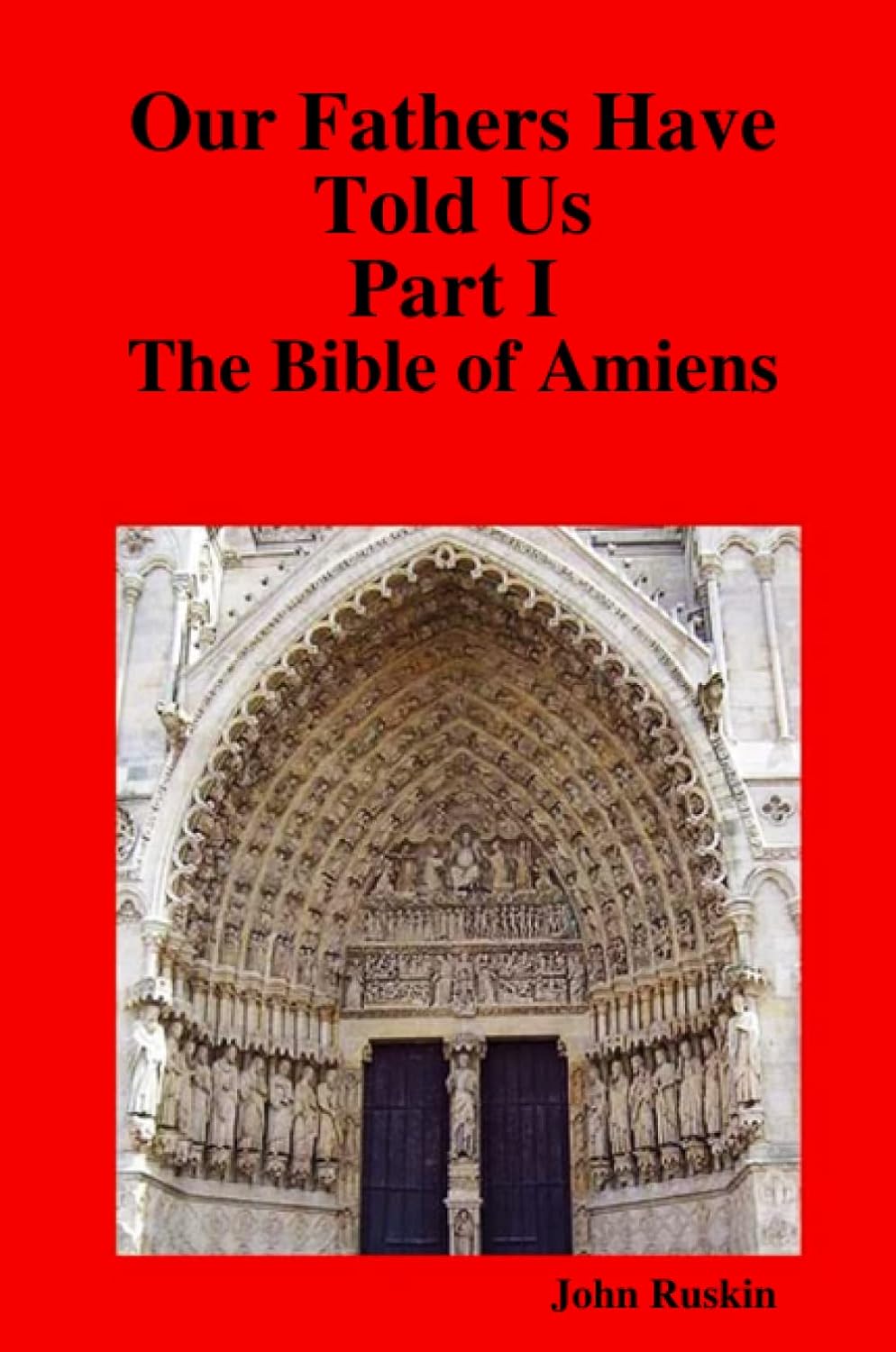
Our Fathers Have Told Us. Part I. The Bible of Amiens - Classic
Our Fathers Have Told Us. Part I. The Bible of Amiens - Classic
Price subject to change. Tap below for current.
Couldn't load pickup availability
In this review of Our Fathers Have Told Us. Part I. The Bible of Amiens the reviewer finds a focused, reflective meditation on the sculptural storytelling of Amiens Cathedral that will appeal to readers who value close observation and literary criticism. John Ruskin's prose is admired for the way it reads like a guided tour, bringing stones and figures to life; the single biggest reason to buy is its intimate, thoughtful interpretation of medieval sculpture rather than a general history or pictorial guide. This edition rewards patient readers and those curious about how art and religious narrative intertwine.
Key Features
- Authoritative reflection: John Ruskin provides a discerning, literary perspective that frames the cathedral sculptures as a visual retelling of biblical stories, enriching understanding for readers of art and religion.
- Focused subject matter: The book concentrates specifically on the Bible as represented in Amiens Cathedral, offering depth rather than a broad, unfocused survey.
- Literary appeal: The prose is written with sensitivity and nuance, which makes it attractive to readers who appreciate contemplative criticism and historical observation.
- Cultural interest: Noted as a work much loved by Proust, the book carries a layer of cultural resonance that will interest fans of literary history.
- Compact study: Its concentrated scope makes it suitable for readers seeking a single, readable essay on the cathedral without needing to consult multiple volumes.
Who It's For
This book is best for readers who enjoy close readings of art and architecture, particularly those interested in medieval sculpture and the ways religious narrative is expressed in stone. It suits students of literature and art history who want a primary-period perspective delivered in a contemplative, essayistic style rather than a modern textbook overview.
Readers seeking lavishly illustrated guides, exhaustive architectural plans, or a comprehensive history of Amiens Cathedral should look elsewhere, as the emphasis here is on Ruskin's interpretive prose and reflection rather than on photographic documentation or technical architectural detail.
Pros & Cons
Pros
- Insightful, eloquent prose that illuminates the narrative quality of the cathedral sculpture.
- Focused examination of the Bible as told through Amiens Cathedral, offering depth of interpretation.
- Literary significance that connects the reader to wider cultural figures who admired the work.
Cons
- Limited visual content and technical architectural detail may disappoint readers expecting an illustrated guide.
Specifications
| Title | Our Fathers Have Told Us. Part I. The Bible of Amiens |
| Author | John Ruskin |
| Subject | Reflections on Amiens Cathedral sculpture |
| Style | Literary criticism and art observation |
| Cultural note | Work admired by Proust |
Our Verdict
For readers who prize thoughtful literary criticism of art, this book is a rewarding, compact study of how Amiens Cathedral communicates biblical narrative through sculpture. It offers real value to students and contemplative readers who want interpretive insight rather than visual documentation, making it a worthwhile addition to a classics or literature collection.
Frequently Asked Questions
Does this book focus on images or text?
The emphasis is on John Ruskin's textual reflections and interpretation rather than on extensive photographic illustration.
Is it suitable for academic study?
Yes, it is useful for literature and art history courses that explore Victorian criticism and interpretations of medieval sculpture.
Will it cover the entire cathedral's architecture?
No, the book concentrates on the sculptural Bible narratives at Amiens rather than a comprehensive architectural survey.
Editor's Take
A compact, thoughtful study by John Ruskin that illuminates how Amiens Cathedral's sculpture retells the Bible; ideal for readers of art criticism and literary classics who want interpretive insight rather than visual documentation.

Recently viewed
Recently viewed products will appear here as customers browse the store.