

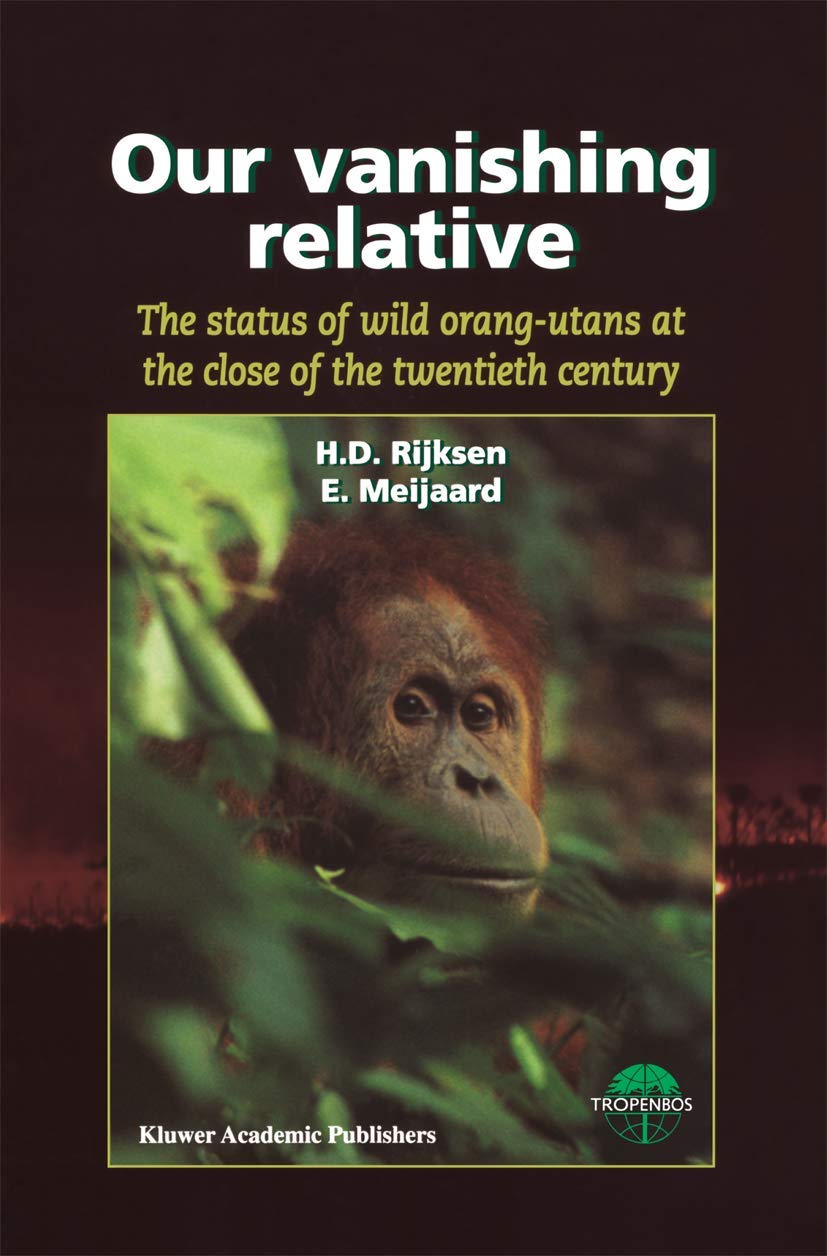
Our Vanishing Relative: The Status of Wild Orang-Utans at the Close
Our Vanishing Relative: The Status of Wild Orang-Utans at the Close
Price subject to change. Tap below for current.
Couldn't load pickup availability
In this review of Our Vanishing Relative, the reviewer finds a serious, fieldbased account aimed at conservationists, biologists, and readers seeking an authoritative history of orang-utan decline. The book's single biggest reason to buy is its combination of long-standing field experience and island-spanning surveys, which together document the species' distribution and conservation status at a critical historical moment. Readers who want a measured, evidence-driven narrative will appreciate the book's focus on habitat loss and population assessment rather than sensationalism.
Key Features
- Field authority: Rijksen's long experience in orang-utan studies provides a grounded, expert perspective on behaviour and conservation challenges.
- Comprehensive surveys: Meijaard's island-spanning surveys in Borneo and Sumatra give a broad, data-driven picture of where wild orang-utans remained at the close of the twentieth century.
- Conservation focus: The narrative connects habitat destruction and human population pressure directly to extinction risk, making the stakes clear for readers interested in policy and protection.
- Historical context: The book traces changing estimates since the 1960s, explaining how earlier counts led to the IUCN endangered designation and why newer surveys were needed.
- Investigative impetus: Rijksen's decision to initiate the study in response to local reports of decline illustrates a rigorous, fieldresponsive approach to conservation research.
Who It's For
The book is best suited to researchers, conservation practitioners, and informed readers who want a careful, historically grounded account of orang-utan status and the habitat pressures behind their decline. Graduate students in biological sciences or tropical ecology will find the island survey methodology and the blend of field observation and population assessment especially useful.
It is less appropriate for casual readers seeking a light narrative or a picture-rich coffee table book; the emphasis is on survey results and conservation analysis rather than popular wildlife storytelling. Those wanting a pictorial field guide should look elsewhere.
Pros & Cons
Pros
- Written by a recognized field authority, giving credibility to observations and conclusions.
- Island-spanning surveys provide comprehensive geographic coverage across Borneo and Sumatra.
- Clear linkage between habitat loss and extinction risk makes the conservation message explicit and actionable.
- Historical framing helps readers understand how population estimates and conservation status evolved.
Cons
- The book emphasizes survey results and conservation analysis rather than visual or popular narrative elements, which may limit appeal to casual readers.
- Specific contemporary updates beyond the study period are not the book's focus, so readers seeking the latest status after the close of the twentieth century will need supplemental sources.
Specifications
| Title | Our Vanishing Relative: The Status of Wild Orang-Utans |
| Authors | H.D. D. Rijksen, E. Meijaard |
| Primary focus | Conservation status and population surveys |
| Geographic scope | Borneo and Sumatra |
| Historical frame | Late twentieth century, with comparisons to 1960s estimates |
| Audience | Researchers, conservationists, biological sciences readers |
Our Verdict
Our Vanishing Relative is a valuable, evidence-based resource for anyone seriously studying orang-utan conservation or tropical mammal surveys. Its combination of Rijksen's field authority and Meijaard's broad surveys makes it good value for researchers and graduate students; casual readers seeking glossy visuals should consider other titles.
Frequently Asked Questions
Does the book include field survey data?
Yes. The book reports island-spanning surveys in Borneo and Sumatra conducted to assess wild orang-utan distribution and numbers.
Who conducted the research?
The work was led by H.D. D. Rijksen, an early authority on orang-utan conservation, with surveys carried out by E. Meijaard across the islands.
Is this a general interest wildlife book?
No. The emphasis is on conservation analysis and survey results, making it most useful to specialists and serious readers rather than casual, picture-focused audiences.
Editor's Take
A serious, evidence-based account combining Rijksen's field authority and Meijaard's island-spanning surveys; ideal for researchers and conservationists seeking historical population and habitat analysis.

Recently viewed
Recently viewed products will appear here as customers browse the store.