

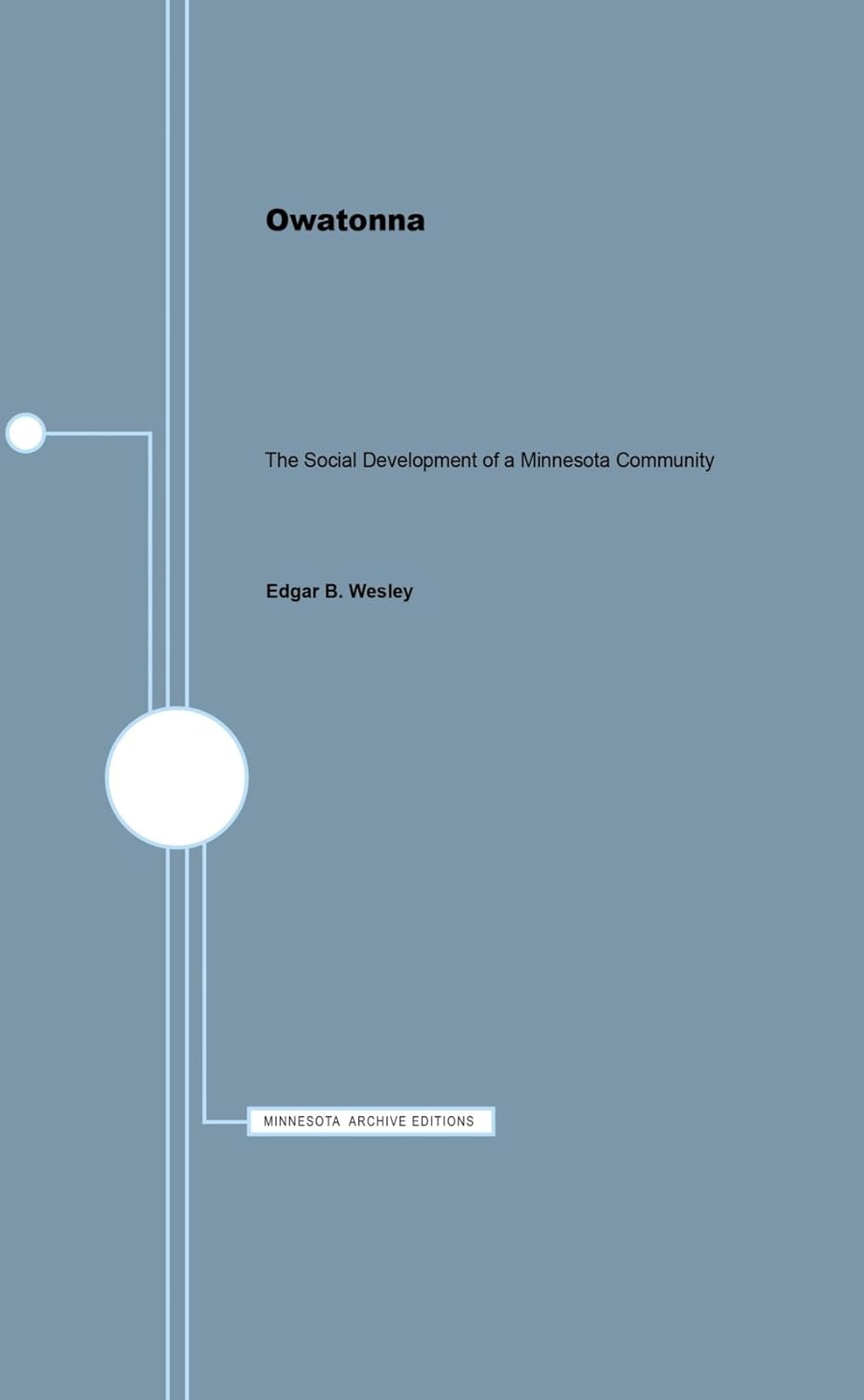
Owatonna: The Social Development of a Minnesota Community - Local
Owatonna: The Social Development of a Minnesota Community - Local
Price subject to change. Tap below for current.
Couldn't load pickup availability
In this review of Owatonna: The Social Development of a Minnesota Community, the reviewer finds a careful, scholarly local history ideal for readers who want context and causation rather than a nostalgic town chronicle. Edgar B. Wesley delivers a model study that traces Owatonna from its 1854 founding to modern times, showing how agricultural trade and cooperative dairying drove the city's industrial growth. For anyone studying community development, rural economics, or Minnesota history, this book stands out for its accuracy and measured interpretation.
Key Features
- Comprehensive chronological account: The book traces Owatonna's rise from 1854 through later industrialization, giving readers a clear timeline of social change.
- Focus on economic causes: Wesley explains how agricultural trading, not early industrial ambitions, provided the durable economic foundation for the city.
- Cooperative dairying analysis: The work details how cooperative dairying helped spawn other industries, illustrating the link between farming practices and urban growth.
- Scholarly but readable voice: Written by a university professor, the study balances academic rigor with accessible narrative for interested general readers.
- Local yet balanced perspective: Wesley achieves accuracy without localism, making the study useful beyond Owatonna for comparative community research.
Who It's For
Students and researchers of social studies, regional history, and rural economics will find the book particularly useful as a case study in how towns evolve around agricultural markets and cooperative institutions. It is also strong for local historians who want a measured, evidence-based account.
General readers interested in Minnesota heritage or community development will appreciate the narrative, though those seeking a richly illustrated or anecdotal town memoir should look elsewhere because the emphasis here is on analysis and social explanation rather than personal recollection or visual history.
Pros & Cons
Pros
- Detailed tracing of Owatonna's development provides a clear view of cause and effect in municipal growth.
- Insightful treatment of cooperative dairying shows practical mechanisms linking agriculture to industry.
- Authoritative voice from a professor of education lends credibility to conclusions about social development.
Cons
- The book focuses on analysis rather than visual or anecdotal content, so readers wanting photographs or personal stories may find it sparse.
Specifications
| Title | Owatonna: The Social Development of a Minnesota Community |
| Author | Edgar Bruce Wesley |
| Scope | Founding in 1854 through the present time (study period) |
| Focus | Industrial and cultural growth; agricultural trading and cooperative dairying |
| Approach | Model local history with scholarly accuracy and balanced perspective |
| Intended audience | Students, researchers, and thoughtful general readers |
Our Verdict
Owatonna is a well-crafted, value-rich study for readers who want a rigorous exploration of how a small city developed through agricultural commerce and cooperative institutions. It is especially worthwhile for scholars and local historians seeking a clear, evidence-based case study rather than a nostalgic portrait, and it represents good value for anyone researching community development or Minnesota social history.
Frequently Asked Questions
Does the book cover the city's founding?
Yes, the study traces Owatonna from its founding in 1854 and follows its subsequent development.
Is this work academic in tone?
Yes, authored by a university professor, it balances scholarly rigor with accessibility for general readers.
Does the book include discussion of industry sources?
Yes, it emphasizes how agricultural trading and cooperative dairying enabled later industrial and commercial growth.
Editor's Take
Owatonna is a rigorous, evidence-based local history that explains how agricultural trading and cooperative dairying drove the city's growth; recommended for students and researchers of community development.

Recently viewed
Recently viewed products will appear here as customers browse the store.