

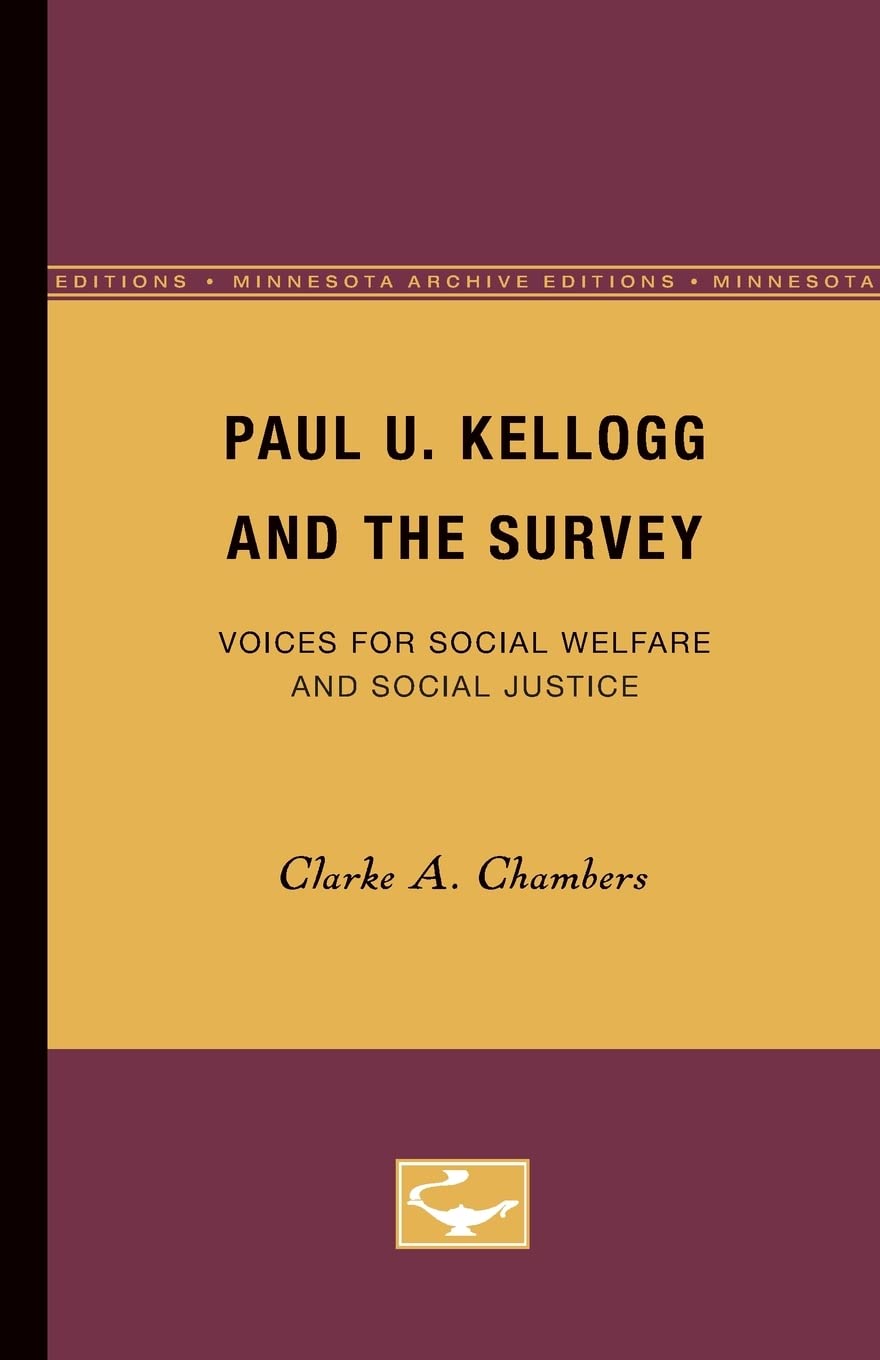
Paul U. Kellogg and the Survey: Voices for Social Welfare and Social
Paul U. Kellogg and the Survey: Voices for Social Welfare and Social
Price subject to change. Tap below for current.
Couldn't load pickup availability
In this review of Paul U. Kellogg and the Survey readers will find a focused biography that doubles as a history of progressive social reform in early 20th century America. The book is best for students, historians, and social work professionals who want a detailed, primary-source rooted account of how an editor and his journal shaped public conversation about welfare policy. It is valuable because the Minnesota Archive Editions reprints the original University of Minnesota Press text unaltered, preserving the authorial voice and historical context that make this work a useful reference.
Key Features
- Joint biography and institutional history: The book traces both Paul U. Kellogg's life and the evolution of the Survey and Survey Graphic, showing how editorial leadership influenced social welfare discourse.
- Primary-era perspective: Published originally in 1971 and reproduced unaltered, the edition preserves contemporary interpretation and primary detail useful to researchers.
- Context for social work development: The text provides insight into the professionalization of social work and the formulation of public social welfare policy during the first half of the twentieth century.
- Historical continuity: Readers benefit from coverage of Kellogg's early career, including his work at the Charities Review beginning in 1901, which situates later accomplishments within a career-long arc.
- Accessible archival reprint: Minnesota Archive Editions uses digital technology to make a long-unavailable title accessible again without editorial alteration, which preserves source fidelity.
Who It's For
This edition is aimed at academics, graduate students, and professionals in social work, public policy, and history who need a well-documented, historically faithful account of reform movements and journalistic influence on policy. It works well as a secondary source for coursework or as background reading for anyone researching the institutional roots of American social welfare.
Readers seeking a modernized, annotated, or heavily interpreted edition with contemporary commentary should look elsewhere; this reprint prioritizes fidelity to the original University of Minnesota Press edition rather than adding new analysis or footnotes.
Pros & Cons
Pros
- Preserves the original 1971 text, offering an authentic historical perspective useful to researchers.
- Combines biography and journal history to illuminate how editors and publications shaped reform debates.
- Provides clear coverage of Kellogg's early career milestones, giving readers career-long context.
Cons
- As an unaltered reprint, it lacks modern annotations or updated scholarly commentary that some readers may prefer.
Specifications
| Title | Paul U. Kellogg and the Survey: Voices for Social Welfare and Social Justice |
| Edition | Minnesota Archive Editions reprint of 1971 University of Minnesota Press edition |
| Subject | Biography, social welfare history, journalism |
| Focus | Paul U. Kellogg and the Survey / Survey Graphic journals |
| Historical range | Early 20th century through mid-20th century reform movements |
| Publisher note | Digitally reissued unaltered to restore long-unavailable title |
Our Verdict
For historians, social work scholars, and policy researchers who need a primary-era, faithful account of editorial influence on social reform, this reprint is a strong value. Its preservation of the original text makes it especially useful as a reference, though those seeking updated scholarly apparatus should pair it with more recent analyses.
Frequently Asked Questions
Is this a new edition with added commentary?
No. Minnesota Archive Editions reproduces the original University of Minnesota Press text unaltered, so this is a faithful reprint rather than a revised or annotated edition.
Who benefits most from this book?
Graduate students, historians, and social work professionals studying the history of social welfare and journalism will find the detailed institutional and biographical material most useful.
Does the book cover Kellogg's early career?
Yes. The narrative traces his early work, including his 1901 involvement with the Charities Review, and follows his influence through his editorship of the Survey and Survey Graphic.
Editor's Take
This faithful reprint delivers a detailed, primary-era biography and journal history valuable to historians and social work scholars; ideal for research, though it lacks modern annotations.

Recently viewed
Recently viewed products will appear here as customers browse the store.