

Peirce's Theory of Signs - Clear Guide to Peircean Semiotics
Peirce's Theory of Signs - Clear Guide to Peircean Semiotics
Price subject to change. Tap below for current.
Couldn't load pickup availability
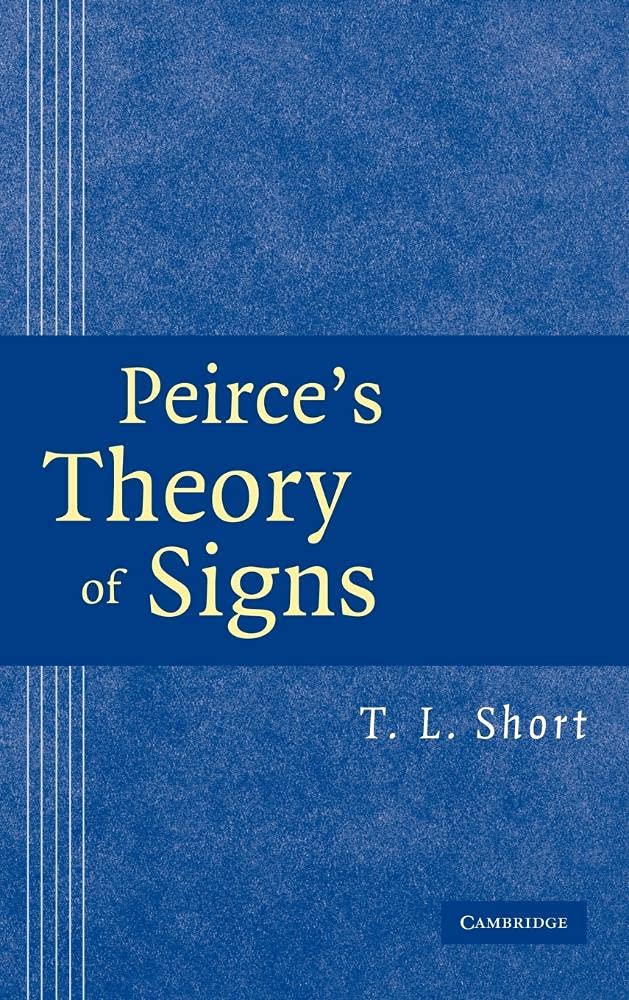
Our review of Peirce's Theory of Signs finds it a careful, corrective study best suited for readers invested in the history and contemporary impact of semiotics. T. L. Short aims to dispel misunderstandings about Charles Peirce's work and to show its relevance to analytic debates in language, mind and science; the single biggest reason to read this book is its clear argument that Peirce's mature theory of signs bridges classic pragmatic and analytic concerns without collapsing into verificationism. This review focuses on accessibility for philosophers and the book's argumentative clarity.
Key Features
- Corrective scholarship: Short systematically distinguishes Peirce's mature theory of signs from his earlier, more paradoxical formulations, clarifying conceptual confusions for readers.
- Contemporary relevance: The book connects Peirce's views to debates in philosophy of language and mind involving figures like Fodor and Millikan, showing practical philosophical implications.
- Nonreductive naturalism: Short presents Peirce's theory of mind as naturalistic but nonreductive, which helps readers see alternatives to strict reductionist accounts.
- Theory of inquiry: Peirce's rejection of foundationalism and subjectivism is explained in a way that illuminates pragmatic approaches to scientific method.
- Account of reference: The text argues that Peirce anticipated key moves later associated with Kripke and Putnam, offering useful historical perspective.
- Pragmatist meaning: Short clarifies that Peirce's pragmatism identifies meaning with potential growth of knowledge rather than simple verification, refining common misunderstandings.
Who It's For
This book is aimed primarily at graduate students, professional philosophers and scholars of semiotics who want a rigorous reassessment of Peirce's mature positions and their bearing on analytic philosophy. Readers who appreciate careful textual exegesis and arguments that link historical figures to contemporary debates will find it valuable.
Those seeking a light, introductory overview of semiotics or a basic textbook for undergraduates should look elsewhere; Short assumes familiarity with philosophical terminology and with central figures in philosophy of language and mind.
Pros & Cons
Pros
- Clarifies common misconceptions by separating Peirce's mature and early theories, improving conceptual accuracy.
- Shows the practical relevance of Peirce to modern debates, which helps bridge historical and analytic work.
- Offers a defensible account of Peirce's nonreductive naturalism that will interest philosophers of mind.
- Explains Peirce's pragmatism in a way that avoids conflating it with verificationism.
Cons
- Not intended as a beginner's introduction; readers without prior background in philosophy may find some sections dense.
Specifications
| Title | Peirce's Theory of Signs |
| Author | T. L. Short |
| Subject areas | Philosophy; Philosophy of Language; Semiotics |
| Approach | Corrective scholarship linking historical and analytic debates |
| Philosophical stance | Naturalistic but nonreductive realism and pragmatism |
| Key comparisons | Fodor, Millikan, Kripke, Putnam |
Our Verdict
Peirce's Theory of Signs is a solid, argument-driven study that rewards readers already versed in philosophy; it excels at correcting misunderstandings and at showing Peirce's continued relevance to analytic issues. For researchers and advanced students looking for clarity on Peirce's mature position and its implications, it represents thoughtful, good-value scholarship.
Frequently Asked Questions
Does the book cover Peirce's early and later work?
Yes. Short explicitly distinguishes Peirce's paradoxical early theory from his more mature theory of signs and develops the latter systematically.
Is this suitable for beginners in philosophy?
The book is not a basic introduction; it assumes familiarity with philosophical terminology and debates in language and mind.
Does the author relate Peirce to contemporary philosophers?
Yes. Short discusses Peirce's relevance to thinkers such as Fodor, Millikan, Kripke and Putnam and situates Peirce within modern analytic debates.
Editor's Take
Peirce's Theory of Signs is a careful, argument-driven study that corrects misconceptions and demonstrates Peirce's relevance to analytic philosophy; recommended for advanced students and scholars seeking clarity on his mature theory.

Recently viewed
Recently viewed products will appear here as customers browse the store.