

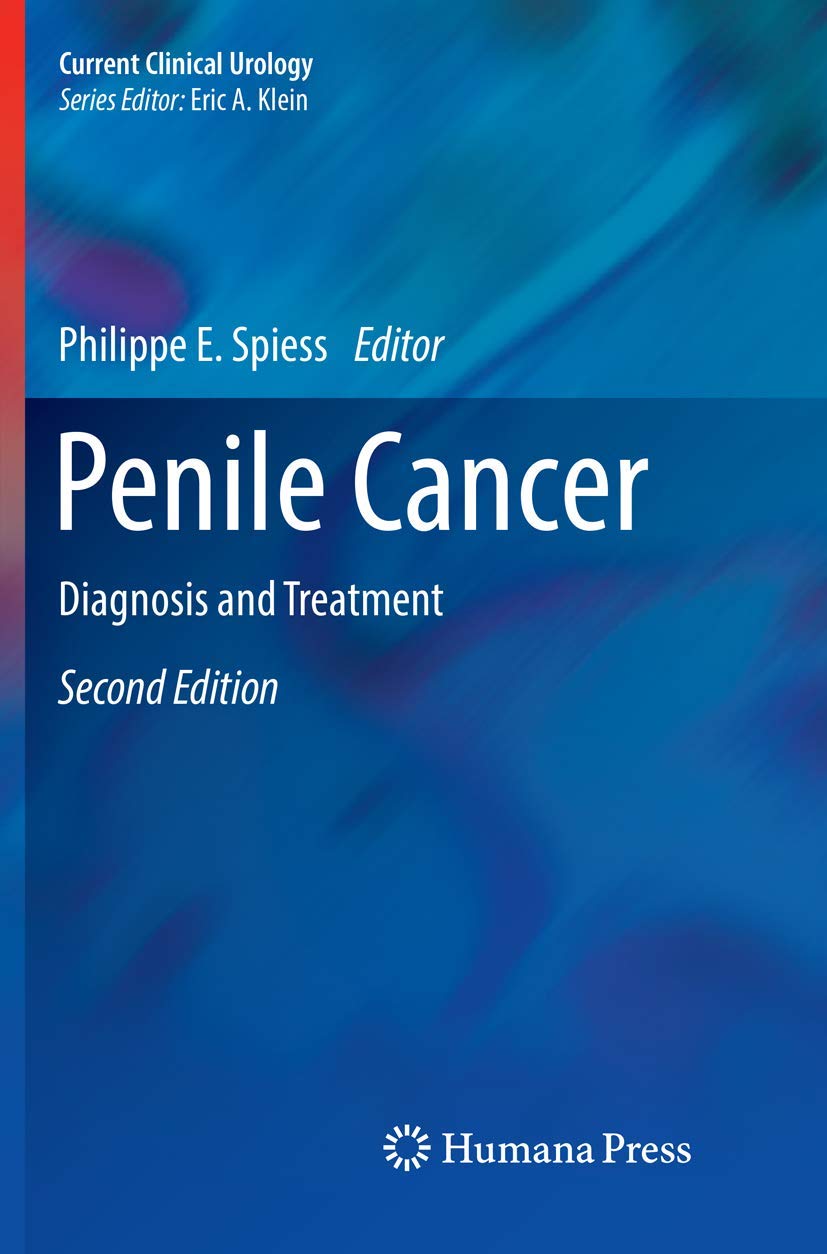
Penile Cancer: Diagnosis and Treatment - Clinical and Guidelines
Penile Cancer: Diagnosis and Treatment - Clinical and Guidelines
Price subject to change. Tap below for current.
Couldn't load pickup availability
In this review of Penile Cancer: Diagnosis and Treatment (Current Clinical Urology), the second edition is recommended for clinicians and trainees seeking an up-to-date, guideline-focused reference. The book's single biggest strength is its clear synthesis of recent national and international diagnostic and treatment guidelines alongside discussion of the evolving biology of penile cancer, making it a useful clinical review and reference for those who manage or study this rare malignancy.
Key Features
- Updated guidance: Presents the most recent national and international diagnostic and treatment guidelines to support evidence-based clinical decisions.
- Pathophysiology focus: Explains advances in understanding the disease mechanism, providing context for treatment choices and risk assessment.
- Human papilloma virus discussion: Covers the suspected role of HPV in penile carcinogenesis, which is important for prevention and counselling.
- Molecular pathways: Describes molecular pathways implicated in precancerous and malignant disease to connect basic science with emerging therapies.
- Clinical relevance: Balances molecular detail with practical diagnostic and treatment information for urologists and oncologists.
Who It's For
The book is best suited to urologists, oncologists, surgical trainees, and advanced practice clinicians who need a concise, contemporary review of penile cancer that integrates biology with practice-oriented guidelines. It will also be useful to researchers seeking a clinical perspective on molecular targets and the role of HPV.
General practitioners or readers looking for a patient-oriented overview should look elsewhere, as the text assumes familiarity with clinical oncology concepts and focuses on detailed diagnostic and management recommendations rather than lay explanations.
Pros & Cons
Pros
- Comprehensive coverage of recent national and international diagnostic and treatment guidelines for evidence-based care.
- Clear discussion of molecular pathways that links pathophysiology to potential new therapies.
- Inclusion of the suspected role of human papilloma virus provides useful context for prevention and research.
Cons
- Not written for lay readers; the material assumes clinical background and may be dense for non-specialists.
Specifications
| Title | Penile Cancer: Diagnosis and Treatment (Current Clinical Urology) |
| Edition | Second edition |
| Author / Editor | Philippe E. Spiess |
| Focus | Pathophysiology, diagnosis, and treatment guidelines |
| Clinical guidance | National Comprehensive Cancer Network and European Urological Association guidelines |
| Topics included | HPV role, molecular pathways, precancerous disease, therapeutic approaches |
Our Verdict
This second edition is a focused, high-value resource for clinicians and trainees who manage penile cancer or study its biology; its integration of updated guidelines with molecular and HPV-related discussion makes it a practical reference for evidence-based care and future therapeutic directions.
Frequently Asked Questions
Does this edition cover current international guidelines?
Yes, the book details recent national and international guidelines from major bodies to guide evidence-based care.
Is the book suitable for non-specialists?
It is primarily written for clinicians and trainees; non-specialists may find the level of detail too technical.
Does it discuss HPV and molecular targets?
Yes, the text specifically discusses the suspected role of human papilloma virus and molecular pathways relevant to therapy.
Editor's Take
The second edition is a focused clinical resource for urologists and trainees, combining updated national and international guidelines with discussion of HPV and molecular pathways to support evidence-based management.

Recently viewed
Recently viewed products will appear here as customers browse the store.