Perennial Red Clover Seeds for Lawn, Pasture & Soil Health
Perennial Red Clover Seeds for Lawn, Pasture & Soil Health
Price subject to change. Tap below for current.
Couldn't load pickup availability
The Perennial Red Clover Seeds are a fantastic addition to any garden or pasture. With a lifespan of 3-5 years, these seeds are perfect for a variety of applications including cover crops, food plots, and hay production. Growing up to 24 inches tall, they are particularly suited for temperate regions and offer the advantage of self-seeding, making them a highly versatile choice for your landscaping needs.
One of the standout features of these inoculated clover seeds is their adaptability. Thriving in USDA Zones 3-9, they flourish in full sun and can handle various soil types and fertility levels. This adaptability not only ensures vigorous establishment but also significantly improves soil structure and fertility through the process of nitrogen fixation. This makes them an excellent choice for sustainable agriculture and enhances the health of your garden.
Additionally, these red clover seeds are ideal for companion planting. They are naturally resistant to plant diseases, making them a great option for crop rotation. Whether grown alongside cool-season perennial grasses or on their own, they provide nutritious forage throughout the seasons, boosting green pasture productivity and supporting erosion control.
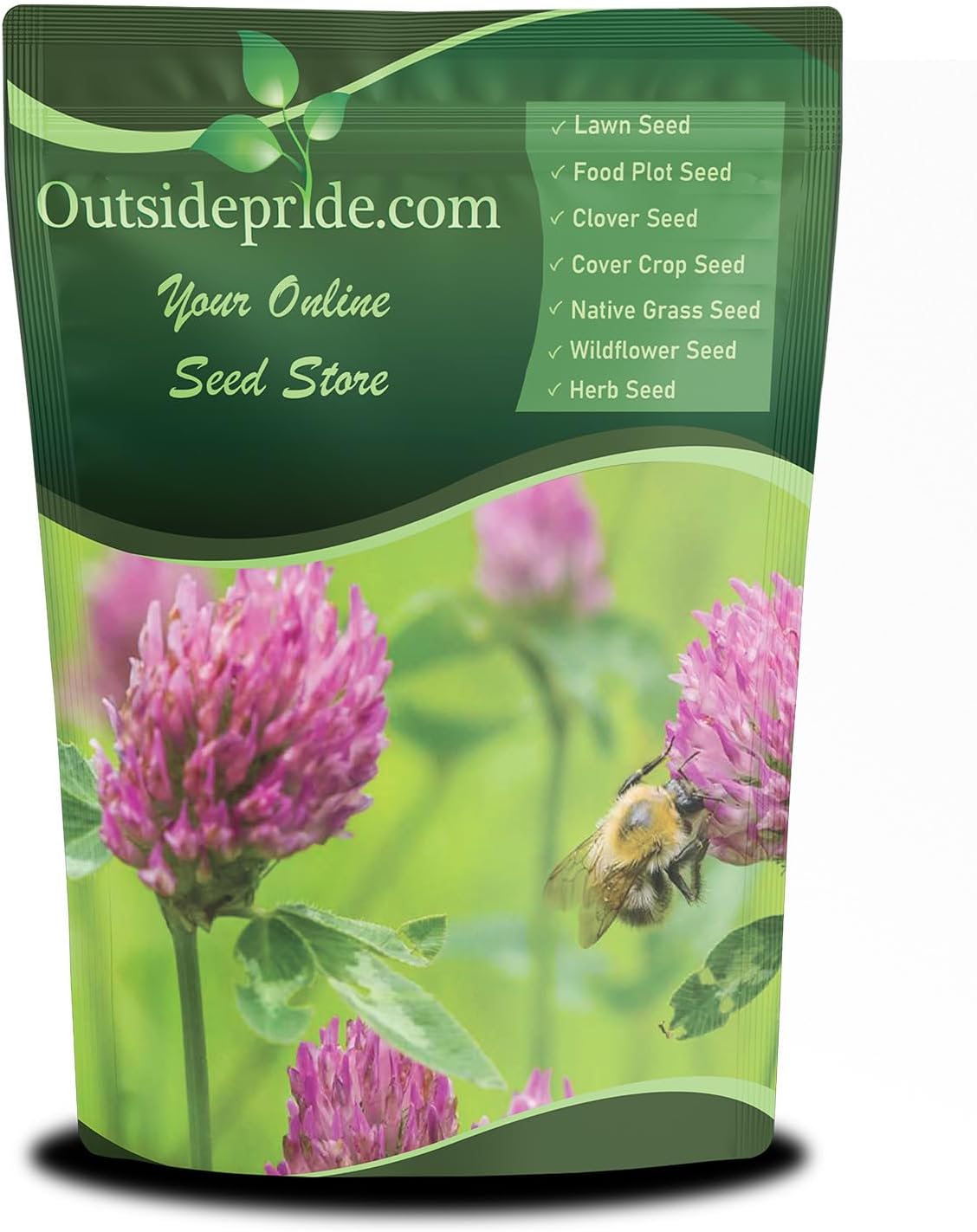
Another benefit of the flowering red clover is its ability to attract pollinators. Bees and other beneficial insects are drawn to these vibrant flowers, which helps support a healthy ecosystem. Not only do they yield more seeds than other clover varieties, but their longer growing season ensures a consistent and reliable source of forage for livestock. This makes them an excellent choice for wildflower gardens and attracting local wildlife such as deer and rabbits.
Planting these seeds is straightforward. For optimal results, use 1/2 lb per 1,000 sq ft or 8-16 lbs per acre, with a seeding depth of 1/4 inch. In northern and central regions, the best time to plant is late winter to early spring, while southern areas should aim for autumn planting. The seeds are coated with inoculant to enhance establishment and yield potential, ensuring robust growth and high germination rates.
Share