

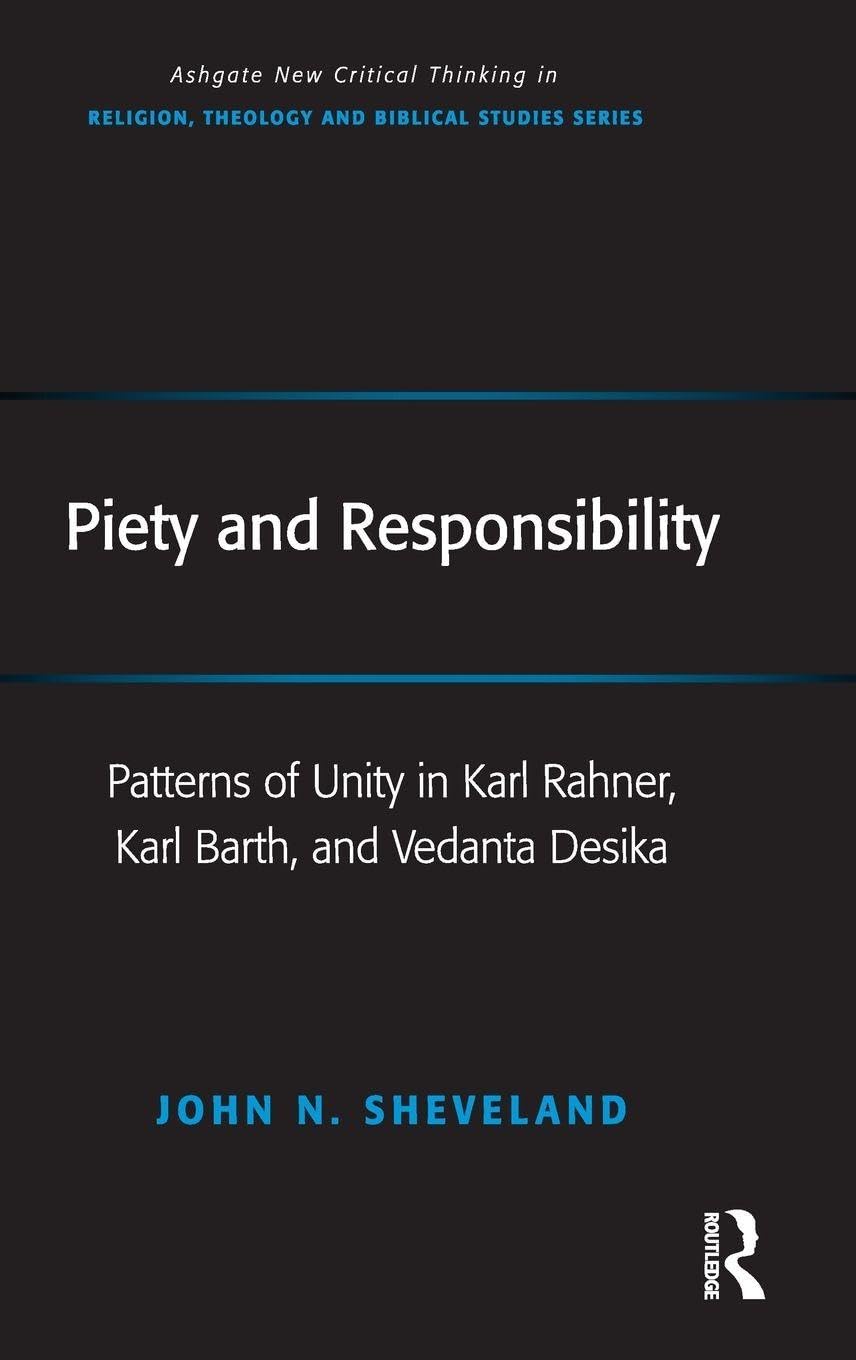
Piety and Responsibility Patterns of Unity in Rahner, Barth
Piety and Responsibility Patterns of Unity in Rahner, Barth
Price subject to change. Tap below for current.
Couldn't load pickup availability
In this review of Piety and Responsibility, John N. Sheveland offers a comparative theological study aimed at readers who want a careful, practice-oriented account of how Christian and Hindu thinkers bind devotion and ethical responsibility. The book's single biggest reason to buy is its methodological use of Renaissance musical polyphony to protect the distinctiveness of each voice while demonstrating their shared unity of love of God and neighbor. This makes the work especially valuable for scholars and thoughtful readers seeking an aesthetic, nonreductive model for interreligious theological engagement.
Key Features
- Comparative focus: Examines Karl Rahner, Karl Barth, and Vedanta Desika side by side to reveal patterns of unity between piety and responsibility.
- Ecumenical and interreligious scope: Frames theology as practice across traditions so readers see how devotion and ethical action interrelate in different contexts.
- Polyphony methodology: Uses the Renaissance genre of musical polyphony as a tool to explore similarity-in-difference and avoid caricature or domestication of the authors studied.
- Theology as enactment: Emphasizes theology lived and practiced, showing how belief and ethical responsibility are inseparable in the authors analyzed.
- Analytic clarity: Lays out comparative arguments clearly enough for graduate students and clergy to follow and apply in their own conversations.
Who It's For
This book is best for graduate students in theology, comparative religion scholars, clergy engaged in interfaith dialogue, and educated lay readers who want a nuanced, practice-oriented model of comparative theology. The attention to Rahner, Barth, and Vedanta Desika rewards readers who already have some familiarity with systematic theology or South Indian devotional traditions.
Readers seeking a beginner primer on Vedanta Desika or a general history of doctrine should look elsewhere, as the work assumes prior background and centers on analytic comparison rather than elementary introductions.
Pros & Cons
Pros
- Clear comparative structure that illuminates the unity of love of God and neighbor across traditions.
- Innovative use of polyphony as a methodological metaphor that helps avoid reductionism.
- Focus on theology as practice makes the book applicable for ethicists and practitioners in ministry.
Cons
- Assumes prior familiarity with the primary authors, which may limit accessibility for casual readers.
Specifications
| Title | Piety and Responsibility: Patterns of Unity in Karl Rahner, Karl Barth, and Vedanta Desika |
| Author | John N. Sheveland |
| Series | Routledge New Critical Thinking in Religion, Theology and Biblical Studies |
| Approach | Comparative theology using musical polyphony as method |
| Primary themes | Piety, responsibility, unity of love of God and neighbour |
| Scope | Ecumenical and interreligious frameworks |
Our Verdict
Sheveland's study is a thoughtful, methodologically fresh contribution for anyone serious about comparative theology and interreligious ethics. It is good value for graduate students, scholars, and clergy who want a nonreductive model that respects difference while exploring shared commitments to devotion and neighbourly responsibility.
Frequently Asked Questions
Does this book compare Christian and Hindu thought?
Yes, it compares the writings of Karl Rahner and Karl Barth with Vedanta Desika to draw out shared themes of piety and responsibility.
Is prior knowledge required to read it?
The book assumes familiarity with the primary authors and theological concepts, so it is best for readers with some background in theology or religion studies.
What methodological tool does the author use?
Sheveland employs the Renaissance genre of musical polyphony as a methodological metaphor to highlight similarity-in-difference and avoid caricature.
Editor's Take
Sheveland offers a methodologically fresh, nonreductive comparative study linking piety and responsibility across Rahner, Barth, and Vedanta Desika, valuable for scholars and clergy seeking practice-oriented interreligious theology.

Recently viewed
Recently viewed products will appear here as customers browse the store.