

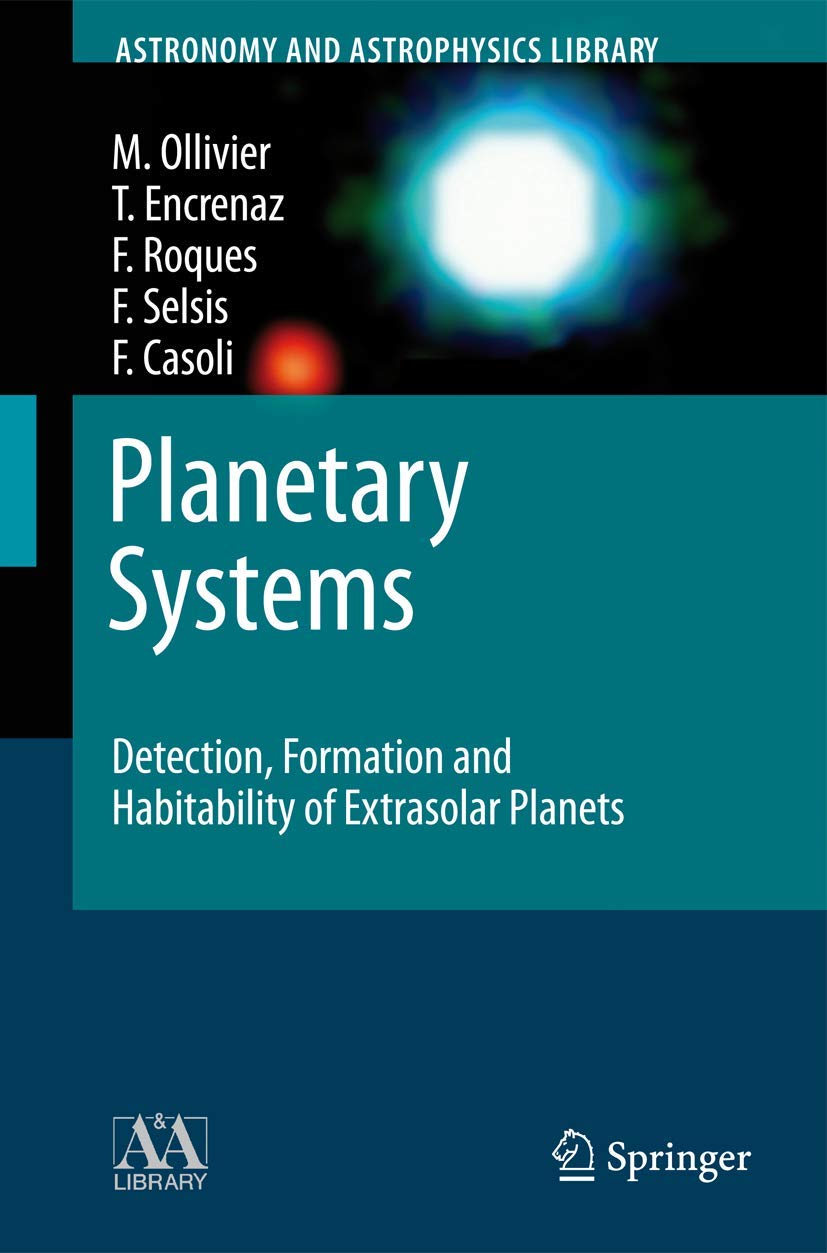
Planetary Systems: Detection, Formation and Habitability of Extrasolar
Planetary Systems: Detection, Formation and Habitability of Extrasolar
Price subject to change. Tap below for current.
Couldn't load pickup availability
Our review of Planetary Systems: Detection, Formation and Habitability of Extrasolar Planets finds it most valuable for readers seeking a rigorous, research-oriented overview of exoplanet science. The book compiles observational results and theoretical advances from a period when more than 300 extrasolar planets had been detected, and the authors focus on how detection methods, formation scenarios and habitability studies intersect. This review highlights why the collection is a useful reference for graduate students and researchers who want a consolidated snapshot of the field rather than a popular-audience primer.
Key Features
- Comprehensive coverage: Summarizes both observational detections and theoretical models to give readers a broad view of exoplanet research.
- Detection methods explained: Describes the main observational techniques in use to increase sensitivity and improve exoplanet discovery.
- Formation scenarios: Discusses new theoretical approaches that seek to explain the variety of planetary systems observed, including close-in giant planets.
- Habitability focus: Examines the question of planetary habitability in the context of diverse system architectures and stellar environments.
- Edited contributions: Brings together perspectives from multiple authors to cover the topic from observational and theoretical angles.
Who It's For
The book is best suited to advanced undergraduates, graduate students and professional astronomers who want a concise review of the state of extrasolar planet research around the time when several hundred detections had been made. Its emphasis on both detection techniques and theoretical modeling makes it a useful supplemental text for courses on planetary systems or astrobiology.
Readers seeking a general-audience introduction with minimal technical detail should look elsewhere; this volume assumes some familiarity with astronomical observation and basic planetary science concepts and is organized as a collection of scholarly treatments rather than a narrative popular science book.
Pros & Cons
Pros
- Offers a balanced mix of observational results and theoretical discussion useful for research context.
- Provides a focused survey of detection methods that were actively developing at the time of publication.
- Addresses habitability in the framework of varied planetary system architectures, which helps connect formation and life-related questions.
Cons
- As an edited scholarly volume, it can be dense and assumes prior knowledge, which limits its accessibility.
Specifications
| Title | Planetary Systems: Detection, Formation and Habitability of Extrasolar Planets |
| Series | Astronomy and Astrophysics Library |
| Authors / Editors | Marc Ollivier, Therese Encrenaz, Francoise Roques, Franck Selsis, Fabienne Casoli |
| Subject | Extrasolar planet detection, formation and habitability |
| Approach | Observational methods and theoretical models |
| Intended audience | Graduate students and researchers in astronomy |
Our Verdict
Planetary Systems is a focused, scholarly overview that delivers strong value to readers engaged with exoplanet research. It connects detection techniques, formation theory and habitability questions in a way that benefits graduate-level study and professional reference, though casual readers may find it too technical for introductory learning.
Frequently Asked Questions
Does this book cover observational detection methods?
Yes. It describes the principal detection techniques in use to increase sensitivity and explains how observational advances shaped early exoplanet discoveries.
Is this suitable for beginners?
Not ideal for beginners; the text assumes a background in astronomy and is tailored to students and researchers rather than a general audience.
Does it discuss habitability?
Yes. The authors examine habitability in the context of different planetary system architectures and current theoretical models.
Editor's Take
Planetary Systems is a scholarly overview that links detection techniques, formation theory and habitability, making it valuable for graduate students and researchers seeking a focused reference.

Recently viewed
Recently viewed products will appear here as customers browse the store.