

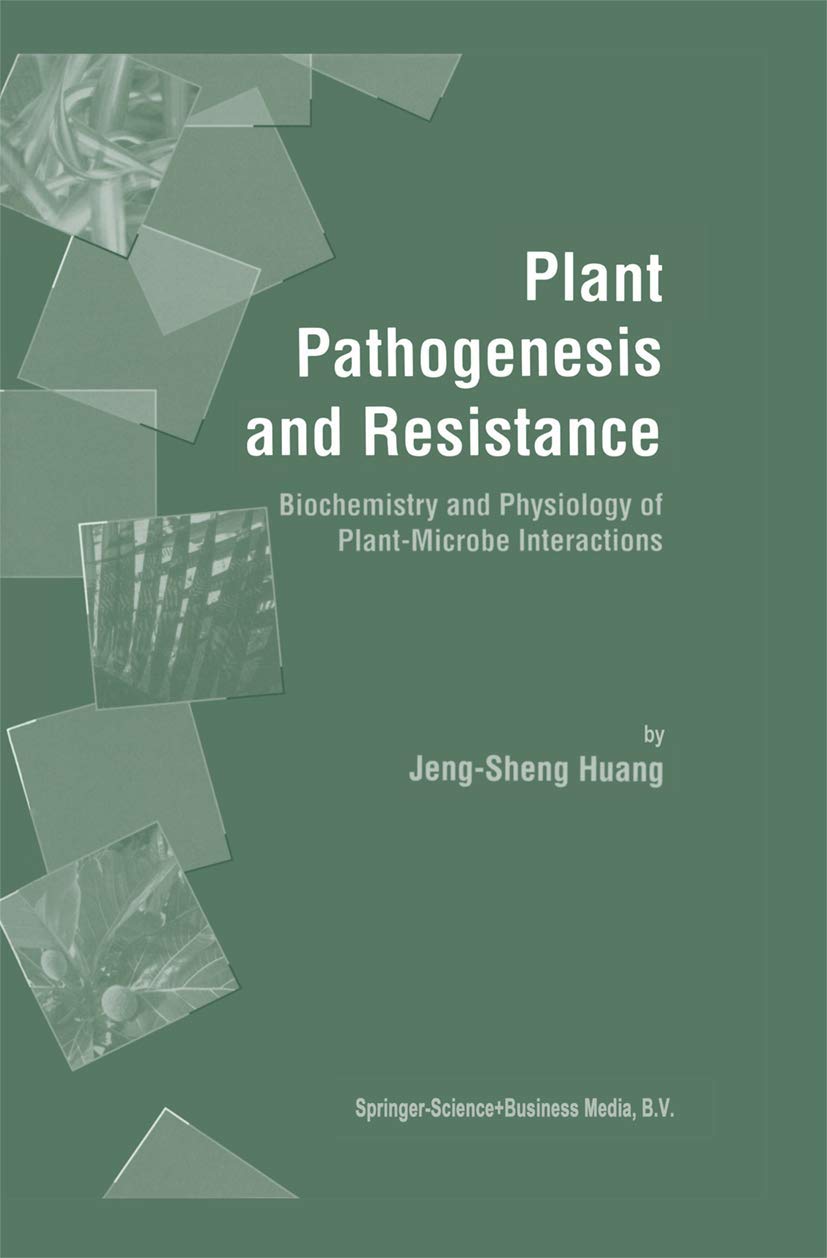
Plant Pathogenesis and Resistance: Biochemistry and Physiology
Plant Pathogenesis and Resistance: Biochemistry and Physiology
Price subject to change. Tap below for current.
Couldn't load pickup availability
In this review of Plant Pathogenesis and Resistance: Biochemistry and Physiology of Plant-Microbe Interactions the reviewer finds a focused, technically detailed overview that is best suited to researchers and advanced students interested in molecular plant immunity. The single biggest reason to buy is its concentrated treatment of the two-way molecular communication between host and pathogen, which clearly links pathogen secretion of virulence factors to plant responses such as cell wall reinforcement and phytoalexin accumulation. This book reads like a reference text that summarizes mechanisms and experimental emphasis rather than a general introduction.
Key Features
- Interactive perspective: Explains the two-way molecular communication so readers can see how pathogen signals and plant responses shape disease outcomes.
- Pathogen mechanisms: Describes how pathogens secrete chemical arsenals and metabolites that disrupt host structure and cellular function, useful for designing experiments.
- Host defense focus: Details plant responses such as cell wall reinforcement, phytoalexin production, and pathogenesis-related proteins to illustrate defense strategies.
- Research orientation: Orients content toward researchers and advanced students by emphasizing pathogenicity and virulence factors and their elicitation of defenses.
- Physiology and biochemistry link: Bridges biochemical mechanisms with physiological outcomes so readers can connect molecular events to whole-plant responses.
Who It's For
This book is aimed primarily at graduate students, postgraduates and laboratory researchers working in plant pathology, plant molecular biology, and related fields who need a concise synthesis of plant-microbe molecular interactions. It is especially valuable for those designing experiments or interpreting data on pathogen virulence factors and host defense responses.
It is less suitable for casual readers or early undergraduates who require broad, introductory explanations; those readers should look for a textbook with more background and pedagogical features such as problem sets or extended tutorials.
Pros & Cons
Pros
- Provides a clear, mechanistic account of pathogen secretion systems and chemical arsenals that establish infection courts.
- Shows how plants reinforce cell walls and accumulate phytoalexins and pathogenesis-related proteins for defense.
- Useful synthesis for researchers connecting biochemical detail to physiological outcomes in plant immunity.
- Concentrated focus helps readers quickly locate discussions on pathogenicity and virulence factors.
Cons
- Not a beginner textbook; readers without prior molecular biology background may find some sections terse.
- The presentation is research oriented and may lack pedagogical features expected in classroom texts.
Specifications
| Title | Plant Pathogenesis and Resistance: Biochemistry and Physiology of Plant-Microbe Interactions |
| Author / Brand | Jeng-Sheng Jeng-Sheng Huang |
| Subject focus | Plant-pathogen molecular communication, pathogenicity, plant defenses |
| Intended audience | Researchers, advanced undergraduate and graduate students |
| Topics covered | Pathogen virulence factors; plant cell wall reinforcement; phytoalexins; PR proteins |
| Approach | Biochemistry and physiology of plant-microbe interactions |
Our Verdict
Plant Pathogenesis and Resistance is a compact, technically focused resource that benefits researchers and advanced students who need a mechanistic synthesis of how pathogens and plants interact at molecular and physiological levels. It offers strong value as a reference for lab-focused readers, but those seeking a beginner-level textbook or extensive pedagogical aids should choose a more introductory title.
Frequently Asked Questions
Is this book suitable for beginners?
It is primarily research oriented and best for advanced undergraduates or graduate students rather than complete beginners.
Does it cover both pathogen and plant perspectives?
Yes; the book emphasizes the two-way molecular communication, detailing pathogen virulence and host defenses.
Who benefits most from this book?
Laboratory researchers and graduate students working on plant-pathogen interactions will gain the most from its detailed, mechanistic focus.
Editor's Take
A compact, technically focused reference that benefits researchers and advanced students by synthesizing pathogen virulence mechanisms and plant defense physiology; not ideal for beginners.

Recently viewed
Recently viewed products will appear here as customers browse the store.