

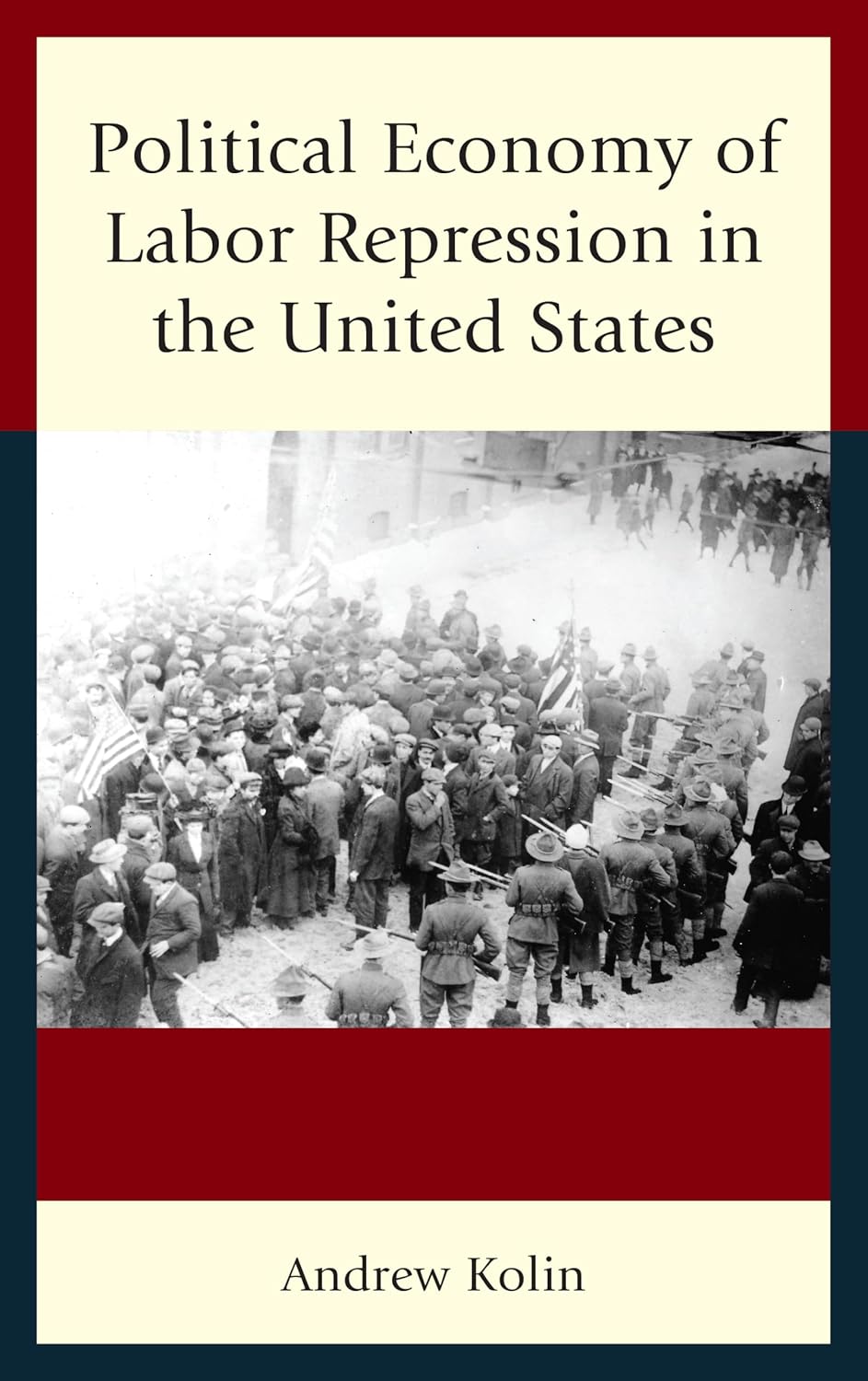
Political Economy of Labor Repression in the United States - Scholarly
Political Economy of Labor Repression in the United States - Scholarly
Price subject to change. Tap below for current.
Couldn't load pickup availability
In this review of Political Economy of Labor Repression in the United States, the reviewer finds a focused, historically grounded study for readers who want to understand how capital-labor relations produce state-backed repression. The book is best for scholars, graduate students, and activists seeking a systematic link between political-economic structures and labor suppression; its single biggest strength is the clear integration of historical narrative with analysis of the government's role. This review highlights why the book matters for understanding labor conflicts rather than as a general social history.
Key Features
- Historical approach: Traces labor repression from the American Revolution onward to show how past decisions shaped later patterns of exclusion and control.
- Class-struggle framework: Explains repression as an outcome of the conflict between capital and labor, offering a consistent analytical thread across chapters.
- State role analysis: Examines how government institutions and policy choices supported the expansion of capitalist interests at the expense of labor influence.
- 19th century focus: Provides detailed chapters on 19th century U.S. developments, useful for readers studying industrialization and labor politics.
- Policy implications: Illuminates how wholesale exclusion of labor from policy formation contributed to repression, helping readers connect history to contemporary debates.
Who It's For
This book is aimed at readers who want a theoretically informed history: graduate students in political economy, historians of labor, policy analysts, and activists seeking a deeper explanation of why repression occurs within capitalist systems. Its focus on the intersection of government and capital makes it a good fit for courses or seminars on labor relations and state power.
Those looking for a light, narrative-driven popular history or a labor-organizing manual should look elsewhere; the book prioritizes analytical clarity and structural explanation over anecdotal storytelling and how-to tactics.
Pros & Cons
Pros
- Clear linkage of historical events to a sustained class-struggle argument that clarifies causes of repression.
- Detailed examination of government roles provides useful context for policy-focused readers.
- Focused treatment of 19th century developments that connects economic growth with exclusionary political structures.
Cons
- The book's analytical and academic tone may be dense for casual readers seeking narrative history.
Specifications
| Title | Political Economy of Labor Repression in the United States |
| Author | Andrew Kolin |
| Subject | Capital-labor relations and labor repression |
| Approach | Historical and political-economic analysis |
| Period covered | From the American Revolution through the 19th century |
| Focus | Role of government and inclusion/exclusion in political-economic structures |
Our Verdict
Political Economy of Labor Repression in the United States is a strong, value-for-money choice for readers who want a rigorous account of how capitalist growth and government choices produced labor exclusion and repression. Its historical breadth and explicit class-struggle framing make it particularly valuable for academic study and informed policy discussion.
Frequently Asked Questions
Does this book cover contemporary labor policy?
It traces historical foundations and analyses that illuminate contemporary policy dynamics, though it focuses mainly on historical development.
Is prior political-economy background required?
Basic familiarity with concepts like class struggle and capitalism helps, but the book explains its framework through historical examples.
Will this help activists?
Yes, for those seeking structural explanations of repression and the role of the state, though it is not an organizing manual.
Editor's Take
A rigorous, historically grounded study that links capitalist growth and government choices to labor exclusion and repression; ideal for scholars and policy-minded readers seeking structural explanation.

Recently viewed
Recently viewed products will appear here as customers browse the store.