

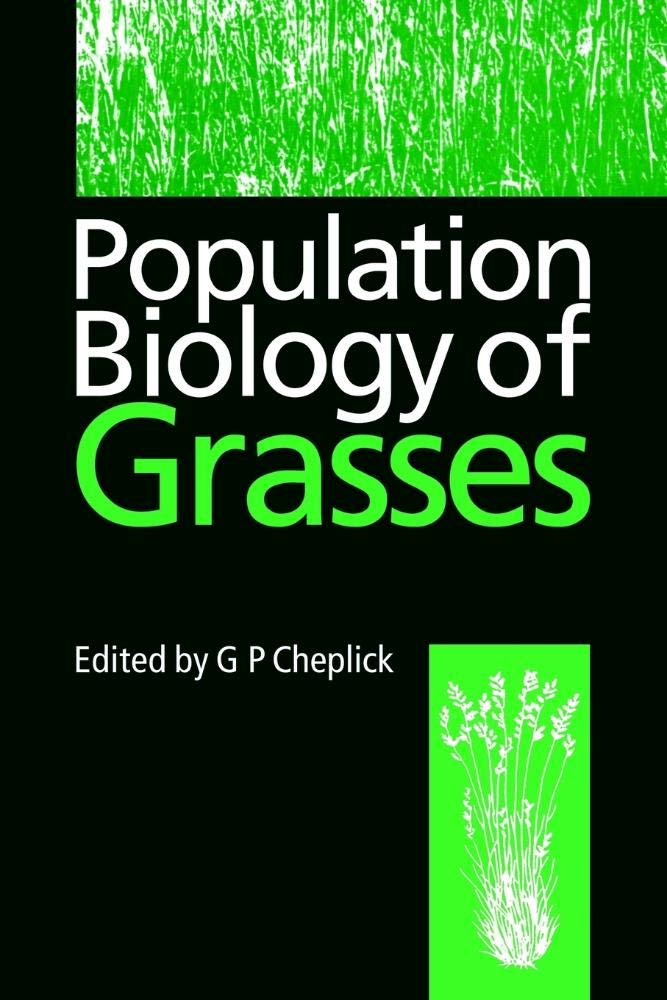
Population Biology of Grasses - In-depth Scientific
Population Biology of Grasses - In-depth Scientific
Price subject to change. Tap below for current.
Couldn't load pickup availability
In this review of Population Biology of Grasses, the reviewer finds a focused, research-driven volume aimed at readers who need a comprehensive synthesis of how grass populations function across environments. The book is best for graduate students, researchers and restoration practitioners who want a cross-disciplinary view that links demography, physiology, ecology and molecular approaches. Its single biggest reason to buy is the breadth of perspectives gathered in one place, which makes it a useful reference for work on reproduction, dispersal, seedling establishment and population dynamics.
Key Features
- Interdisciplinary coverage: Brings together demographic, physiological, ecological and molecular approaches so readers can compare methods and findings across fields.
- Life history focus: Examines reproduction, dispersal, germination and seedling establishment to clarify stages that limit or promote population persistence.
- Applied and fundamental balance: Includes work relevant to restoration and agriculture as well as studies targeted at basic evolutionary and ecological questions.
- Genetic and plasticity perspectives: Discusses the role of genetic variation and phenotypic plasticity in shaping population responses to environmental variation.
- Expert contributors: Chapters by researchers provide current information and constructively compare experimental and observational approaches.
Who It's For
The book is aimed at graduate students and researchers in plant ecology, evolutionary biology and restoration ecology who need a detailed synthesis of grass population biology. It is particularly useful for those working on demographic modeling, seed ecology or genetic structure of plant populations.
Practitioners seeking quick management checklists or hobbyists looking for an identification guide should look elsewhere, since the volume emphasizes theory, research results and comparative perspectives rather than step-by-step field protocols or taxonomic keys.
Pros & Cons
Pros
- Comprehensive interdisciplinary treatment that connects demography with physiology and genetics.
- Useful discussion of life history stages such as seedling establishment and dispersal for applied and basic work.
- Chapters synthesize recent research, making it a solid reference for graduate-level reading.
Cons
- Not a practical field manual, so it lacks concise management checklists some practitioners prefer.
- The content is research-focused and may be dense for readers without graduate-level background.
Specifications
| Title | Population Biology of Grasses |
| Primary authors/editors | G. P. Cheplick PhD, A. D. Bradshaw |
| Subject focus | Population biology, demography, reproduction, dispersal |
| Approaches included | Demographic, physiological, ecological, molecular |
| Applications covered | Both applied (restoration, agriculture) and fundamental research |
| Key topics | Germination, seedling establishment, genetic variation, phenotypic plasticity |
Our Verdict
Population Biology of Grasses is a valuable, research-oriented collection for graduate students and scientists who need a rigorous synthesis of how grass populations operate across ecosystems. It represents good value as a reference because it gathers diverse methodological perspectives and recent findings in one volume, even though it is not designed as a hands-on field guide.
Frequently Asked Questions
Does this book cover genetic aspects of grass populations?
Yes, chapters discuss the role of genetic variation and phenotypic plasticity in shaping life history and population responses.
Is this suitable for practical restoration planning?
It contains applied research relevant to restoration, but it is not a step-by-step management manual.
What topics are emphasized?
The volume emphasizes reproduction, dispersal, germination, seedling establishment and population dynamics across ecological and molecular scales.
Editor's Take
Population Biology of Grasses is a research-focused, interdisciplinary reference that brings together demography, physiology and genetics. It is recommended for graduate students and scientists needing a rigorous synthesis, though it is not a field manual.

Recently viewed
Recently viewed products will appear here as customers browse the store.