

Portraits of 21st Century Chinese Universities - In-Depth
Portraits of 21st Century Chinese Universities - In-Depth
Price subject to change. Tap below for current.
Couldn't load pickup availability
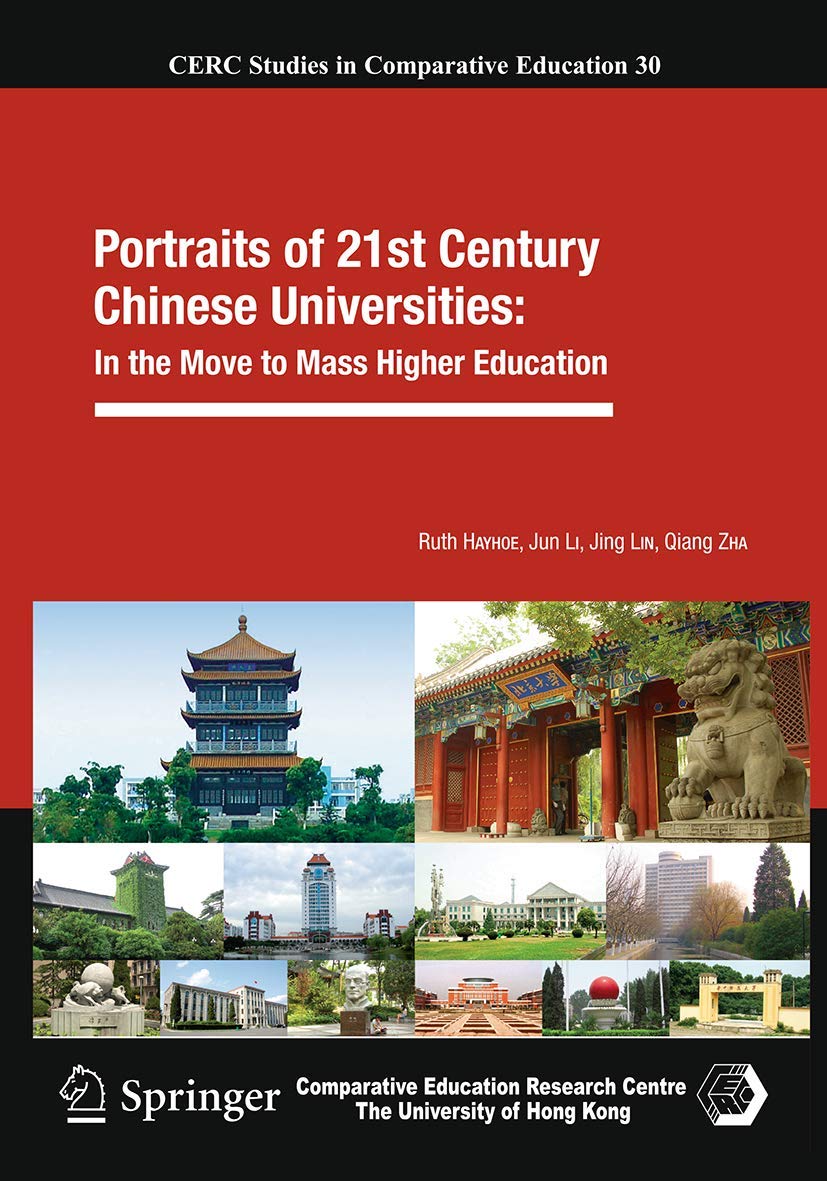
In this review of Portraits of 21st Century Chinese Universities readers will find a careful, research-driven look at how Chinese higher education shifted into a mass phase since the late 1990s. Written by Ruth Hayhoe, Jun Li, Jing Lin and Qiang Zha, the book is best for scholars, policymakers and graduate students who need grounded case studies and student-survey evidence to understand institutional change across China. The single biggest reason to buy is the combination of national policy analysis with portraits of twelve distinct campuses, offering both breadth and human detail.
Key Features
- National policy analysis: The opening section explains the central policy processes behind the move to mass higher education, providing context for institutional changes described later.
- Large student survey: Analysis of responses from about 2,300 students across twelve campuses highlights how expansion affected learning experiences and civic involvement.
- Twelve campus portraits: Detailed profiles of three comprehensive, three education, three science and technology, and three private universities reveal regional and institutional variation.
- Multiple perspectives: Portraits are drawn from the eyes of students, faculty and institutional leaders to show competing views within each university.
- Comparative emphasis: The book situates individual cases within broader trends, useful for comparative education researchers and policy analysts.
Who It's For
This title is aimed primarily at academics, graduate students and policy researchers who want a rigorous, evidence-based account of China's expansion of higher education. Those studying comparative education or the sociology of education will find the campus portraits and student survey especially valuable.
Readers looking for a brief popular history or a narrative memoir should look elsewhere; the book is scholarly in tone and organized around institutional analysis rather than personal storytelling or travel writing.
Pros & Cons
Pros
- Comprehensive combination of national policy context and campus-level portraits gives a layered view of change.
- The student survey of roughly 2,300 respondents provides empirical weight to the authors' observations.
- Coverage across four university types highlights diversity in responses to massification.
Cons
- The scholarly tone and focus on institutional analysis make it less accessible for casual readers seeking a narrative-driven account.
Specifications
| Title | Portraits of 21st Century Chinese Universities |
| Series | CERC Studies in Comparative Education, 30 |
| Authors / Editors | Ruth Hayhoe, Jun Li, Jing Lin, Qiang Zha |
| Scope | Twelve universities across different regions and types |
| Empirical basis | Survey of about 2,300 students plus interviews with faculty and leaders |
| Main themes | Mass higher education, policy processes, institutional portraits |
Our Verdict
Portraits of 21st Century Chinese Universities is a strong value for researchers and students seeking a nuanced, empirically informed account of China's move to mass higher education. Its combination of national policy analysis, a substantial student survey and twelve richly described campus portraits makes it a reliable reference for comparative education and policy work.
Frequently Asked Questions
Does the book include original survey data?
Yes, the authors analyze responses from about 2,300 students across the twelve campuses profiled.
What types of universities are profiled?
The portraits cover three comprehensive universities, three education-related, three science and technology, and three newly emerging private universities.
Is this accessible for general readers?
The book is scholarly and best suited to researchers and graduate students rather than casual readers seeking a narrative account.
Editor's Take
A rigorous, research-driven study ideal for scholars and policy researchers; combines national policy analysis, a survey of about 2,300 students and twelve detailed campus portraits for a nuanced account of China's mass higher education transition.

Recently viewed
Recently viewed products will appear here as customers browse the store.