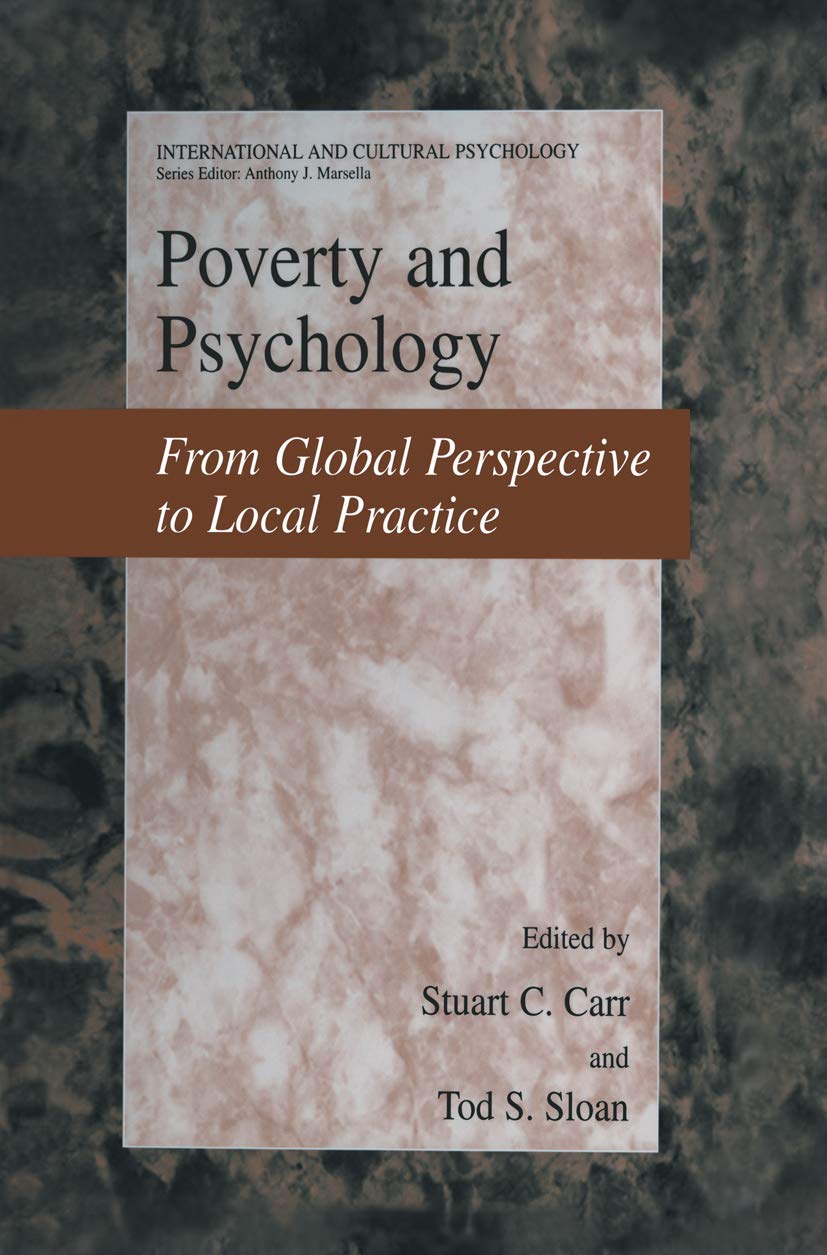
Poverty and Psychology: Global Perspectives on Local Practice
Poverty and Psychology: Global Perspectives on Local Practice
Price subject to change. Tap below for current.
Couldn't load pickup availability
Poverty and Psychology is an essential read for anyone interested in understanding the intricate relationship between poverty and mental health. This book delves into the psychological implications of poverty, offering a comprehensive view that spans from global perspectives to local practices. The authors, Stuart C. Carr and Tod S. Sloan, bring their expertise to the forefront, making complex theories accessible to a wide audience.
One of the standout features of this book is its focus on cultural psychology. The authors explore how different cultures perceive and respond to poverty, providing valuable insights into the psychological effects that vary across different societies. This aspect is crucial for practitioners who work in diverse environments and need to tailor their approaches to fit the cultural context of their clients.
The book is structured to guide readers through various themes related to poverty, including the impact on mental health, community resilience, and the role of social support systems. Each chapter is rich with case studies that illustrate real-world applications of the theories discussed. These examples not only enhance understanding but also inspire practitioners to think critically about their own practices.
Another significant contribution of this work is its emphasis on local practices. The authors argue that while global perspectives are important, it is the local context that ultimately shapes the experiences of individuals living in poverty. This focus encourages readers to consider how they can implement strategies that are culturally relevant and effective in their own communities.
Throughout the book, the authors also address the importance of interdisciplinary approaches in tackling the challenges posed by poverty. They advocate for collaboration between psychologists, social workers, and policymakers to create comprehensive solutions that address both the psychological and social dimensions of poverty. This holistic view is essential for developing effective interventions that can lead to meaningful change.
In addition to theoretical discussions, the book provides practical tools and resources for practitioners. Readers will find valuable information on assessment techniques, intervention strategies, and ways to engage with communities. The inclusion of evidence-based practices ensures that the recommendations are grounded in research, making them reliable and applicable in real-world settings.
Overall, Poverty and Psychology is a thought-provoking and insightful book that challenges readers to rethink their understanding of poverty and its psychological implications. It is a must-read for anyone involved in psychology, social work, or community development, as it equips them with the knowledge and tools necessary to make a positive impact in the lives of those affected by poverty.
Share