

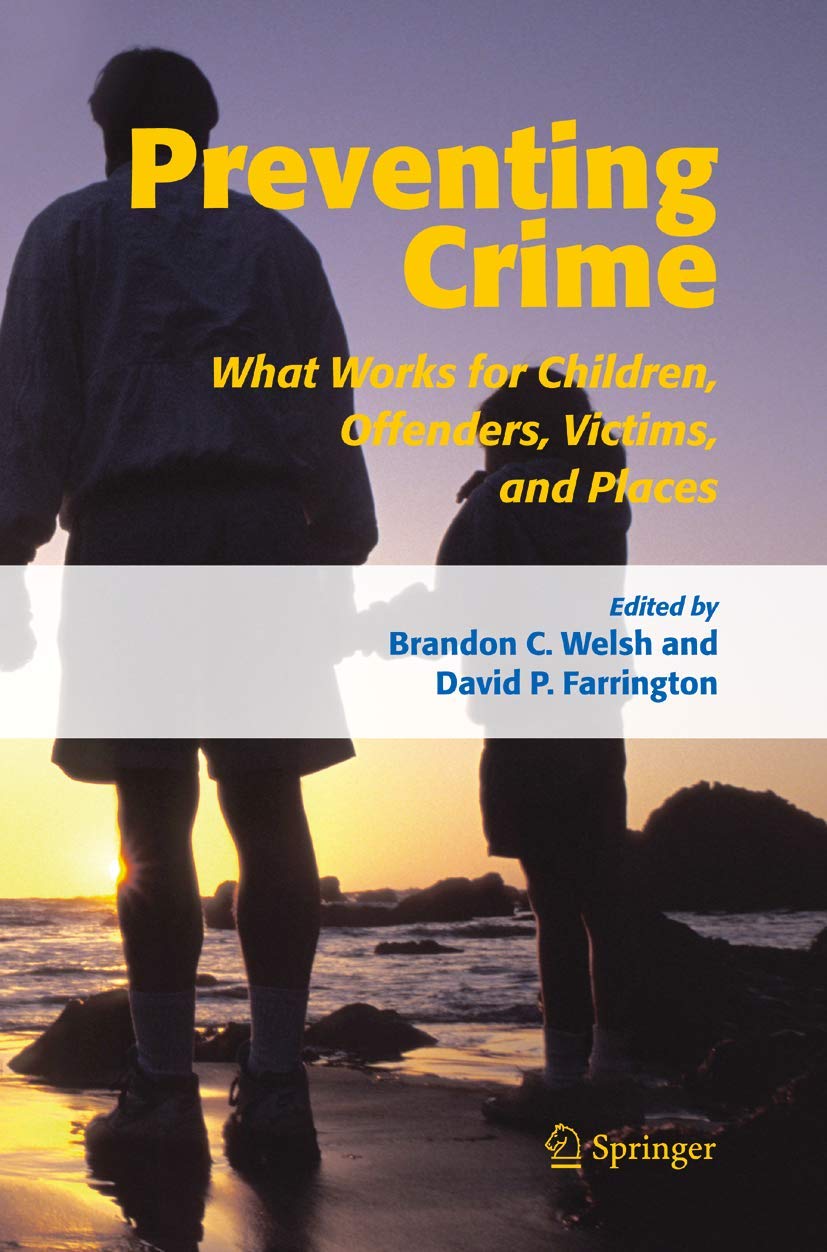
Preventing Crime: What Works for Children, Offenders, Victims
Preventing Crime: What Works for Children, Offenders, Victims
Price subject to change. Tap below for current.
Couldn't load pickup availability
In this review of Preventing Crime: What Works for Children, Offenders, Victims and Places, the book is presented as a practical, evidence-focused guide aimed at anyone who must make policy or program decisions about crime prevention. The bottom line: this is for practitioners, policymakers and researchers who need a clear, research-grounded summary of what interventions have reliable effects. The authors make a sustained case for relying on the best available evidence, and the book's value lies in its systematic, Campbell Collaboration-aligned approach that helps readers separate tested programs from those that merely sound plausible.
Key Features
- Evidence-based focus: The book prioritizes rigorous evaluations so readers can distinguish interventions supported by data from those without measurable impact.
- Broad scope: It covers prevention strategies for children, offenders, victims and places, offering a wide lens useful for integrated policy planning.
- Authoritative project backing: As a project of the Campbell Collaboration Crime and Justice Group, the work aggregates leading scientific evidence to inform decisions.
- Decision-maker orientation: The text emphasizes how to use evidence in implementation choices, making it practical for those allocating resources or designing programs.
- Critical evaluation stance: The authors discuss common pitfalls where programs with no discernable effect are nonetheless adopted, helping readers apply skepticism and demand better evidence.
Who It's For
This book is best suited to criminal justice policymakers, program managers and academic researchers who require a concise synthesis of what interventions have been evaluated and found effective. It is also useful for graduate students or consultants tasked with recommending or designing prevention programs based on evidence.
Those seeking an introductory textbook on criminology theory or a how-to manual with step-by-step implementation templates should look elsewhere; the emphasis here is on reviewing and weighing the available research rather than providing operational checklists or training materials.
Pros & Cons
Pros
- Provides a rigorous, evidence-first framework that helps distinguish effective programs from untested ones.
- Covers multiple target groups-children, offenders, victims and places-so readers can apply findings across contexts.
- Backed by the Campbell Collaboration Crime and Justice Group, lending credibility to its synthesis of studies.
Cons
- The book focuses on evidence synthesis and policy guidance and does not include detailed operational tools for implementation.
Specifications
| Title | Preventing Crime: What Works for Children, Offenders, Victims and Places |
| Authors | Brandon C. Welsh, David P. Farrington |
| Project affiliation | Campbell Collaboration Crime and Justice Group |
| Primary focus | Evidence-based crime prevention |
| Audience | Policymakers, practitioners, researchers |
| Content approach | Synthesis of scientific evidence and program evaluations |
Our Verdict
Preventing Crime is a valuable, well-grounded resource for anyone responsible for choosing or recommending crime prevention programs because it concentrates on what the evidence actually shows. It is good value for readers who need clarity about effectiveness across children, offenders, victims and places, though implementation teams will need supplementary guides for operational details.
Frequently Asked Questions
Does this book summarize research on multiple target groups?
Yes. It covers interventions aimed at children, offenders, victims and places and highlights what the best evidence shows for each group.
Is the book practical for frontline implementers?
Partly. It offers guidance on using evidence to make decisions but does not provide step-by-step implementation toolkits.
Who produced the evidence synthesis?
The work is a project of the Campbell Collaboration Crime and Justice Group and aggregates leading scientific evaluations of crime prevention.
Editor's Take
A concise, evidence-focused synthesis for policymakers and researchers, Preventing Crime clarifies which prevention programs are supported by evaluations and helps decision-makers favor interventions with proven effects.

Recently viewed
Recently viewed products will appear here as customers browse the store.