

Principles of Forensic Mental Health Assessment - Practical Guidance
Principles of Forensic Mental Health Assessment - Practical Guidance
Price subject to change. Tap below for current.
Couldn't load pickup availability
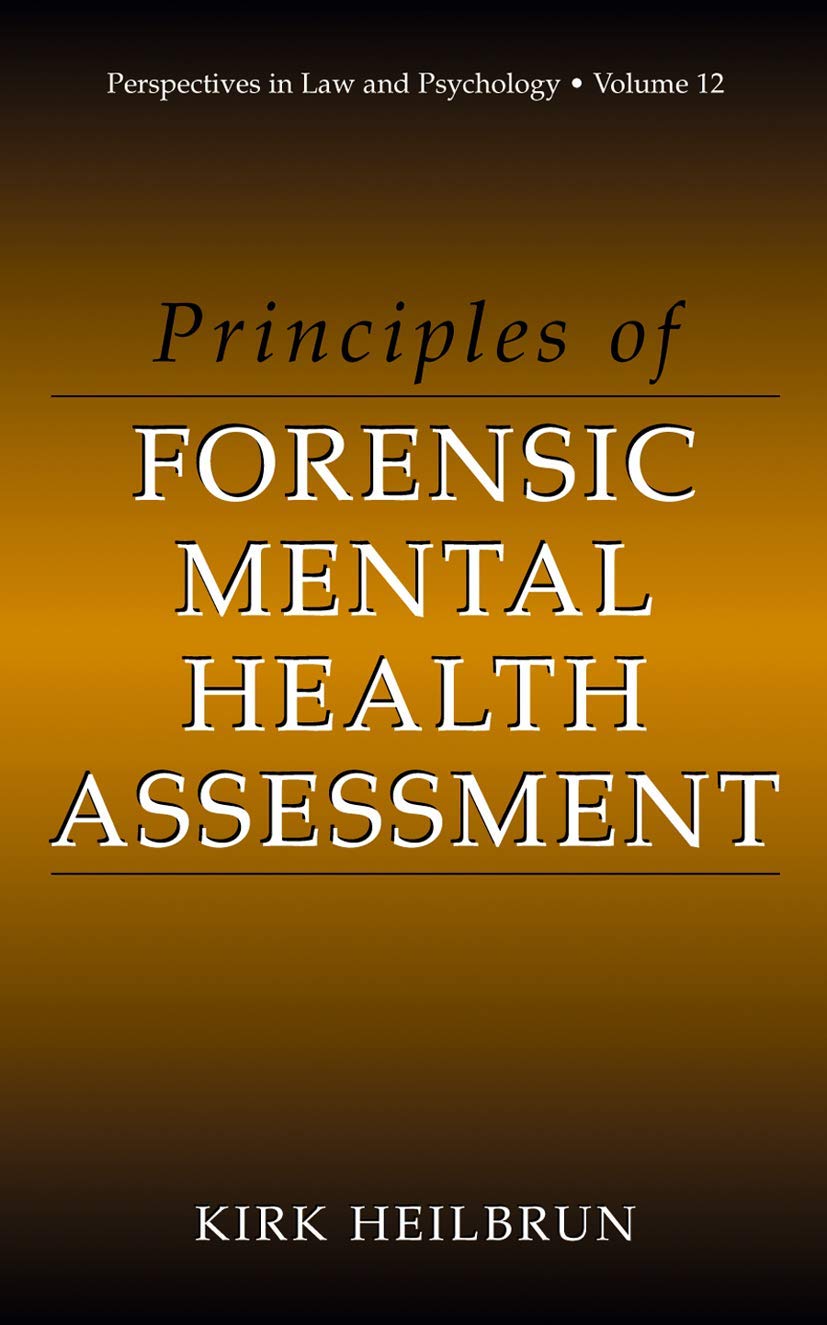
In this review of Principles of Forensic Mental Health Assessment the reviewer finds a thoughtful, principle-driven text best suited to clinicians and legal professionals who want a coherent framework across forensic questions. The book's single biggest reason to buy is its organization around 29 broad principles rather than topic-by-topic legal issues, which gives readers a consistent, ethics- and evidence-informed approach to assessments. This review highlights how the author ties those principles to sources of authority in ethics, law, science, and professional practice, making it a useful reference for applied work.
Key Features
- 29 Foundational Principles: Presents a concise set of principles that offer consistent guidance across diverse forensic assessment contexts.
- Authority-Based Analysis: Each principle is analyzed with reference to ethics, law, science, and professional practice to ground recommendations in credible sources.
- Applied Focus: Emphasizes practical implications for clinicians conducting evaluations rather than purely theoretical discussion.
- Cross-Issue Utility: Organizes material so the same principle can be applied to multiple legal issues, reducing repetition and improving coherence.
- Concise Scholarship: Distills complex material into accessible chapters suitable for quick consultation by practitioners.
Who It's For
The book is primarily aimed at forensic psychologists, psychiatrists, and other mental health professionals who perform evaluations for courts or other legal systems and who need a principled framework that applies across case types. It will also be helpful for law students, legal practitioners, and policy makers who want to understand the professional and ethical foundations that inform forensic assessment practice.
Those seeking step-by-step test protocols or a comprehensive textbook of psychometrics may want a more technical manual. Readers expecting extensive case law summaries or jurisdiction-specific guidance should complement this book with local legal resources.
Pros & Cons
Pros
- Provides a stable, principle-based structure that aids consistent decision making across varied forensic matters.
- Connects principles to ethics, law, and science, which strengthens the practical credibility of recommendations.
- Useful as a reference for experienced clinicians who want to align practice with professional authority.
Cons
- Not a substitute for detailed test manuals or jurisdiction-specific legal guides, so some users will need additional resources.
Specifications
| Title | Principles of Forensic Mental Health Assessment |
| Series | Perspectives in Law & Psychology |
| Author / Brand | Kirk Heilbrun |
| Core Content | 29 broad principles of forensic assessment |
| Approach | Analysis from ethics, law, science, and professional practice |
| Intended Audience | Forensic clinicians, legal professionals, students |
Our Verdict
Principles of Forensic Mental Health Assessment is recommended for clinicians and legal professionals who want a principled, authority-grounded framework for conducting evaluations. It is good value as a concise reference that reduces fragmentation across legal issues and helps align practice with ethical and scientific standards, though practitioners should pair it with technical manuals or local legal sources when needed.
Frequently Asked Questions
Does this book offer practical assessment tools?
The book focuses on high-level principles and analysis rather than step-by-step test protocols, so it is best used alongside technical manuals for instruments.
Who authored the book?
The work is by Kirk Heilbrun and is positioned in the Perspectives in Law & Psychology series.
Is it suitable for legal professionals?
Yes; lawyers and policy makers will find the ethics- and law-informed perspective helpful for understanding professional practice in forensic assessment.
Editor's Take
A principled, authority-grounded guide for forensic clinicians and legal professionals that provides 29 broad principles to align assessment practice with ethics, law, and science; best used alongside technical manuals.

Recently viewed
Recently viewed products will appear here as customers browse the store.