

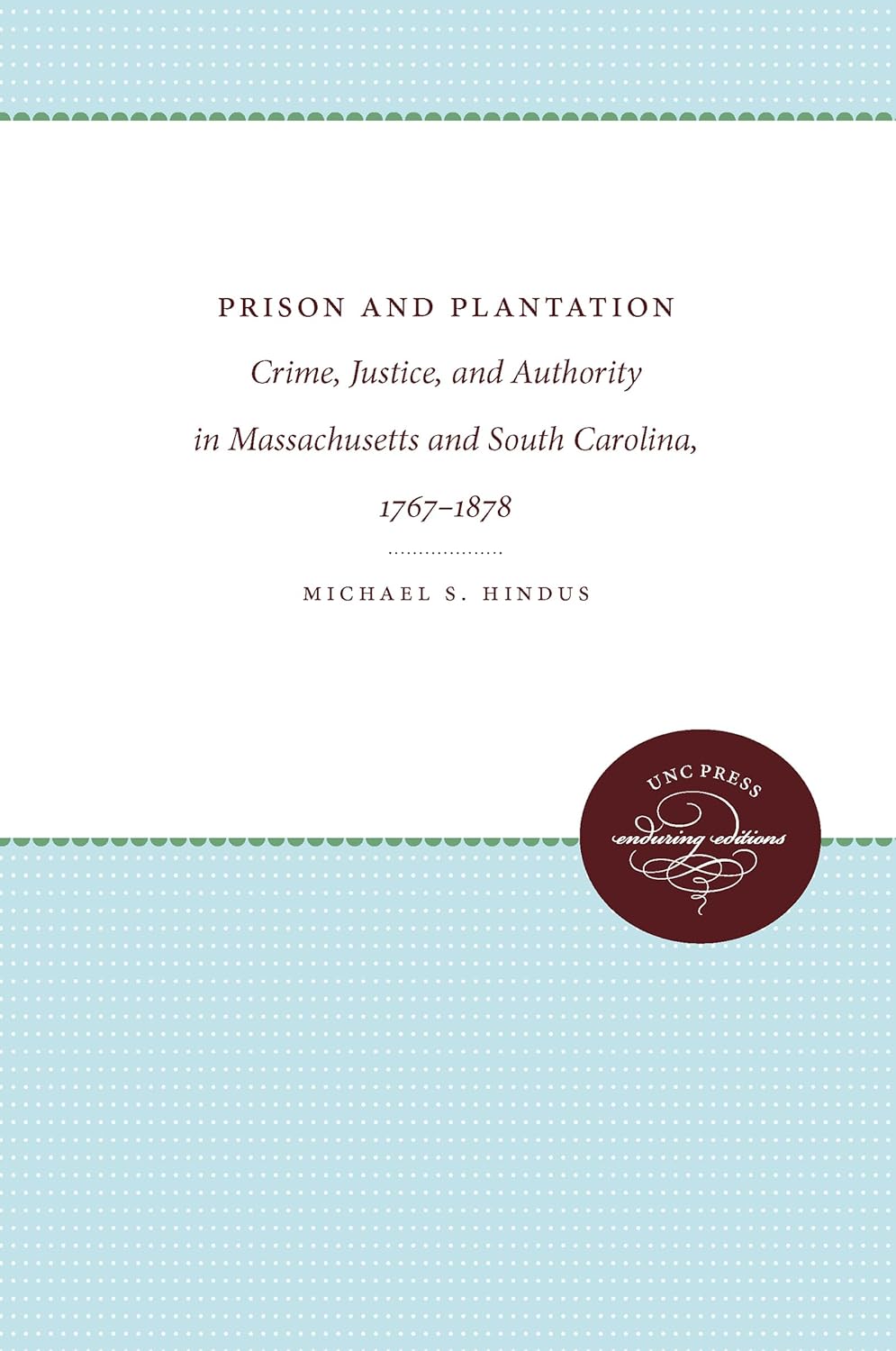
Prison and Plantation: Crime, Justice, and Authority in Massachusetts
Prison and Plantation: Crime, Justice, and Authority in Massachusetts
Price subject to change. Tap below for current.
Couldn't load pickup availability
In this review of Prison and Plantation, the reviewer finds a rigorous, comparative study aimed at readers who want to understand how differing social and economic structures shaped criminal justice across a century. Michael S. Hindus offers a sustained argument about how Massachusetts embraced the penitentiary to minimize extralegal authority while South Carolina cut back formal institutions and relied on vigilantism. This book is best for historians, legal scholars, and graduate students seeking a focused, evidence-driven account of regional differences in crime and authority.
Key Features
- Comparative focus: Examines Massachusetts and South Carolina side by side so readers can directly contrast northern penitentiary development with southern erosion of formal institutions.
- Long chronological sweep: Covers 1767 to 1878, providing continuity across colonial, revolutionary, and postwar transformations that shaped legal practice.
- Social and economic context: Connects changing patterns of crime and punishment to urbanization, industrialization, slavery, and rural social order for deeper causal insight.
- Legal-historical method: Uses court practice and institutional decisions to show how formal law interacted with informal authority in everyday governance.
- Accessible reprint: An UNC Press Enduring Edition makes the originally out-of-print scholarship available again in a readable paperback format.
Who It's For
This book is best suited to academics and advanced students in legal history, American history, and criminal justice who want a comparative case study linking institutional choices to broader social structures. Readers preparing coursework or research on penal reform, vigilantism, or regional legal cultures will find the measured analysis especially useful.
It is less appropriate for casual readers seeking a narrative history with abundant anecdote or for those wanting a contemporary policy handbook: the emphasis is scholarly, archival, and interpretive rather than prescriptive or popular.
Pros & Cons
Pros
- Thorough comparative framework clarifies how different social economies produced divergent legal choices.
- Clear chronological coverage from 1767 to 1878 helps trace institutional change over time.
- Strong use of legal and social evidence supports the central argument about penitentiary adoption versus reliance on vigilantism.
Cons
- The scholarly tone and focus make it less accessible to readers who expect popular narrative history.
Specifications
| Title | Prison and Plantation: Crime, Justice, and Authority in Massachusetts and South Carolina, 1767-1878 |
| Author | Michael S. Hindus |
| Scope | Comparative study of two states |
| Time period | 1767-1878 |
| Focus areas | Crime, justice, authority, penitentiary, vigilantism |
| Edition | UNC Press Enduring Edition (paperback reprint) |
Our Verdict
Prison and Plantation is a valuable, well-argued work for specialists who need a comparative legal history tying institutional choices to social and economic contexts. While its academic tone limits casual appeal, the book offers clear evidence and interpretation that make it a good value for researchers and graduate seminars exploring punishment, social order, and regional legal cultures.
Frequently Asked Questions
Does this book compare northern and southern penal systems?
Yes. The core of the book contrasts Massachusetts adoption of the penitentiary with South Carolina's reduced formal institutions and reliance on vigilantism.
Is this a recent edition?
This is an UNC Press Enduring Edition, a paperback reprint that restores an out-of-print scholarly work in its original form.
Who will benefit most from reading it?
Historians, legal scholars, and graduate students studying criminal justice, penal reform, or regional differences in American legal history will get the most from this book.
Editor's Take
Prison and Plantation is a rigorous comparative legal history that links institutional choices to social and economic contexts; its scholarly focus makes it excellent value for researchers and graduate seminars.

Recently viewed
Recently viewed products will appear here as customers browse the store.