

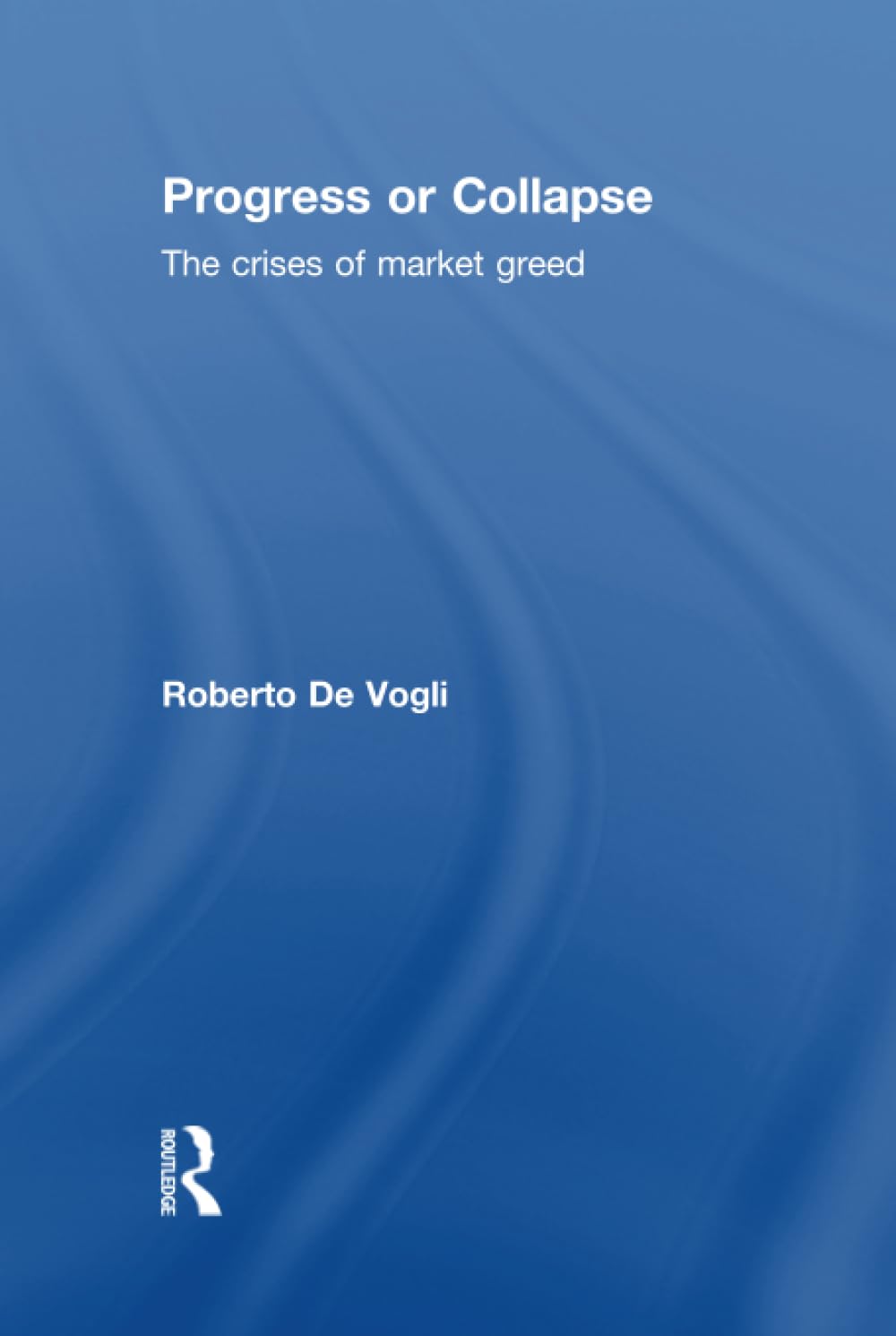
Progress or Collapse - of a Critical Analysis of Modern Progress
Progress or Collapse - of a Critical Analysis of Modern Progress
Price subject to change. Tap below for current.
Couldn't load pickup availability
In this review of Progress or Collapse, Roberto De Vogli presents a sober, wide-angle critique of contemporary economic growth and its ecological consequences. The book is best for readers who want a connected view of environmental, social and psychological crises rather than a narrow technical account. The single biggest reason to read it is its clear argument that ecological limits are intertwined with cultural and economic patterns, making it a useful synthesis for students, policymakers and thoughtful general readers seeking a coherent diagnosis of why current progress may be unsustainable.
Key Features
- Interdisciplinary framing: The book connects environmental problems with social, cultural and psychological issues to show how crises reinforce one another.
- Focus on ecological limits: It emphasizes concrete planetary constraints such as climate change, peak oil and water scarcity to ground the argument in material limits.
- Systems perspective: De Vogli traces converging crises to illustrate how economic growth patterns create feedback loops that risk collapse.
- Accessible tone: The writing aims to bridge specialist evidence and public discussion so nontechnical readers can follow complex linkages.
- Policy relevance: By linking environmental degradation to social outcomes, the book provides a framework useful for thinking about policy tradeoffs and long-term planning.
Who It's For
Progress or Collapse is for readers interested in environmental economics, development studies and cultural critiques who want a broad synthesis rather than a narrow scientific monograph. It suits students, NGO staff, policymakers and intellectually curious readers looking for a single-volume explanation of why ecological and social indicators are moving together.
Readers seeking detailed technical climate modeling, prescriptive step-by-step policy blueprints, or a purely optimistic account of technological fixes should look elsewhere; the book prioritizes diagnosis and systemic connections over granular technical prescriptions.
Pros & Cons
Pros
- Clear synthesis that links environmental limits with social and psychological problems.
- Wide-ranging scope that helps readers see patterns across different crises.
- Written in an accessible style that makes complex interactions understandable.
Cons
- Less focus on detailed, implementable policy steps, which some readers may expect after the diagnosis.
Specifications
| Title | Progress or Collapse |
| Author | Roberto De Vogli |
| Subject focus | Environmental limits and socio-economic crises |
| Primary themes | Climate change, peak oil, water shortages, food and fish depletion |
| Approach | Interdisciplinary critique linking ecological and social systems |
| Intended audience | Students, policymakers, general readers interested in development and sustainability |
Our Verdict
Progress or Collapse is a valuable, thought-provoking synthesis for readers who want to understand why ecological degradation is inseparable from social and economic problems. It is good value for anyone seeking a coherent, interdisciplinary diagnosis of modern progress and its limits, though readers hoping for detailed technical solutions may need to consult specialist works afterward.
Frequently Asked Questions
Does the book focus only on climate change?
Answer. No, it places climate change alongside other limits such as peak oil, water scarcity and food and fish depletion to show how these crises interact.
Is this a technical scientific book?
Answer. No, the book is interdisciplinary and written for a general audience rather than as a detailed climate science or economic modeling text.
Who benefits most from reading it?
Answer. Students, policymakers and informed readers seeking a connected diagnosis of ecological and social crises will gain the most from this work.
Editor's Take
Progress or Collapse offers a coherent interdisciplinary diagnosis linking ecological limits to social and economic crises; recommended for students, policymakers and readers seeking a systemic explanation though not a technical policy manual.

Recently viewed
Recently viewed products will appear here as customers browse the store.