

Property, Production, and Family in Neckarhausen, 1700-1870 - Social
Property, Production, and Family in Neckarhausen, 1700-1870 - Social
Price subject to change. Tap below for current.
Couldn't load pickup availability
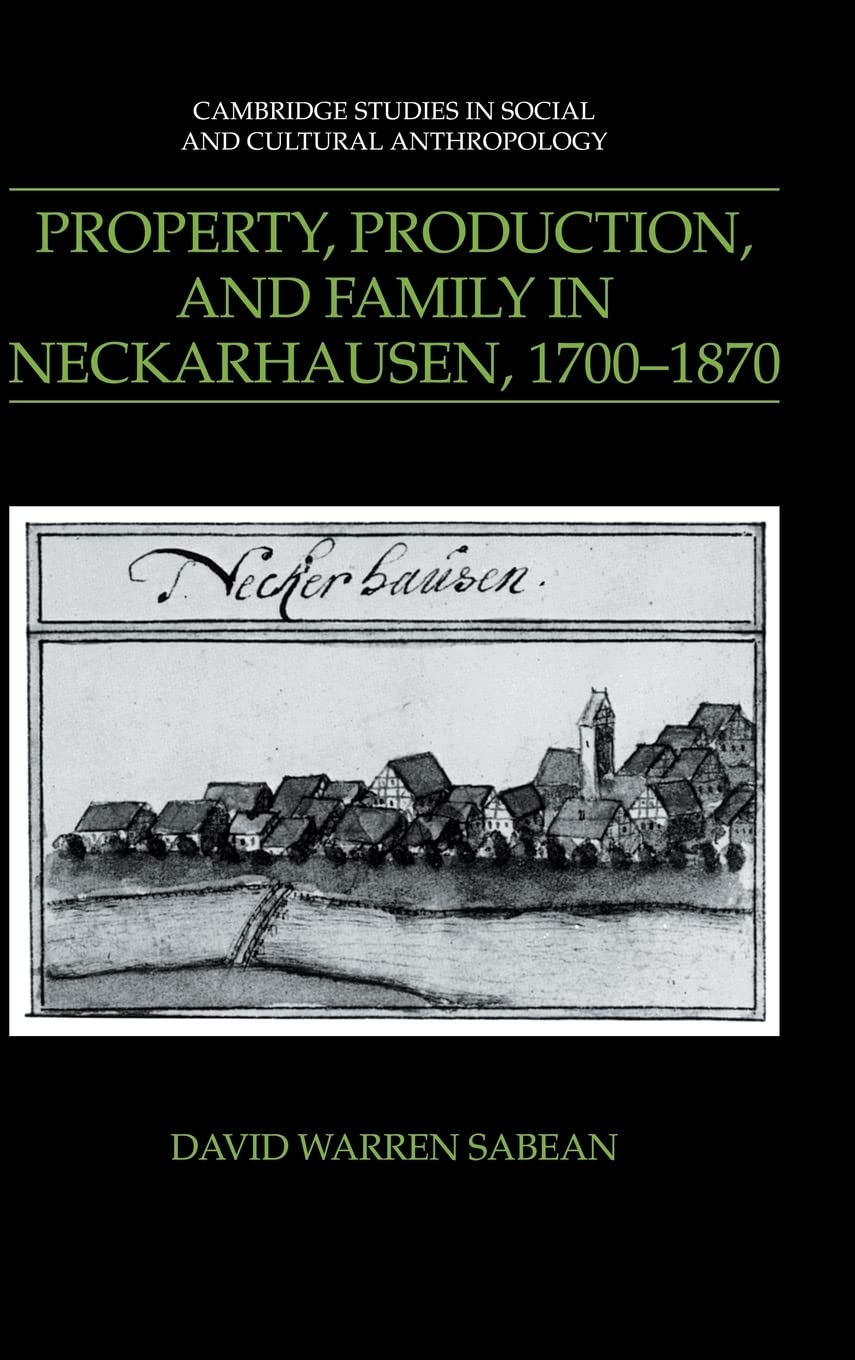
In this review of Property, Production, and Family in Neckarhausen, 1700-1870, the reviewer recommends the book primarily to readers interested in detailed social history and rural family dynamics. David Warren Sabean's study offers a deeply researched portrait of ordinary village life in Southern Germany and explains how family structure directly shaped property distribution and agricultural production. For historians, anthropologists, and advanced students seeking a case study that links demographic change, economic practice, and kinship, this volume is an essential, readable exploration rather than a broad general survey.
Key Features
- Village case study: Presents an intensive local account of Neckarhausen that makes larger patterns in rural Europe tangible and traceable to specific families and farms.
- Family focus: Emphasizes how internal family relations governed inheritance, household labor, and the subdivision of land over generations.
- Longitudinal scope: Covers 1700 to 1870, allowing readers to follow continuity and change across nearly two centuries of demographic and economic shifts.
- Social history approach: Marries documentary evidence with social and cultural analysis to show how everyday practices shaped property and production.
- Regional context: Locates Neckarhausen between the Black Forest and the Swabian Alp to situate local practices within Southern German agricultural systems.
Who It's For
This book is best for graduate students, scholars of European rural history, and readers of historical anthropology who want a focused case study that links family structure to landholding and labor practices. The analysis suits readers comfortable with archival detail and genealogical reconstruction.
Those seeking a synthetic survey of European agrarian history or a short introduction for general readers should look elsewhere: the book's strength is its deep, village-level research rather than broad thematic overviews or lightly illustrated summaries.
Pros & Cons
Pros
- Detailed local analysis that clarifies how family relations shaped property rights and production decisions over time.
- Clear historical narrative spanning 1700-1870 that highlights continuity after the Thirty Years War and later transformations.
- Useful for comparative studies because the Neckarhausen case illustrates common pressures in small peasant agriculture, such as shrinking plots and intensified soil use.
Cons
- The focus on a single village means readers seeking broad, general conclusions may find the scope narrow.
Specifications
| Title | Property, Production, and Family in Neckarhausen, 1700-1870 |
| Author | David Warren Sabean |
| Series | Cambridge Studies in Social and Cultural Anthropology, No. 73 |
| Geographic focus | Neckarhausen, Southern Germany |
| Time period | 1700 to 1870 |
| Subject | Social history of family, property, and peasant agriculture |
Our Verdict
For readers who value meticulous archival research and a strong link between family organization and economic outcomes, this book delivers substantive insights and comparative relevance. It is good value for scholars wanting a rigorous case study of Southern German peasant life, though casual readers may prefer a broader survey.
Frequently Asked Questions
Does this book cover the entire village economy?
It concentrates on family, property, and production relations in Neckarhausen, using household and landholding evidence to illuminate the village economy rather than providing exhaustive economic statistics.
Is prior knowledge of German history required?
Helpful but not required: the book explains local context such as recovery after the Thirty Years War, but readers with some background will gain more from the analysis.
Is this volume suitable for classroom use?
Yes, especially for seminars in social history or historical anthropology where a detailed case study enriches discussion of inheritance, labor, and agrarian change.
Editor's Take
A meticulous, archival case study that shows how family relations shaped property and agricultural production in Neckarhausen; ideal for scholars and advanced students seeking a deep local analysis.

Recently viewed
Recently viewed products will appear here as customers browse the store.