

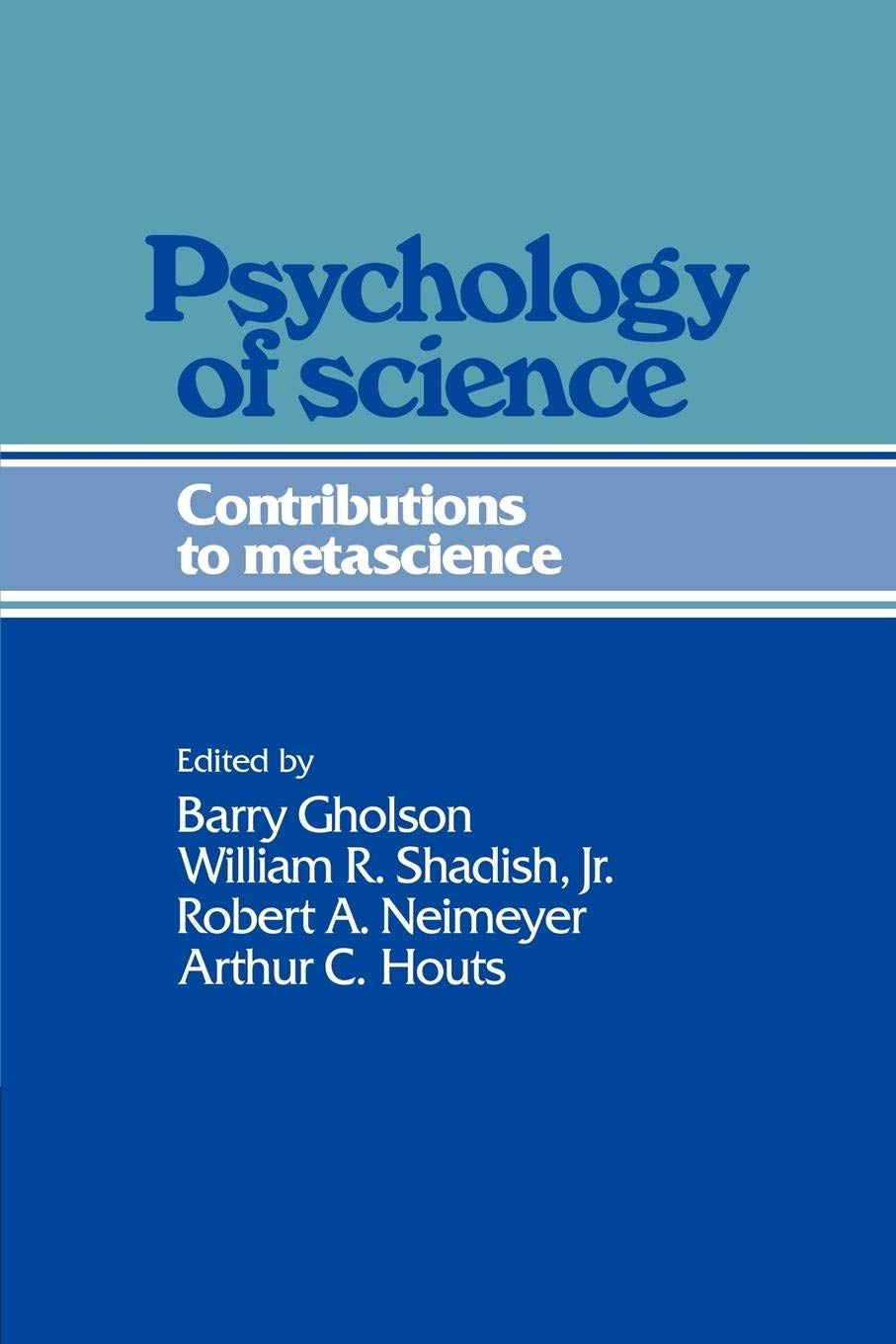
Psychology of Science: Contributions to Metascience - In-depth
Psychology of Science: Contributions to Metascience - In-depth
Price subject to change. Tap below for current.
Couldn't load pickup availability
In this review of Psychology of Science: Contributions to Metascience the reviewer finds a thoughtful, scholarly collection best suited for researchers and advanced students interested in the psychology behind scientific thinking. The single biggest reason to buy is its comprehensive survey of how psychological concepts and methods illuminate the scientific enterprise, with contributors addressing historical evolution, epistemology, and cognitive approaches to scientific practice. This volume organizes cross-disciplinary work into a coherent portrait of the emerging field of the psychology of science.
Key Features
- Comprehensive survey: The introduction and chapters collectively trace the historical evolution of the field, helping readers understand how the psychology of science emerged from related disciplines.
- Interdisciplinary contributors: Essays from scholars in different disciplines bring varied perspectives that clarify how psychological methods apply to scientific activity.
- Epistemological focus: Several chapters tackle epistemological issues, which benefits readers seeking deeper theoretical grounding for metascientific questions.
- Cognitive psychology emphasis: Chapters on cognitive psychology of science explain how individual and small-group cognitive processes influence scientific reasoning and discovery.
- Applied orientation: The book emphasizes application of psychological concepts to real scientific practice, valuable for those studying research behavior and decision making.
- Scholarly framing: The edited volume situates the psychology of science among philosophy, history, and sociology while maintaining a distinct individual-level focus.
Who It's For
This book is ideal for graduate students, researchers, and practitioners in psychology, philosophy of science, and metascience who want a concentrated, scholarly overview of how psychological theory and methods apply to scientific practice. It is most useful for readers comfortable with academic discourse and interested in theory, history, and methodological issues.
Those seeking a quick primer or light popular reading on scientific culture should look elsewhere; the book assumes some familiarity with scholarly arguments and focuses on detailed, discipline-crossing analysis rather than introductory anecdotes.
Pros & Cons
Pros
- Provides a coherent, historically aware overview that clarifies the field's development and scope.
- Includes epistemological and cognitive analyses that deepen understanding of scientific reasoning at individual and small-group levels.
- Contributors from multiple disciplines offer complementary perspectives useful for metascience research.
Cons
- The volume is academic in tone and may be dense for casual readers or those new to the subject.
Specifications
| Title | Psychology of Science: Contributions to Metascience |
| Editors/Authors | Barry Gholson, William R. Shadish Jr., Robert A. Neimeyer, Arthur C. Houts |
| Scope | Historical survey, epistemology, cognitive psychology of science |
| Focus | Individuals and small groups within scientific practice |
| Interdisciplinary reach | Psychology, philosophy, history, sociology of science |
| Intended audience | Researchers, graduate students, metascience scholars |
Our Verdict
This edited volume is a substantive, well-framed contribution to metascience that is worth acquiring for researchers and advanced students who need a rigorous account of how psychological methods illuminate scientific behavior. Its interdisciplinary essays and epistemological depth make it strong value for scholarly study, though the academic tone limits its appeal to casual readers.
Frequently Asked Questions
Does this book cover practical research methods?
Answer. The book emphasizes psychological concepts and cognitive analyses applied to science rather than step-by-step laboratory methods, so it is more theoretical and analytical in orientation.
Is prior knowledge required?
Answer. Some familiarity with academic discourse in psychology or philosophy of science helps; the text is aimed at advanced students and researchers rather than beginners.
How does this differ from history or sociology of science?
Answer. While it overlaps with those fields, this volume focuses predominately on individuals and small-group cognitive and psychological processes rather than broad institutions or social structures.
Editor's Take
This edited volume offers a rigorous, interdisciplinary survey of the psychology of science, ideal for researchers and advanced students who want theoretical and epistemological insight into scientific reasoning and practice.

Recently viewed
Recently viewed products will appear here as customers browse the store.